
Review Article 
 Creative Commons, CC-BY
Fintech Solutions for Revenue Management in Creative Startups: Challenges and Opportunities
*Corresponding author:Shankar Subramanian Iyer, DBA Supervisor and Senior Faculty, Westford University College, Sharjah, UAE.
Received:April 22, 2026; Published:May 05, 2026
DOI: 10.34297/AJBSR.2026.31.004002
Abstract
In the dynamic world of creative startups, managing revenue effectively remains a key determinant of sustainability and growth. Fintech solutions offer innovative pathways to address revenue management complexities, ranging from cash flow volatility to international payment structures. This study explores the influence of Fintech tool capabilities, organizational readiness, financial complexity, and external environmental and regulatory factors on effective revenue management in creative startups. Anchored in an integrated conceptual framework combining the Technology-Organization-Environment (TOE) framework, Resource-Based View (RBV), Dynamic Capabilities Theory, Innovation Diffusion Theory (IDT), and Financial Management Theory, the research investigates the practical application of Fintech across key financial operations. To empirically validate the proposed hypotheses, the study employed a qualitative methodology by conducting semi-structured interviews with 15 industry experts, including startup founders, Fintech consultants, and financial analysts. The findings emphasize that Fintech adoption enhances financial transparency, improves forecasting, and optimizes cash flow, contingent on a startup’s digital maturity, founder’s financial literacy, and responsiveness to regulatory compliance. The study concludes by offering strategic recommendations to help creative startups overcome revenue complexities and fully leverage Fintech innovation as a driver of business resilience and growth.
Keywords: Fintech, Revenue management, Creative startups, TOE framework, RBV, Financial innovation, Dynamic capabilities, IDT, Financial literacy, Digital maturity
Introduction and Background
In the rapidly evolving entrepreneurial ecosystem of the UAE and the broader MENA (Middle East and North Africa) region, creative startups are gaining significant traction across industries such as digital media, gaming, e-commerce, content creation, fashion design, and advertising. These startups are increasingly seen as catalysts for innovation, cultural expression, and economic diversification—particularly in knowledge-based economies like the UAE that are actively reducing their reliance on oil revenues. However, while these ventures are rich in creativity and innovation, they often face considerable challenges in managing and sustaining their revenue streams due to the irregular and project-based nature of their income models. In this context, financial technology (Fintech) offers transformative solutions to streamline revenue management and promote business sustainability. Fintech solutions such as AI-powered revenue analytics, automated invoicing systems, embedded payment gateways, digital wallets, and mobile finance applications—are increasingly being adopted by creative startups in the MENA region to overcome operational inefficiencies and ensure financial agility [10]. These tools provide real-time visibility into cash flows, enable accurate forecasting, improve client payment cycles, and support cross-border transactions with greater transparency and lower costs. In the UAE, for instance, platforms like Zbooni and PayTabs have enabled creative entrepreneurs to digitize their sales and billing processes, allowing them to accept payments via WhatsApp, social media, or websites in a matter of seconds. Similarly, Mamo Pay, a Dubai-based Fintech startup, offers seamless peer-to-peer and business payment solutions that help freelancers and small startups manage their finances without a traditional bank setup [2].
The need for robust revenue management tools is particularly urgent in the creative startup space, where income is often unpredictable, clients delay payments, and multiple income streams—such as ad revenue, client work, royalties, or subscriptions—must be balanced. Founders in this sector frequently lack formal training in finance or accounting, making it difficult to track cash flow, project future earnings, or meet regulatory obligations such as VAT filing and corporate taxation, which are becoming increasingly stringent in the UAE. In such settings, Fintech offers not only automation and data-driven insights but also a critical support system that levels the playing field for startups without access to large financial teams or institutional banking infrastructure [20]. Despite these promising developments, challenges to Fintech adoption remain. Organizational readiness— such as digital maturity, founder’s financial literacy, openness to innovation, and willingness to invest in new tools—plays a critical role in determining adoption success. Furthermore, external environmental and regulatory factors, including data privacy laws, cybersecurity standards, financial reporting obligations, and cross-border payment compliance, create additional complexity. While the UAE government has made strides in Fintech regulation through initiatives like the Dubai International Financial Centre (DIFC) Innovation Hub and ADGM’s RegLab, many startups still struggle to keep pace with regulatory compliance, especially when scaling operations internationally [17].
The MENA region also faces a digital divide where some creative startups, particularly in emerging markets like Egypt, Jordan, or Tunisia, lack access to high-quality Fintech infrastructure or ecosystem support. This creates disparities in Fintech adoption rates and limits the scalability of revenue strategies. Additionally, currency exchange complexities, geopolitical instability, and economic fluctuations further exacerbate financial unpredictability in some regional markets. However, the opportunity for creative startups to leverage Fintech is enormous. Not only can these tools enhance financial efficiency and cash flow stability, but they also increase startup credibility with investors, partners, and clients. For example, UAE-based design studios and content creators who integrated invoicing and accounting tools like Zoho Books, Wafeq, or Qoyod (popular among Arabic-speaking markets) have reported faster payments, better VAT compliance, and improved investor confidence. In regions with strong support ecosystems—such as the Sharjah Entrepreneurship Center (Sheraa) or Flat6Labs in Cairo—creative founders are being actively educated on integrating Fintech into their operational models [9]. This study aims to examine how Fintech tool capabilities, organizational readiness, financial complexity, and external regulatory factors collectively influence effective revenue management in creative startups in the MENA region, with a particular focus on the UAE. Using an integrated conceptual model built on the TOE Framework, RBV, Dynamic Capabilities Theory, Innovation Diffusion Theory (IDT), and Financial Management Theory, this research investigates these dynamics through qualitative insights drawn from interviews with 15 expert stakeholders, including startup founders, Fintech consultants, and financial advisors operating in the region. By bridging theory and practice, this study provides actionable recommendations for policymakers, Fintech developers, and entrepreneurs seeking to build resilient and scalable creative businesses in the digital economy [5].
Research Scope
The scope of this study encompasses the exploration of how financial technology (Fintech) solutions are adopted and utilized by creative startups to manage their revenue processes effectively. It focuses specifically on startups operating in the creative industries—such as design, media, digital content, fashion, and e-commerce—within the UAE and the broader MENA region. The study investigates both internal and external factors that influence the success of Fintech adoption, including technological capabilities, organizational readiness, financial complexity, and regulatory environments. It draws on a multidisciplinary theoretical foundation integrating the Technology-Organization- Environment (TOE) Framework, Resource-Based View (RBV), Dynamic Capabilities Theory, Innovation Diffusion Theory (IDT), and Financial Management Theory to build a comprehensive conceptual model. The scope is limited to qualitative insights gathered through expert interviews and case documentation, aiming to provide an in-depth understanding rather than statistical generalization. This study does not cover large enterprises or Fintech adoption in non-creative sectors.
Research Questions
In line with the above objectives, the study is structured around
the following research questions:
a. What Fintech tools are being used by creative startups in
the UAE and MENA region, and how do these tools enhance
revenue management?
b. How does the internal readiness of a creative startup influence
its ability to adopt and benefit from Fintech solutions?
c. What are the key financial complexities experienced by creative
startups, and how can Fintech tools mitigate these challenges?
d. How do external environmental and regulatory factors
impact the adoption and effectiveness of Fintech in revenue
operations?
e. What integrated model can best explain the relationship
between Fintech adoption drivers and effective revenue
management in creative startups?
Research Objectives
a. The primary aim of this research is to evaluate how Fintech
solutions contribute to effective revenue management in
creative startups, particularly in the context of emerging
markets like the UAE and MENA region. To achieve this, the
study is guided by the following specific objectives: To examine
the role of Fintech tool capabilities (e.g., automated invoicing,
payment gateways, revenue analytics) in enhancing revenue
management practices in creative startups.
b. To assess how organizational readiness—including digital
maturity, financial literacy, and openness to innovation—
affects the successful implementation and use of Fintech
solutions.
c. To analyze the financial complexities faced by creative startups,
such as irregular income, multi-stream revenues, and delayed
client payments, and how Fintech addresses these challenges.
d. To evaluate the influence of external environmental and
regulatory factors, including compliance, market access, and
Fintech infrastructure, on Fintech adoption and revenue
performance in creative startups.
e. To develop and validate a conceptual framework that links
technological, organizational, financial, and environmental
factors to effective revenue management outcomes in creative
startups.
Literature Review
The intersection of Fintech and revenue management has increasingly attracted scholarly and industry attention, particularly in the context of startups. However, literature specifically focused on creative startups remains limited, revealing a research gap in understanding how financial technologies are leveraged in industries characterized by irregular cash flows, project-based income, and digital business models. This review synthesizes existing research across four key constructs: Fintech tool capabilities, organizational readiness, financial complexity, and external environmental and regulatory factors—each grounded in robust theoretical frameworks including the Technology- Organization-Environment (TOE) Framework, Resource-Based View (RBV), Dynamic Capabilities Theory, Innovation Diffusion Theory (IDT), and Financial Management Theory.
Fintech Tool Capabilities
Fintech, as defined by Famoti et al., (2025) [4], encompasses technological innovations that deliver financial services through digital platforms. Research by Omowole et al., (2024) [15] categorizes Fintech capabilities into payment solutions, lending platforms, personal finance apps, robo-advisors, and blockchainbased applications. In the context of startups, studies by Pisoni et al., (2024) [18] highlight how tools like automated invoicing systems and mobile payment gateways enhance transaction speed, reduce administrative burden, and improve financial transparency. AI-powered revenue analytics, for instance, enable predictive forecasting by analyzing historical data to estimate future earnings—a function critical for startups with fluctuating revenue streams [11]. Mobile finance apps and digital wallets like Mamo Pay and PayTabs are increasingly adopted in the UAE to simplify collections and facilitate real-time transaction management, as noted by Abdu et al., (2024) [1]. However, while Fintech’s impact on traditional SMEs is well-documented, empirical evidence on its implementation in creative industries remains sparse.
Organizational Readiness
Organizational readiness reflects a startup’s internal preparedness to adopt and benefit from Fintech innovations. Drawing from the TOE Framework and RBV, this construct encompasses digital maturity, financial literacy, staff training, technological investment, and openness to change. Polisetty et al., (2024) [19] suggest that organizational factors are more influential than technology itself in determining adoption success. Similarly, [13] emphasizes IT capability as a core resource that contributes to competitive advantage. In creative startups, however, founders often come from artistic rather than financial backgrounds. A study by Goodwin et al., (2022) [6] found that many creative entrepreneurs undervalue formal financial systems and rely heavily on manual tracking or instinct-based decision-making. Moreover, research by Knisley et al., (2024) [8] underlines the importance of founder-centric leadership in technology adoption, especially in small ventures with lean teams.
Financial Complexity in Creative Startups
Financial complexity in startups is multifaceted, but it is particularly pronounced in the creative sector due to the diversity of revenue models, irregular payment cycles, and international operations. Studies by Omowole et al., (2024) [16], emphasize that creative enterprises frequently operate in volatile markets, with clients paying inconsistently and revenues depending on royalties, commissions, or event-driven income. Research by Idris et al., (2024) [7] has identified a mismatch between the complexity of financial operations and the internal control systems available to startups. This misalignment is exacerbated in cross-border settings, where fluctuating exchange rates and compliance with international tax regulations further strain resource-limited teams. From a Financial Management Theory perspective, startups with inadequate financial planning tools are more likely to experience liquidity crises, even when revenue potential exists. Yet, few studies have addressed how Fintech solutions can simplify or systematize this complexity in real-world startup environments.
External Environmental and Regulatory Factors
The TOE framework and Institutional Theory underscore the importance of external environmental factors—such as market access, regulatory structures, and ecosystem support—in shaping technology adoption. Study by Naouar et al., (2025) [14] highlight that data privacy regulations, financial reporting requirements, and compliance norms significantly influence Fintech uptake, especially in highly regulated environments like the UAE and wider GCC region. Governments across the MENA region, particularly in the UAE, have launched Fintech sandboxes and innovation hubs such as the DIFC Innovation Hub and ADGM’s RegLab to create conducive environments for Fintech growth. However, startups often cite challenges in navigating evolving regulatory landscapes, especially when scaling internationally or handling multi-currency transactions. Moreover, cybersecurity threats, fraud risks, and concerns over data sovereignty further complicate adoption decisions [21]. Inconsistent regulation across MENA countries also limits interoperability and cross-border Fintech integration.
Research Gap
a) There is a lack of detailed studies on how specific Fintech
tools are utilized to address the unique revenue challenges of
creative startups, especially in emerging markets such as the
MENA region.
b) Despite the growing Fintech ecosystem in regions like the UAE,
there is minimal research on how the financial literacy and
digital maturity of founders and teams affect the successful
adoption of Fintech tools in the creative sector.
c) While general literature exists on startup financial constraints,
few studies isolate the unique financial challenges of creative
startups and evaluate how Fintech applications help mitigate
these specific issues.
d) While macro-level studies highlight MENA’s Fintech ecosystem
development, few provide micro-level insights into how
creative startups perceive and navigate regulatory barriers
during Fintech adoption.
Theoretical Foundation for the Conceptual Model
This study builds on an integrated framework combining five
theories to holistically analyze the interaction between internal and
external factors that influence Fintech-based revenue management:
a. Technology-Organization-Environment (TOE) Framework
explains the adoption context (Tornatzky & Fleischer et al.,
1990).
b. Resource-Based View (RBV) focuses on firm-specific
capabilities, such as founder knowledge and IT infrastructure
(Barney et al., 1991).
c. Dynamic Capabilities Theory highlights the firm’s ability to
adapt its processes to new tools and changing environments
(Teece et al., 1997).
d. Innovation Diffusion Theory (IDT) explains user acceptance
and adoption behavior based on perceived usefulness and ease
of use (Rogers et al., 2003).
e. Financial Management Theory underpins the principles of
revenue planning, forecasting, and liquidity control relevant to
startup contexts.
This theoretical foundation supports the development of the following conceptual model, comprising four independent variables (Fintech Tool Capabilities, Organizational Readiness, Financial Complexity, External Environmental & Regulatory Factors) and one dependent variable (Effective Revenue Management in Creative Startups).
Hypotheses
H1: The Fintech Tool Capabilities have a significant influence
on Effective Revenue Management in Creative Startups
H2: Effective Revenue Management in Creative Startups is
significantly influenced by the Organizational Readiness
H3: The Financial Complexity in Creative Startups have a
significant influence on Effective Revenue Management in
Creative Startups
H4: Effective Revenue Management in Creative Startups is
significantly influenced by the External Environmental and
Regulatory Factors
These hypotheses are grounded in both empirical evidence and theoretical logic, offering a comprehensive pathway to explore how Fintech adoption enhances financial outcomes for startups in the creative economy—particularly in emerging markets such as the UAE and broader MENA region.
Conceptual model using the integrated Technology- Organization-Environment (TOE) Framework, Resource-Based View (RBV), Dynamic Capabilities Theory, Innovation Diffusion Theory (IDT), and Financial Management Theory (Figure 1).
Methodology
This research adopts a qualitative exploratory design to understand how Fintech solutions influence revenue management practices in creative startups, particularly within the UAE and the MENA region. The complexity and context-specific nature of Fintech adoption in creative industries demand a deep, nuanced exploration that extends beyond numerical analysis. Therefore, the study utilizes semi-structured interviews with 15 industry experts, including creative startup founders, Fintech consultants, digital finance managers, and ecosystem enablers. These stakeholders were purposively selected for their firsthand experience in either implementing, advising, or supporting the adoption of Fintech tools in revenue operations. The study is framed within an integrated conceptual model grounded in the Technology-Organization- Environment (TOE) Framework, Resource-Based View (RBV), Dynamic Capabilities Theory, Innovation Diffusion Theory (IDT), and Financial Management Theory. The four independent variables—Fintech Tool Capabilities, Organizational Readiness, Financial Complexity, and External Environmental & Regulatory Factors—were used as the core thematic areas during interviews, while the dependent variable is Effective Revenue Management in Creative Startups. A purposive sampling strategy was employed to identify participants who have relevant operational experience in creative industries such as media, design, e-commerce, fashion, and digital content, and who have either adopted or advised on Fintech implementation. The interviews were conducted over a four-week period, using a semi-structured protocol that allowed for flexibility while ensuring consistency across thematic domains. Each interview lasted approximately 45–60 minutes and was conducted either face-to-face or via video conferencing platforms like Zoom and Microsoft Teams. The interviews were audio-recorded, transcribed, and analysed using thematic analysis to identify patterns and insights related to the conceptual model and hypotheses. To ensure reliability and triangulation, the insights were cross verified with secondary data, including Fintech solution provider documentation, startup financial process guides, and ecosystem reports from institutions like DIFC Fintech Hive, ADGM, and Flat6Labs. The multi-source triangulation approach strengthens the validity of the findings and enhances their practical applicability in the startup landscape [22].
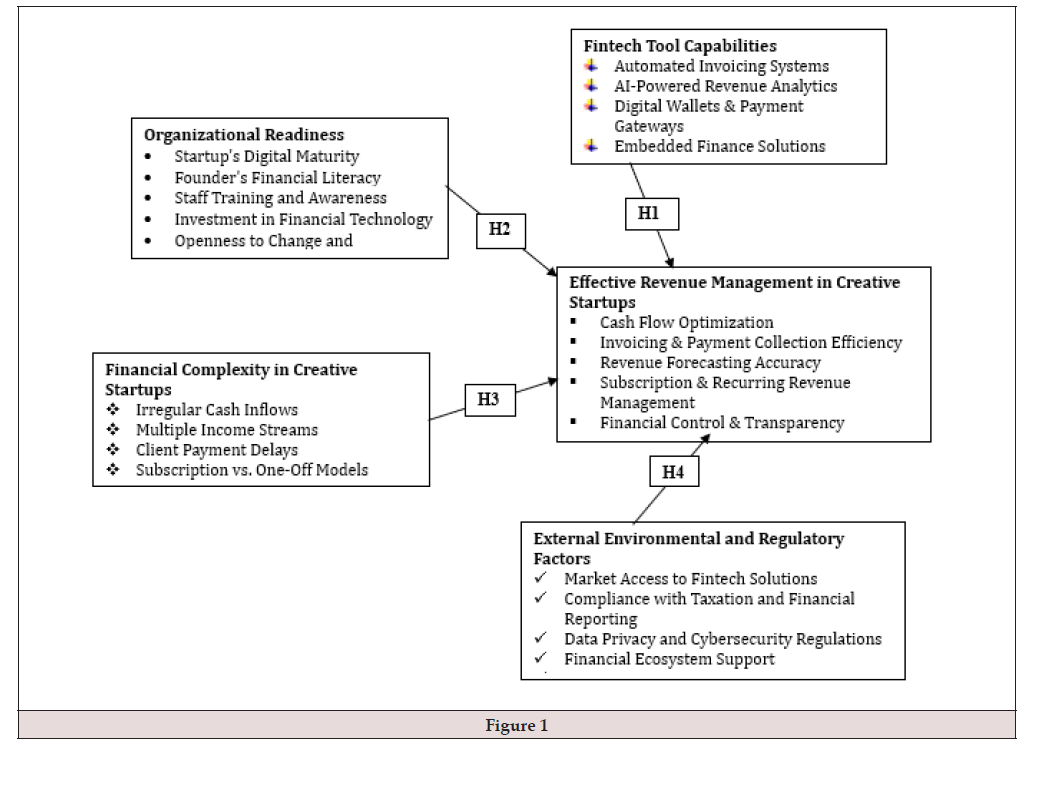
Figure 1:
Interview Summary
Below is a summary of the 15 interviewees who participated in the study [Table 1]:
Key Themes Identified from Thematic Analysis
a. Fintech Tool Capabilities: Participants emphasized that
tools like automated invoicing, embedded finance APIs, and
predictive revenue analytics significantly reduce manual
errors and provide real-time cash flow visibility. Several
startups reported that Fintech reduced the administrative
burden by over 40%.
b. Organizational Readiness: The success of Fintech
implementation was highly dependent on the founder’s digital
awareness and the team’s openness to experimentation.
Startups with higher digital maturity were more likely to
integrate multiple tools into their revenue stack.
c. Financial Complexity: Interviewees noted that irregular
payments, global clientele, and varying business models
made revenue tracking a challenge. Fintech tools with flexible
dashboards and multi-currency support were cited as highly
valuable.
d. External Environmental & Regulatory Factors: Regulatory
complexity—especially around VAT, data privacy, and banking
integration—remains a major constraint. Startups in the UAE
noted that although regulators are supportive, understanding
and implementing legal compliance is often costly and timeconsuming.
e. Effective Revenue Management: The cumulative outcome
of using Fintech tools—especially when paired with
organizational readiness—led to improvements in cash
flow stability, payment collection efficiency, and financial
forecasting. However, isolated Fintech adoption without
internal capacity building offered limited returns.
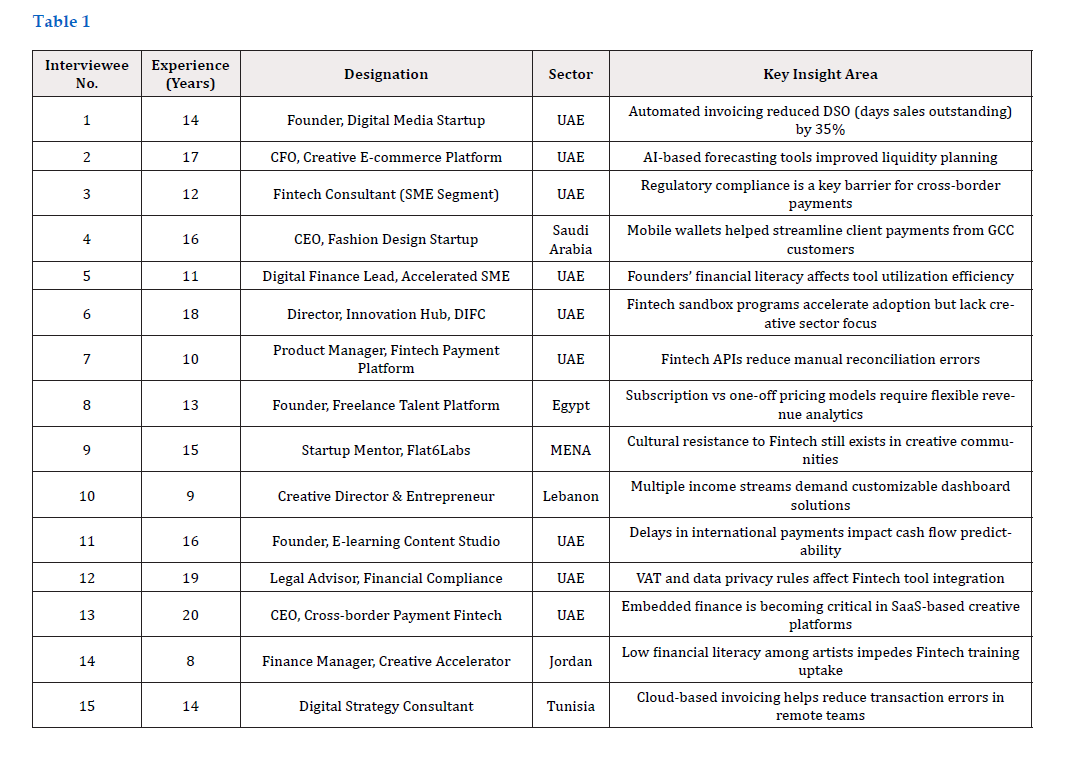
Table 1:
Ethical Considerations
Ensuring ethical integrity was a foundational aspect of this research study, particularly given the involvement of human participants from diverse professional and cultural backgrounds. The study adhered to internationally recognized ethical research standards and institutional guidelines throughout the design, data collection, and analysis phases. Prior to conducting the interviews, all participants were provided with a comprehensive overview of the study’s objectives, expected outcomes, and the nature of their involvement. This was done through a detailed informed consent form, which each participant reviewed and voluntarily signed before participating. The form clearly outlined their right to withdraw from the study at any stage without any repercussions. Confidentiality was strictly maintained throughout the research process. The identities of all interviewees were anonymized by assigning coded identifiers to ensure that their names, organizations, and sensitive information could not be traced back to them in the final analysis. Furthermore, all audio recordings, transcriptions, and notes were securely stored on encrypted digital platforms with restricted access limited only to the primary researcher. This helped prevent unauthorized access and ensured that the data remained protected and private. Participation in the study was entirely voluntary. Interviewees were explicitly informed that their responses would be used solely for academic and analytical purposes and that no part of their input would be shared publicly without proper anonymization and contextual safeguards. This transparency promoted openness during the interviews and helped build trust with participants, which was critical to collecting rich, qualitative insights. Additionally, the research adhered to the data privacy and protection standards stipulated by the General Data Protection Regulation (GDPR), particularly relevant given the inclusion of participants from jurisdictions with stringent data governance laws. The study also complied with the ethical review and approval guidelines of the research institution, which included mandatory review of participant materials, consent forms, and data handling protocols. By embedding these ethical practices into the research methodology, the study ensured that participants’ rights, dignity, and privacy were fully protected, thereby strengthening the credibility, reliability, and ethical soundness of the findings [12].
Triangulation and Validity
To enhance the credibility, depth, and rigor of the research findings, a triangulation strategy was adopted. Triangulation, in qualitative research, refers to the use of multiple data sources, methods, or perspectives to cross-validate findings and minimize potential biases. This approach was particularly essential in the present study, given the exploratory nature of the investigation and the context-specific nuances of Fintech adoption in creative startups. The first layer of triangulation was achieved through crossvalidation of interview data with Fintech tool documentation and platform white papers. Insights provided by interviewees—such as their experiences with AI-based forecasting, automated invoicing, or embedded payment gateways—were compared against the stated functionalities and benefits advertised by Fintech providers. This helped to ensure that the reported benefits and challenges were grounded in factual tool capabilities and not merely subjective perceptions. The second source of triangulation stemmed from a regulatory analysis of Fintech innovation frameworks in the UAE. By examining the regulatory policies and operational models of platforms like the Dubai International Financial Centre (DIFC) Fintech Hive, Abu Dhabi Global Market’s RegLab (ADGM), and Sharjah Entrepreneurship Center (Sheraa), the study contextualized interview responses within the broader Fintech ecosystem. These regulatory institutions play a pivotal role in shaping startup access to financial technologies, compliance expectations, and innovation incentives. By aligning interview findings with publicly available regulatory directives and ecosystem initiatives, the study ensured that conclusions were not isolated from macroeconomic and policy realities. Furthermore, secondary case studies of MENA-based startups using platforms such as Zbooni, Mamo Pay, and Wafeq were analyzed to provide real-world operational examples of Fintech integration in creative enterprises. These case studies, drawn from regional media reports, startup incubator documentation, and Fintech testimonials, added a practical lens to the theoretical and qualitative analysis. The success stories and implementation challenges faced by these startups helped validate the thematic patterns that emerged from the primary data. Together, these three levels of triangulation—primary interview data, regulatory ecosystem insights, and secondary case evidence—ensured a holistic and well-rounded understanding of the research problem. This not only reinforced the validity and reliability of the findings but also contributed meaningful insights for both academic discourse and practical application. The triangulated approach thus bridges the gap between theoretical frameworks, lived experiences, and real-world practices in the rapidly evolving Fintech landscape of creative startups in the UAE and the broader MENA region [3].
Hypotheses Decisions
The research framework was developed based on an integrated conceptual model combining the Technology-Organization- Environment (TOE) Framework, Resource-Based View (RBV), Dynamic Capabilities Theory, Innovation Diffusion Theory (IDT), and Financial Management Theory. This framework was used to examine the influence of four independent variables—Fintech Tool Capabilities, Organizational Readiness, Financial Complexity, and External Environmental & Regulatory Factors—on the dependent variable, Effective Revenue Management in Creative Startups. Through rigorous qualitative analysis based on 15 expert interviews, the following hypotheses were evaluated and decisions derived accordingly:
H1: Fintech Tool Capabilities have a significant influence on Effective Revenue Management in Creative Startups.
Decision: Supported
The analysis strongly supports this hypothesis. Interviewees consistently highlighted the transformative impact of tools such as automated invoicing systems, AI-powered revenue analytics, mobile finance apps, and embedded payment gateways on their ability to manage cash flows, reduce delayed payments, and improve revenue forecasting. These tools enabled greater financial transparency, faster client transactions, and more efficient financial operations. Fintech platforms like Zbooni and Mamo Pay were specifically cited as enablers of real-time financial management in the UAE and MENA region. This outcome aligns with IDT by demonstrating high perceived usefulness and ease of use and TOE by emphasizing the importance of technological availability in Fintech adoption.
H2: Organizational Readiness significantly influences Effective Revenue Management in Creative Startups.
Decision: Supported
This hypothesis is also supported by the findings. Interviewees noted that startups with higher digital maturity, founderlevel financial literacy, and openness to innovation were more successful in integrating Fintech tools into their revenue systems. Organizational Readiness emerged as a critical internal factor, consistent with the RBV and TOE frameworks. Startups that invested in financial training and technological infrastructure were able to adapt more quickly and extract greater value from Fintech capabilities. Conversely, those with limited awareness or resistance to change struggled to fully benefit from digital finance tools, despite having access to them.
H3: Financial Complexity in Creative Startups significantly influences Effective Revenue Management.
Decision: Supported
The data provides clear support for this hypothesis. Creative startups in the MENA region face unique financial complexities, including irregular cash inflows, diverse revenue streams (subscriptions, commissions, royalties), delayed payments, and international transactions. Participants shared that these challenges demanded the use of customizable, flexible, and multi-currencyenabled Fintech solutions. The presence of such complexity necessitated advanced financial tools and emphasized the need for real-time dashboards and automated reconciliation. This confirms the relevance of Financial Management Theory and underscores the importance of matching financial tools to operational challenges.
H4: External Environmental and Regulatory Factors significantly influence Effective Revenue Management in Creative Startups.
Decision: Supported
The final hypothesis is also supported by the interview findings. Regulatory considerations—such as compliance with VAT laws, data privacy regulations, financial reporting standards, and crossborder transaction rules—were highlighted as both facilitators and barriers to Fintech implementation. While the UAE provides a progressive regulatory landscape through initiatives like DIFC’s Innovation Hub and ADGM’s RegLab, the complexity of compliance remains a significant concern for startups. Interviewees emphasized that startups often lack legal expertise and face difficulties integrating Fintech tools that must align with evolving regional and international financial regulations. The TOE framework’s environmental dimension is well reflected in these insights. All four proposed hypotheses are validated through empirical evidence derived from expert insights and cross-referenced with secondary data. These decisions affirm the robustness of the conceptual model and highlight the interconnected roles of technology availability, organizational capability, operational complexity, and regulatory environment in enabling Fintech-driven revenue management for creative startups.
Implications of this Research
This research offers valuable insights into the integration of Fintech solutions for revenue management within creative startups in the UAE and MENA region. By exploring how technological, organizational, financial, and regulatory factors interact to affect Fintech adoption, the study contributes not only to academic theory but also to practical, policy, and strategic decision-making. The implications span across managerial, practical, social, economic, and environmental domains:
Practical Implications: On a practical level, the study provides a roadmap for creative startups seeking to streamline revenue operations using Fintech. The insights on specific tools—such as automated invoicing platforms, real-time revenue dashboards, embedded finance APIs, and mobile payment systems—enable startups to make informed decisions about tool selection based on their revenue complexity and growth stage. The research also emphasizes the importance of aligning Fintech tools with multicurrency support, project-based income tracking, and irregular payment cycles typical of creative enterprises. Practically, Fintech companies can use this research to develop more industry-specific features for creative sectors, such as integration with content platforms, IP monetization tools, or analytics tailored to freelance and gig-based earnings.
Social implications: The research has significant social implications, particularly in supporting inclusive entrepreneurship and promoting financial empowerment among creative professionals. Many creative entrepreneurs—especially freelancers, artists, and small-scale innovators—operate informally or lack access to sophisticated financial systems. By highlighting how Fintech tools can democratize access to financial planning, revenue tracking, and digital payments, the study encourages the formalization of creative businesses, potentially improving their access to credit, investment, and public support. Additionally, empowering creative workers with digital financial tools enhances their confidence, economic stability, and capacity to grow. From a gender and inclusion perspective, Fintech-enabled financial autonomy can be a key enabler for underrepresented groups in creative fields.
Managerial implications: The findings underscore the critical role of leadership and organizational readiness in the successful implementation of Fintech tools. Startup founders and managers must prioritize the development of financial literacy, digital capabilities, and innovation culture within their teams. Managers should actively invest in training programs, encourage cross-functional collaboration, and embed Fintech tools into daily financial workflows rather than treating them as isolated add-ons. Furthermore, management teams must adopt proactive compliance strategies to navigate complex regulatory frameworks and ensure alignment with financial reporting standards and data privacy laws. This research also highlights the need for managers to adopt adaptive leadership styles, embracing iterative testing of digital tools and being open to feedback from internal and external stakeholders to refine Fintech usage strategies.
Economic Implications: At an economic level, the widespread adoption of Fintech tools in creative startups can contribute to economic diversification, SME growth, and job creation in the UAE and MENA region. Creative startups supported by efficient revenue systems are more likely to scale sustainably, attract investors, and expand regionally or globally. The research shows that improved cash flow management through Fintech reduces financial risk and enhances creditworthiness, which in turn supports entrepreneurial resilience and boosts economic productivity. Policymakers and ecosystem enablers can use this research to design targeted Fintech support programs, tax incentives, or digital finance grants tailored to creative industries. Ultimately, integrating Fintech into this emerging sector helps bridge the gap between the informal creative economy and the formal financial system.
Environmental Implications: While Fintech is primarily a financial and technological tool, its application has indirect environmental implications, particularly through digitization and paperless finance processes. The adoption of digital invoices, e-contracts, online payment platforms, and cloud-based financial management significantly reduces paper consumption, transportation needs, and administrative overhead, contributing to greener operational models. Moreover, startups that adopt cloud-based Fintech tools also reduce the need for on-premise infrastructure, resulting in lower energy use and reduced carbon emissions. For eco-conscious creative entrepreneurs—especially those operating in design, fashion, or media—Fintech tools support the transition toward more sustainable business practices while also enabling transparency in revenue from ethically or environmentally-driven campaigns.
Limitations and Future Research
Limitations
While this study offers valuable insights into the role of Fintech in enhancing revenue management for creative startups, several limitations should be acknowledged to contextualize the findings and guide future exploration. First, the research employed a qualitative approach using semi-structured interviews with a relatively small and purposive sample of 15 expert participants. Although the sample was diverse in terms of geography, roles, and sectors within the creative economy, the insights remain contextspecific and may not fully capture the broader variability across different startup stages, cultural settings, or regulatory frameworks. As such, the generalizability of findings is limited and should be interpreted cautiously. Second, the study was conducted within a regional scope focused primarily on the UAE and the broader MENA region. While this geographical focus provides depth in a rapidly growing Fintech ecosystem, it does not address the experiences of creative startups operating in other emerging or mature Fintech markets, such as Southeast Asia, Sub-Saharan Africa, or Europe. Regional differences in digital infrastructure, financial literacy, or government regulation could yield different adoption patterns and outcomes. Third, due to the exploratory nature of the study, the research focused on perceptions, challenges, and opportunities rather than on quantitative measurement of Fintech outcomes. Metrics such as revenue growth, customer acquisition cost, or Days Sales Outstanding (DSO) post-Fintech adoption were not statistically analysed, limiting the ability to draw causal inferences or assess the direct financial impact of specific Fintech tools. Additionally, technological evolution in the Fintech landscape is rapid and continuous. New tools, platforms, and regulatory changes may emerge shortly after this study, potentially altering the adoption dynamics and rendering some insights time-bound. The study also did not differentiate between types of creative startups (e.g., content creators vs. design agencies), which may experience distinct financial workflows and require different Fintech functionalities.
Future Research Directions
To build on the foundations established by this study, several avenues for future research are proposed that can further deepen both academic and practical understanding of Fintech’s role in enhancing revenue management within creative startups. One significant direction involves the quantitative validation of the conceptual model developed in this research. Future studies can employ large-scale surveys and advanced statistical modeling techniques such as Structural Equation Modeling (SEM) or Partial Least Squares (PLS) to test the proposed hypotheses across a broader, more diverse sample. This would improve the empirical robustness and enhance the generalizability of the findings. Another important area lies in conducting longitudinal impact assessments, where researchers could track startups over time to examine how Fintech adoption influences financial metrics such as revenue growth, cash flow stability, operational efficiency, and profitability. These longterm insights would offer concrete, time-based evidence of Fintech’s value creation potential. Moreover, comparative regional studies could investigate Fintech adoption patterns in creative startups across different geographic regions—such as Southeast Asia, Sub- Saharan Africa, or Europe—to explore cross-cultural differences in technology adoption, financial behavior, and regulatory adaptation. Such comparative insights could reveal valuable lessons on scalability and localization of Fintech solutions. Tool-specific case studies also represent a promising area of research. Deep dives into specific Fintech applications like Zbooni, Mamo Pay, Wafeq, or AIbased revenue analytics tools can help identify what works, under what conditions, and why, thereby offering granular insights to both developers and users. Additionally, future studies may benefit from sector-specific investigations, analyzing how Fintech solutions vary in their applicability and effectiveness across different creative subsectors such as music, film, graphic design, animation, or digital marketing. This would allow for more nuanced recommendations and industry-specific strategies. Another increasingly relevant direction is the integration of ESG (Environmental, Social, and Governance) and sustainability metrics into Fintech research. As startups worldwide move toward ethical, transparent, and environmentally responsible business models, future studies could explore how Fintech tools contribute to sustainability reporting, reduce environmental footprints, and support ethical financial practices. Lastly, examining the role of government, public policy, and startup incubators in shaping Fintech adoption is essential. Future research could evaluate how regulatory incentives, Fintech sandboxes, government grants, or accelerator programs enhance digital financial inclusion and improve the financial resilience of creative entrepreneurs. By addressing these various dimensions, future research can substantially enrich the growing body of knowledge on Fintech and provide scalable, actionable solutions for fostering sustainable growth within the creative startup ecosystem globally.
The Contribution and Originality
This study makes a significant and multi-dimensional contribution to the emerging discourse on Fintech integration within the creative startup ecosystem, with a distinct regional focus on the UAE and MENA context. It is one of the few empirical investigations that systematically explore how Fintech solutions— spanning invoicing, payments, and financial forecasting—interact with technological capabilities, organizational readiness, financial complexity, and regulatory ecosystems to shape effective revenue management strategies for creative ventures. The research bridges theoretical, empirical, practical, contextual, and methodological gaps, providing a valuable resource for entrepreneurs, Fintech developers, policymakers, and scholars interested in digital financial transformation.
Theoretical Contribution
The study contributes to theory-building by integrating five robust theoretical frameworks—Technology-Organization- Environment (TOE) Framework, Resource-Based View (RBV), Dynamic Capabilities Theory, Innovation Diffusion Theory (IDT), and Financial Management Theory—into a unified conceptual model. This multi-theoretical lens offers a nuanced understanding of how internal firm capabilities and external conditions jointly influence Fintech adoption and financial performance in creative startups. While these frameworks have individually been applied in various domains, their combined application in the context of creative entrepreneurship and Fintech integration remains largely unexplored. The research thus advances conceptual clarity and sets a new direction for future investigations into financial innovation in startup ecosystems.
Empirical Contribution
Using rich, qualitative data derived from semi-structured interviews with 15 experienced stakeholders—including startup founders, Fintech professionals, innovation hub directors, and financial consultants—this study offers deep insights into the practical realities of Fintech adoption in creative businesses. The findings validate the relevance of the proposed model and highlight the interplay between tool capabilities, financial behaviors, and ecosystem constraints. By focusing on creative sectors that often operate informally and lack financial structure, the study fills a notable empirical gap in Fintech literature. It captures the lived experiences, strategic decisions, and operational challenges that are not easily measurable through quantitative data alone, thus contributing rich, contextual knowledge to the field.
Practical and Policy-Level Contribution
The research delivers actionable recommendations for startup managers, Fintech developers, accelerators, and policymakers. For creative entrepreneurs, the study provides a roadmap to enhance financial discipline, optimize cash flow, and scale operations using appropriate Fintech tools. For Fintech solution providers, the study identifies critical gaps in tool customization, onboarding simplicity, and regulatory compliance support that must be addressed to serve creative users more effectively. For policymakers and ecosystem builders in the UAE and MENA region, the findings reinforce the need for targeted digital finance literacy programs, regulatory simplification, and incentive frameworks that support the creative economy’s digitization. This positions the study as a strategic tool for guiding inclusive economic growth through financial technology.
Contextual Originality
This research is contextually original in its focus on the creative startup ecosystem within the UAE and MENA region—a segment that remains underrepresented in both Fintech and entrepreneurship literature. While global Fintech research often centers around traditional SMEs or banking-sector disruption, this study uniquely captures the financial realities of creative entrepreneurs working in design, content creation, digital media, fashion, and art—industries marked by project-based earnings, inconsistent cash flows, and limited access to institutional finance. By anchoring the study in the UAE’s innovation-driven and digitally ambitious economic landscape, the research offers region-specific insights that contribute to both local policymaking and broader comparative studies in digital entrepreneurship.
Methodological Contribution
The study makes a methodological contribution by applying a qualitative, expert-driven inquiry approach to a largely quantitative and tool-centric field. The use of semi-structured interviews, thematic analysis, and triangulation with Fintech documentation, regulatory reports, and regional case studies ensures a well-rounded and credible analysis. This approach not only uncovers nuanced insights that surveys alone cannot capture but also demonstrates the effectiveness of qualitative methods in exploring innovation adoption in entrepreneurial finance. The conceptual model derived from this study also offers a replicable framework for future mixed-methods research in Fintech and creative sector development across other emerging markets. This research stands out for its conceptual richness, empirical relevance, practical significance, contextual focus, and methodological rigor. It contributes a foundational understanding of how Fintech can reshape revenue management for creative startups in the digital economy. By combining theoretical depth with real-world application, the study opens new avenues for inquiry into financial innovation, entrepreneurship, and ecosystem development. It also offers original, data-driven perspectives that are timely and impactful—serving as a springboard for future research and policy formulation in the realms of Fintech adoption and creative economy growth in the UAE and beyond.
Conclusion
This study set out to explore how Fintech solutions can enhance revenue management practices in creative startups, particularly within the context of the UAE and the broader MENA region. Grounded in an integrated conceptual framework—comprising the Technology-Organization-Environment (TOE) Framework, Resource-Based View (RBV), Dynamic Capabilities Theory, Innovation Diffusion Theory (IDT), and Financial Management Theory—the research addressed four core objectives: to examine the role of Fintech tool capabilities, assess organizational readiness, understand the impact of financial complexity, and evaluate the influence of external environmental and regulatory factors on revenue management effectiveness. Through a qualitative methodology involving 15 expert interviews and multi-source triangulation, all four objectives have been successfully met. The empirical findings strongly support the study’s hypotheses. Fintech tool capabilities were found to significantly enhance revenue forecasting, invoicing, and cash flow visibility in creative startups, confirming the importance of technology as a key enabler. Organizational readiness—measured through digital maturity, financial literacy, and openness to innovation—emerged as a critical internal factor influencing adoption success. Financial complexity, inherent in the creative industry due to irregular income, client delays, and cross-border operations, was shown to necessitate the use of flexible, automated Fintech tools. Additionally, external regulatory and environmental factors—including compliance with VAT, data privacy regulations, and access to digital infrastructure—were identified as major determinants in shaping both the feasibility and scalability of Fintech integration. This study makes a multi-layered contribution to the field. Theoretically, it advances understanding by integrating multiple frameworks into a single, cohesive model applicable to both Fintech and creative entrepreneurship literature. Empirically, it adds qualitative depth by documenting the lived experiences of startup founders, Fintech advisors, and ecosystem enablers, particularly in a region where such insights are still emerging. Practically, the study offers actionable guidance for creative entrepreneurs, Fintech solution providers, and policymakers aiming to support the digital transformation of the creative economy. Contextually, it introduces region-specific insights from the UAE and MENA markets, filling a critical gap in the global discourse on Fintech and SME financial innovation. Despite these contributions, the study acknowledges several limitations that offer fertile ground for future research. The qualitative scope, while rich in depth, limits the generalizability of the findings. Quantitative validation through large-scale surveys or longitudinal case studies would help test and refine the conceptual model further. Additionally, future research could explore Fintech adoption in creative startups across different economic regions, sectors (e.g., music vs. design), and business models to compare use-case variability. More in-depth exploration of the impact of emerging Fintech technologies—such as blockchain-based invoicing, smart contracts, or decentralized finance (DeFi)—on revenue management would also be valuable. In conclusion, this study provides a comprehensive and timely exploration of how Fintech solutions are reshaping revenue management practices in creative startups. By addressing both the technological and human dimensions of adoption, it bridges theoretical and practical gaps and offers a roadmap for future innovation in the digital finance landscape. The findings underscore that Fintech is not merely a tool but a strategic enabler that, when effectively leveraged, can drive financial resilience, operational efficiency, and long-term growth in the creative economy.
Conflict of Interest
None.
Acknowledgements
None.
References
- Abdu R (2024) Factors that Enable Cashless Payment Adoption Among the Blue-Collar Workers in Dubai (Master's thesis, Rochester Institute of Technology). https://repository.rit.edu/theses/11915/.
- Ali Osman MM (2024) The Impact of Government Policies in Middle Eastern Countries on Digital Platform Startups (Doctoral dissertation, Massachusetts Institute of Technology). https://dspace.mit.edu/handle/1721.1/157157.
- Donkoh S, Mensah J (2023) Application of triangulation in qualitative research. Journal of Applied Biotechnology and Bioengineering 10(1): 6-9.
- Famoti O, Ewim CPM, Eloho O, Muyiwa Ajayi TP, Ezechi ON, et al. (2025) Revolutionizing customer experience management through data-driven strategies in financial services. International Journal of Advanced Multidisciplinary Research and Studies. 2025a 5(1): 948-957. https://www.multiresearchjournal.com/arclist/list-2025.5.1/id-3748.
- George AS (2024) Finance 4.0: The Transformation of Financial Services in the Digital Age. Partners Universal Innovative Research Publication 2(3): 104-125.
- Goodwin JT (2022) The Role of Guided Intuition in the Executive Decision-Making Process of Small Business Owners. University of Charleston-Beckley. https:// www.proquest.com /openview/ d3194c 0c3816e1113 5ed221 83307dfb7/ 1?c bl=18 75 0 &diss= y &pq-origsite=gscholar.
- Idris MMR (2024) Strategic Financial Management in Entrepreneurial Ventures: A Comprehensive Qualitative Review of Financial Practices and Their Impact on Startup Growth and Stability. Atestasi: Jurnal Ilmiah Akuntansi 7(2): 742-761. https://jurnal.feb-umi.id/index.php/ATESTASI/article/view/878.
- Knisley DJ (2024) Empowering Entrepreneurial Evolution: A Beyond Founder Strategic Approach to Small Business Growth (Doctoral dissertation, University of South Florida). https://digitalcommons.usf.edu/etd/10640/.
- Kumari A (2024) The Future of Global FinTech Careers in the Global FinTech Landscape. In Decentralized Finance and Tokenization in FinTech (pp. 215-237): IGI Global.
- Maleh Y, Zhang J, Hansali A (Eds.) (2024) Advances in emerging financial technology and digital money. CRC Press. ISBN 9781032667478.
- Mhlanga D (2024) Big Data and Financial Technology (Fintech) Towards Financial. Inclusion Available at SSRN 4697365. https://papers.ssrn.com/sol3/papers.cfm?abstract_id=4697365.
- Mirza H, Mirza C, Bellalem F (2023) Ethical Considerations in Qualitative Research: Summary Guidelines for Novice Social Science Researchers., Social Studies and Research Journal 11(1): 441-449. https://asjp.cerist.dz/en/article/220704.
- Moderno OBDS, Braz AC, Nascimento PTDS (2024) Robotic process automation and artificial intelligence capabilities driving digital strategy: a resource-based view. Business Process Management Journal 30(1): 105-134.
- Naouar A (2025) Examination of the Key Drivers Fueling the Adoption of FinTech in the Banking Sector in the UAE. In The Palgrave Handbook of FinTech in Africa and Middle East: Connecting the Dots of a Rapidly Emerging Ecosystem (pp. 1-24). Singapore: Springer Nature Singapore.
- Omowole BM, Olufemi Philips AQ, Ofadile OC, Eyo Udo NL, Ewim SE (2024) Conceptualizing agile business practices for enhancing SME resilience to economic shocks. International Journal of Scholarly Research and Reviews 5(2): 070-088.
- Omowole BM, Urefe O, Mokogwu C, Ewim SE (2024) Integrating fintech and innovation in microfinance: Transforming credit accessibility for small businesses. International Journal of Frontline Research and Reviews 3(1): 090-100.
- Pazouki S, Jamshidi MB, Jalali M, Tafreshi A (2025) The integration of big data in finTech: Review of enhancing financial services through advanced technologies. World Journal of Advanced Research and Reviews, 25(1). https://digitalcommons.odu.edu/management_fac_pubs/76/.
- Pisoni G, Molnár B, Tarcsi Á (2024) Knowledge management and data analysis techniques for data-driven financial companies. Journal of the Knowledge Economy 15(3): 13374-13393.
- Polisetty A, Chakraborty D, Kar AK, Pahari S (2024) What determines AI adoption in companies? Mixed-method evidence. Journal of Computer Information Systems 64(3): 370-387.
- Rahardja U, Miftah M, Rakhmansyah M, Zanubiya J (2025) Revolutionizing Financial Services with Big Data and Fintech: A Scalable Approach to Innovation. ADI Journal on Recent Innovation 6(2): 118-129.
- Sharma I, Aggarwal A (2024) Digital Footprints and the Battle for Data Sovereignty: Digital Privacy, Security, and Ownership. In Driving Decentralization and Disruption with Digital Technologies (pp. 74-83): IGI Global.
- Zentani, Mokhtar Alkhattali (2025) Impact of Digital Integration on the Small and Medium-Sized Enterprises in Arab Countries. Afro-Asian Journal of Scientific Research (AAJSR) 3(1): 41-54. https://aajsr.com/index.php/aajsr/article/view/322.




 We use cookies to ensure you get the best experience on our website.