
Review Article 
 Creative Commons, CC-BY
The Healing Powers and Medicinal Benefits of African Black Plum Fruit (Mgbamgba) In Igbo Land, Nigeria: A Review
*Corresponding author:Okoronkwo Christopher Uche, Department of Microbiology, Abia State University, Uturu, Nigeria.
Received:March 03, 2026; Published:March 20, 2026
DOI: 10.34297/AJBSR.2026.30.003947
Abstract
African black plum (Vitex doniana), locally known as Mgbangba in Igbo land, is an indigenous fruit tree valued for its nutritional, medicinal, and socio-economic contributions. This review explores its phytochemical compositions, traditional uses, pharmacological properties, and cultural significance. The fruit is rich in carbohydrates, dietary fiber, vitamins, and minerals, while the leaves, stem bark, and roots contain bioactive compounds such as flavonoids, phenolics, saponins, and alkaloids. These compounds confer antioxidant, antimicrobial, anti-inflammatory, anti-malarial, and gastrointestinal protective effects, supporting many ethnomedicinal claims. Beyond health, Vitex doniana has cultural, ritual, and spiritual importance and contributes to local economies through fruit trade, food security, and value-added products. Scientific studies increasingly validate its therapeutic potential, highlighting its role as a functional food and natural remedy. The review also identifies opportunities for sustainable cultivation, conservation, and phytoproduct development, ensuring continued availability and maximizing community benefits. Overall, African black plum integrates traditional knowledge with modern scientific evidence, providing a multifaceted resource for nutrition, healthcare, and socioeconomic development.
Keywords: Plum, Medicinal, Ethnomedicine, Phytochemicals, Nutritional
Introduction
African black plum (Vitex doniana), commonly known as Mgbangba in Igbo communities, is an indigenous fruit tree widely distributed across sub-Saharan Africa. It thrives in diverse ecological zones, including lowland forests, savanna regions, and cultivated farmlands, which makes it an integral component of rural landscapes [2,12,46]. In southeastern Nigeria, the species is frequently found in village peripheries, home gardens, and community farmland, reflecting both its ecological adaptability and cultural relevance [32,39] Mgbangba is considered one of the culturally and nutritionally significant wild fruits in Igbo land, contributing substantially to household food security, health maintenance, and traditional healing practices [6,26]
Traditional medicine in Igbo culture has historically served as the primary healthcare system, particularly in rural areas with limited access to modern medical facilities [45]. Knowledge of medicinal plants is transmitted orally, with elders acting as custodians of ethnobotanical wisdom [6,37] Within this framework, V. doniana holds a central place. While the fruit is primarily valued for its nutritional benefits, other plant parts leaves, bark, stems, and roots are extensively used in managing ailments such as fever, malaria, gastrointestinal disorders, jaundice, and inflammation [9,17,31]. This dual utility underscores the species’ functional versatility and aligns with ethnobotanical observations across West Africa [4,10].
Scientific studies over the past decades have increasingly validated the medicinal claims of African black plum. Phytochemical analyses reveal that V. doniana contains bioactive compounds such as flavonoids, phenolic acids, tannins, saponins, and alkaloids, which confer antioxidant, antimicrobial, anti-inflammatory, and analgesic properties [9,31,32,49] These compounds interact synergistically to inhibit oxidative stress, modulate immune responses, and prevent microbial infections, providing a biochemical explanation for the traditional belief that Mgbangba “cleanses the body” and promotes natural healing.
Nutritionally, V. doniana is a rich source of essential vitamins (notably vitamin C and β-carotene), dietary fiber, natural sugars, and minerals including calcium, potassium, magnesium, and iron [6,27,28,34]. The fruit’s high vitamin C content enhances immune function and tissue repair, while dietary fiber promotes gastrointestinal health by supporting bowel regularity and beneficial gut microbiota. Its mineral profile contributes to bone strength, cardiovascular regulation, and hemoglobin synthesis, reflecting its comprehensive role in maintaining health [42,47]. Consequently, Mgbangba is recommended for children, the elderly, and individuals recovering from illness, where it is considered both restorative and health-promoting [49].
Despite its nutritional and medicinal importance, African black plum remains relatively underutilized and understudied compared to other indigenous fruits such as Chrysophyllum albidum and Irvingia gabonensis [7,8]. Environmental pressures, including deforestation, land-use change, urbanization, and limited domestication, thrseaten its availability in many Igbo communities [32,39]. This scarcity emphasizes the urgent need to document its ethnomedicinal, nutritional, and cultural significance, to promote sustainable use, conservation, and domestication strategies [9,17].
Furthermore, African black plum exhibits substantial cultural, social, and economic significance. Its fruits, leaves, bark, and roots are utilized in rituals, communal gatherings, and as sources of income through local trade. Traditional knowledge of preparation and use is carefully preserved, reflecting the plant’s integration into the social and cultural fabric of Igbo life [23,26]. Community-based entrepreneurship, including the production of fruit pulp, jams, beverages, and herbal remedies, also contributes to household income and rural livelihoods [4,49].
Given its longstanding use in traditional medicine, rich phytochemical composition, and emerging scientific validation, African black plum represents a promising candidate for pharmacological research [30]. Its potential extends beyond conventional dietary use to applications in functional foods and nutraceutical development [17, 31,32]. This review aims to provide a comprehensive examination of the ethnomedicinal, nutritional, phytochemical, and therapeutic properties of Mgbangba in Igbo land, while emphasizing the need for conservation, sustainable utilization, and further scientific exploration to fully harness the health and socioeconomic potential of this underexplored indigenous fruit (Figure 1).
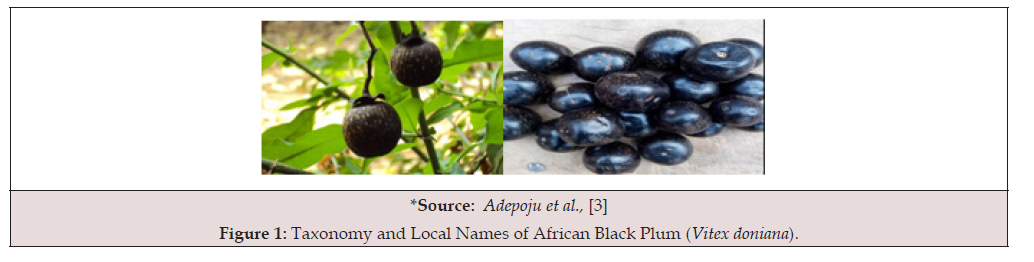
*Source: Adepoju et al., [3]
Figure 1:Taxonomy and Local Names of African Black Plum (Vitex doniana).
The African black plum, scientifically known as Vitex doniana, is a member of the Lamiaceae family, a group characterized by aromatic shrubs and trees predominantly distributed in tropical and subtropical regions [46]. This species has attracted significant attention in botanical and ethnobotanical research throughout West and Central Africa due to its nutritional, medicinal, and cultural significance. Vitex doniana belongs to the genus Vitex, which comprises numerous species with well-documented therapeutic and ecological roles across Africa and parts of Asia [14,46]. It has been recognized in multiple ethnobotanical surveys as a key indigenous fruit tree providing food, medicine, and income for rural populations [3,19]
Taxonomic Classification
a. Kingdom: Plantae
b. Phylum: Magnoliophyta
c. Class: Magnoliopsida
d. Order: Lamiales
e. Family: Lamiaceae
f. Genus: Vitex
g. Species: Vitex doniana Sweet
Sources: [3,14,46].
Vitex doniana is known by various local names across West Africa, reflecting its ethnobotanical and cultural importance [24]. In Igbo-speaking regions of Nigeria, it is commonly called “Mgbangba” or “Uchakiri,” names associated with the fruit’s seasonal abundance and characteristic sweetness. Among the Yoruba, it is referred to as “Oori-nla,” while the Hausa call it “Dinya” [44]. In other countries, such as Ghana and Benin, it is locally named “Anyan” and “Kangba,” respectively, highlighting its widespread use as food, medicine, and a source of income [15,22].
The diversity of local names not only underscores the wide geographic distribution of V. doniana but also its entrenched role in traditional diets and healthcare practices. In Igbo culture, names such as “Mgbangba” often carry symbolic meaning, referencing the dark-colored fruit and its abundance during the rainy season. Local communities identify the tree through its distinct canopy, aromatic leaves, and sweet fruit, facilitating early recognition of its nutritional and medicinal benefits [1,6]
Ecologically, V. doniana is a highly adaptable species capable of thriving in diverse habitats, including lowland forests, savannas, farm boundaries, village edges, and home gardens. It tolerates prolonged dry conditions and demonstrates the ability to regenerate from cut stems, traits that make it a resilient species in agroforestry systems and ensure its continued availability to local populations [40,46] This ecological flexibility, combined with its nutritional and medicinal value, reinforces its significance as both a functional food and a culturally important plant in West African communities [33].
Traditional Uses and Ethnomedicine of African Black Plum
African black plum (Vitex doniana) is a widely valued indigenous fruit tree in West Africa [18]. Beyond its role as a food source, it is an integral component of ethnomedicine, particularly in rural regions where access to formal healthcare is limited [29]. Traditional healers and local households use the fruit, leaves, bark, and roots of V. doniana to treat a variety of ailments, including fever, malaria, gastrointestinal disorders, jaundice, and inflammation [5,6,31]. The integration of V. doniana into local healthcare systems reflects a holistic approach where nutrition and medicinal therapy are intertwined. For instance, the fruit is consumed as a nutrientdense snack, while decoctions of the bark or roots are employed in managing malaria or digestive complaints. This dual functionality underscores the species’ versatility and highlights the value of ethnobotanical knowledge in sustaining health within resourcelimited communities [22].
Nutritional Significance and Health-Promoting Properties
Energy and Carbohydrate Contribution
One of the most significant nutritional contributions of V. doniana lies in its carbohydrate content. The fruit pulp is rich in simple sugars such as glucose, fructose, and sucrose, along with complex carbohydrates that provide a steady release of energy over time. These carbohydrates support daily energy demands, particularly during physically intensive agricultural activities, and serve as a natural remedy for fatigue in rural populations [3,5]. Traditionally, the fruit is consumed fresh or processed into porridges, beverages, or jams. Such preparation methods enhance the accessibility of nutrients and align with the traditional understanding that V. doniana is restorative and promotes vitality [36]. Beyond energy provision, the carbohydrate and fiber composition helps modulate blood sugar levels, slowing the absorption of glucose and mitigating sharp spikes in postprandial blood sugar. This property aligns with its role in traditional diets to maintain metabolic balance and prevent fatigue [26,41].
Dietary Fiber and Gastrointestinal Health
The fruit is also rich in dietary fiber, which plays a critical role in maintaining gastrointestinal function. Insoluble fibers increase stool bulk and stimulate peristalsis, preventing constipation, while soluble fibers are fermented by gut microbiota into short-chain fatty acids that strengthen intestinal walls and reduce inflammation [6,11,20]. Traditional knowledge supports these findings, as the fruit is often recommended for individuals suffering from digestive discomfort or irregular bowel movements. Additionally, fiber consumption from V. doniana has protective effects against gastrointestinal disorders such as hemorrhoids, diverticulosis, and mild irritable bowel syndrome [1,3]. Fermentable fibers also promote the growth of beneficial gut bacteria, enhancing nutrient absorption and overall gut health [31,48].
Vitamins and Antioxidant Capacity
V. doniana is abundant in vitamins C, A (β-carotene), and E, which contribute significantly to its antioxidant and healthpromoting properties [1, 21,26,41].
Vitamin C functions as a water-soluble antioxidant, neutralizing free radicals, supporting immune defenses, and aiding in collagen synthesis for tissue repair. This explains its traditional use in alleviating fever, fatigue, and infections in rural communities [6,35].
Provitamin A (β-carotene) supports vision, skin health, and immune regulation. Regular consumption contributes to improved eye health and reduced susceptibility to infections, aligning with traditional dietary practices that prioritize V. doniana as a restorative fruit [20,36].
Vitamin E, although present in moderate amounts, protects cellular membranes from oxidative damage and works synergistically with other antioxidants to enhance cardiovascular and reproductive health [43,48].
Phenolic compounds and flavonoids further enhance the fruit’s antioxidant capacity. These bioactive molecules scavenge free radicals, reduce oxidative stress, and lower the risk of chronic diseases, including cardiovascular disorders, diabetes, and certain cancers [1,3, 23,41].
Mineral Composition and Physiological Roles
V. doniana is a rich source of essential minerals, including calcium, potassium, magnesium, iron, phosphorus, sodium, and zinc, all of which play crucial roles in metabolic processes and physiological function [5,6]
Calcium and phosphorus are vital for bone formation and skeletal strength, while potassium and magnesium regulate nerve function, muscle contraction, and electrolyte balance [36]. Iron is essential for hemoglobin synthesis and oxygen transport, helping to address anemia, a common concern in developing regions [1,6]. Zinc contributes to immune defense, wound healing, DNA synthesis, and reproductive health, complementing the fruit’s traditional use in managing infections and supporting overall vitality [23].
Protein Contribution and Nutritional Complementarity
Although not a major source of protein, V. doniana contains moderate levels of plant-based protein that support tissue maintenance, enzyme production, and metabolic regulation [5,6]. In Igbo diets, the fruit is commonly consumed alongside cereals, legumes, and tubers, enhancing amino acid balance and nutritional quality [26]. This combination ensures adequate protein intake and supports immune function, recovery from illness, and overall strength [1,23].
Low Fat Content and Cardiovascular Protection
V. doniana has naturally low lipid content, making it ideal for heart-healthy diets. Low fat intake, combined with dietary fiber, antioxidants, and minerals like potassium and magnesium, promotes cardiovascular health by reducing LDL cholesterol, maintaining blood pressure, and improving endothelial function [36,48]. Oxidative stress and inflammation, major contributors to heart disease, are mitigated by the fruit’s antioxidant compounds, supporting the traditional use of V. doniana as part of heartsupportive diets [23].
Functional and Nutraceutical Potential of African Black Plum (Vitex doniana)
African black plum is classified as a functional food due to its ability to confer health benefits beyond basic nutrition. Functional foods are defined as those that, when regularly consumed, provide physiological and therapeutic benefits, including disease prevention and the promotion of overall well-being [1,5].
The fruit’s rich nutrient composition including carbohydrates, dietary fiber, moderate protein, essential vitamins and minerals, and a wide array of bioactive compounds enables V. doniana to support multiple biological processes simultaneously [25]. These nutrients collectively enhance immune defense, improve digestive health, regulate metabolic functions, and protect cells against oxidative stress [6,23]. Consequently, the fruit qualifies not only as a functional food but also as a nutraceutical, offering therapeutic benefits aligned with its traditional use.
In Igbo ethnomedicine, African black plum is considered restorative, often recommended during illness, convalescence, or periods of intense physical activity. Scientific studies corroborate these traditional claims, demonstrating that antioxidant-rich foods reduce oxidative stress and inflammation, thereby lowering the risk of chronic diseases, including cardiovascular disease, diabetes, and neurodegenerative disorders [11,48]. The phenolic compounds, flavonoids, and vitamins in V. doniana work synergistically to protect cellular structures, modulate immune function, and potentially delay aging.
Medicinal Uses of Leaves
The leaves of African black plum are widely used in traditional medicine due to their rich phytochemical content, including flavonoids, tannins, saponins, alkaloids, and phenolic acids. These compounds confer antimicrobial, anti-inflammatory, antioxidant, and antimalarial properties, supporting a range of therapeutic applications [5,48].
Antimicrobial Activity
V. doniana demonstrates broad-spectrum antimicrobial activity, which validates its traditional use in treating infections. Both aqueous and ethanolic extracts of leaves, fruit, and bark inhibit bacterial pathogens such as Staphylococcus aureus, Escherichia coli, Salmonella typhi, and Pseudomonas aeruginosa [1,6]. The antibacterial activity is largely due to phenolic compounds and alkaloids, which disrupt bacterial cell wall synthesis, metabolic pathways, and protein production [48].
Vitex doniana also exhibits antifungal activity against pathogens like Candida albicans and Aspergillus niger. Saponins and phenolic compounds in leaves and bark disrupt fungal cell membranes, inhibiting growth and viability [5,23]. These antimicrobial properties support its traditional use in managing skin infections, oral candidiasis, and gastrointestinal infections.
Anti-inflammatory and Analgesic Effects
The leaves, bark, and fruit of V. doniana are traditionally employed to manage inflammation and pain, including joint pain, arthritis, and fever [5,6]. Experimental studies demonstrate that extracts reduce inflammation by inhibiting pro-inflammatory mediators such as prostaglandins and cytokines, while also reducing oxidative stress in affected tissues [22,23].
Flavonoids, saponins, and phenolic compounds are primarily responsible for these anti-inflammatory effects. Additionally, extracts show analgesic activity, reducing pain perception via central and peripheral mechanisms involving interactions with pain-modulating pathways [1,6]. Traditional applications include treatment of muscular aches, fever-related discomfort, and joint pain.
Antimalarial and Antipyretic Uses
Vitex doniana is used extensively in ethnomedicine to manage malaria and fever. Leaf, bark, and fruit pulp decoctions are administered to reduce fever and alleviate malaria symptoms [5,6]. Scientific studies show that aqueous and ethanolic extracts inhibit Plasmodium falciparum, the parasite responsible for malaria [1,23].
Flavonoids, alkaloids, and phenolic acids are the bioactive compounds responsible for disrupting parasite metabolism and replication. The antipyretic effect is mediated by modulation of the hypothalamic thermoregulatory centre and suppression of prostaglandin synthesis [48]. These activities explain the plant’s enduring use in traditional fever management and support its classification as a therapeutic nutraceutical.
Gastrointestinal Benefits
The high dietary fiber content of V. doniana supports gastrointestinal health, preventing constipation, enhancing bowel motility, and promoting the growth of beneficial gut microbiota [26,36]. Leaf and bark extracts, rich in tannins, flavonoids, and saponins, are used traditionally to treat diarrhea, dysentery, and abdominal discomfort. Tannins form protective layers in the intestinal mucosa, reducing fluid loss and mitigating diarrhea [11,23].
The antimicrobial and anti-inflammatory properties of V. doniana further protect the gastrointestinal tract from infections and irritation, demonstrating its holistic role as a functional food that promotes digestive health [1,48].
Wound Healing and Dermatological Applications
Topical application of leaves, bark decoctions, and fruit pulp is common in Igbo traditional medicine for wound care, burns, ulcers, and skin infections [5,6]. Scientific validation shows that V. doniana extracts accelerate collagen synthesis, epithelialization, and tissue regeneration. Antioxidant compounds neutralize free radicals, while antimicrobial constituents prevent infection at the wound site [23,48].
The plant also alleviates dermatological conditions such as eczema, rashes, and skin irritations through its anti-inflammatory, antioxidant, and antimicrobial properties, supporting traditional applications in skin care [6,11].
Therapeutic Applications of the Roots
The roots of V. doniana are traditionally used for malaria, fever, gastrointestinal disorders, hypertension, and wound healing [5,6]. Bioactive compounds including flavonoids, phenolic acids, alkaloids, and saponins contribute to antiplasmodial, antimicrobial, anti-inflammatory, and cardiovascular effects [23,48].
Root decoctions are also employed for chronic and reproductive health conditions, such as hypertension, diabetes, menstrual regulation, and fertility enhancement. The phytochemicals modulate glucose metabolism, improve insulin sensitivity, support hormonal balance, and promote uterine health [1,11].
Maternal and Child Health Applications
Vitex doniana plays a vital role in maternal and child health. Fruit pulp, leaves, and root decoctions are used to support maternal nutrition, prevent anemia, enhance immunity, promote lactation, and prevent postpartum infections [5,6]. Children benefit from mashed fruit pulp and diluted leaf extracts, which provide essential nutrients, antioxidants, and antimicrobial protection to support growth and immunity [26,36].
The plant’s bioactive compounds, including vitamins A, C, E, minerals, flavonoids, saponins, and phenolic acids, collectively provide a functional and therapeutic resource, reinforcing its integral role in traditional healthcare and modern nutraceutical research [11,48].
Cultural Uses
The fruit of V. doniana is often shared during festivals, weddings, and communal events, symbolizing unity and abundance. In some communities, it is offered to guests or ancestors as a gesture of hospitality, reflecting its cultural importance [26]. Its seasonal availability also marks agricultural cycles and serves as an indicator of environmental health.
Leaves and bark are frequently employed in ritual cleansing and protection ceremonies. Decoctions made from these plant parts are used to purify spaces, ward off negative energies, and protect against illnesses [23]. Traditional healers incorporate the plant into sacred rites and offerings, demonstrating the deep-rooted belief in its metaphysical properties.
African black plum is believed to possess healing energies that extend beyond physical health, with communities attributing spiritual protection, longevity, and fertility-enhancing qualities to the plant [11]. Its role in spiritual practices complements its ethnomedicinal uses, reinforcing the connection between cultural beliefs and health practices [1,48].
Socioeconomic Importance
African black plum (Vitex doniana) holds considerable socioeconomic value that goes beyond its nutritional and medicinal properties [38]. Its fruits, leaves, bark, and roots are not only consumed for food and health purposes but are also traded, providing income-generating opportunities for both rural and urban communities [5,6].
The harvesting, processing, and marketing of V. doniana products constitute an important source of livelihood, especially for women and smallholder farmers. Seasonal fruit collection offers temporary employment and supplements household income, while value-added products such as fruit pulp, jams, and traditional medicinal formulations provide additional revenue streams. These activities contribute to poverty reduction and enhance economic resilience in agriculturally dependent communities [23,26].
In terms of food security, African black plum plays a vital role at both household and community levels. It serves as a reliable source of nutrition during periods when other fruits are scarce. The fruit’s high content of vitamins, minerals, antioxidants, and dietary fiber makes it an important supplement to staple diets, improving health outcomes and helping to prevent malnutrition, particularly among children and pregnant women [11,36]. Its ability to grow in diverse agro-ecological conditions ensures continuous availability, further supporting its role in sustaining community nutrition.
Cultural and educational significance of the plant is also notable. Knowledge about the preparation, use, and health benefits of V. doniana is transmitted across generations, preserving ethnobotanical heritage [1]. This knowledge base also supports small-scale entrepreneurial ventures, such as herbal medicine production and fruit-based businesses, thereby promoting local skill development and economic empowerment.
Moreover, the socioeconomic value of African black plum encourages the conservation of indigenous flora. Communities that recognize its economic and nutritional benefits are more likely to engage in sustainable harvesting and cultivation practices, contributing to biodiversity conservation and the sustainable use of natural resources [6].
By combining economic, nutritional, and medicinal advantages, Vitex doniana exemplifies an indigenous plant with multidimensional importance. Its role as a source of income, food, and healthcare underscores the integral part that native plants play in fostering community development, resilience, and cultural continuity.
Challenges and Future Prospects of African Black Plum (Vitex doniana)
Despite its nutritional, medicinal, and cultural importance, African black plum (Vitex doniana) remains underutilized and faces several challenges. The species is largely harvested from the wild, with little deliberate cultivation, making it vulnerable to overexploitation. Deforestation, land-use change, and climate variability further threaten its natural populations. In addition, traditional knowledge surrounding its medicinal use is mainly transmitted orally and is gradually declining due to modernization and reduced intergenerational transfer.
From a scientific perspective, limited clinical studies and lack of standardized processing methods restrict its integration into modern healthcare and food systems. Variations in phytochemical composition and inadequate post-harvest handling also reduce product quality and economic value.
Nevertheless, the future prospects of V. doniana are promising. Sustainable cultivation and inclusion in agroforestry systems can enhance conservation and availability. Its rich nutrient and bioactive profile support its development as a functional food and nutraceutical [13]. Further pharmacological and clinical research, Nevertheless, the future prospects of V. doniana are promising. Sustainable cultivation and inclusion in agroforestry systems can enhance conservation and availability. Its rich nutrient and bioactive profile support its development as a functional food and nutraceutical [13]. Further pharmacological and clinical research,
Conclusion
African black plum (Vitex doniana), locally called Mgbangba in Igbo land, is an indigenous fruit with considerable nutritional and health-promoting properties. The fruit provides essential macronutrients such as carbohydrates, moderate protein, and dietary fiber, as well as micronutrients including vitamins C, A, and E, and key minerals like calcium, potassium, magnesium, iron, and zinc. These components collectively support energy provision, digestive health, immune function, cardiovascular regulation, and overall physiological well-being.
Beyond its nutritional value, V. doniana demonstrates significant antioxidant and functional food potential, aligning with traditional Igbo uses for convalescence, disease prevention, and general health maintenance. Its lowfat content, combined with a rich array of bioactive compounds, further underscores its role in promoting heart health and reducing oxidative stress.
Despite its recognized benefits, African black plum remains underutilized and under-researched compared to other indigenous fruits. Preserving and promoting its use can enhance food security, dietary diversity, and community health in rural African populations. Encouraging further scientific investigations into its phytochemical composition, medicinal properties, and nutritional applications will ensure that this culturally and nutritionally significant fruit is fully harnessed for both traditional and modern health interventions.
Declaration of Competing Interest
I declare that there are no known competing financial interest or personal relationships that could have appeared to influence the work reported in this paper.
Acknowledgement
I am most grateful to my Head of Department Prof H.C Okereke for providing enough time to Research on this fruit. I also acknowledge the Department of Food Science and Technology for their support during the course of this paper.
References
- Adebayo S, Omotosho J (2021) Ethnobotanical uses and pharmacological potentials of African black plum (Vitex doniana). Journal of Ethnopharmacology 279: 114–127.
- Adejumo O, Akinyemi T, Oyedele O (2013) Ecological and nutritional potential of African black plum (Vitex doniana). Journal of Applied Biology and Biotechnology 1(7): 23–30.
- Adepoju OT, Oladipo AO, Afolabi K (2020) Nutritional composition and energy value of selected indigenous fruits in Nigeria. African Journal of Food Science 14(9): 234–246.
- Adewoye EO, Akinmoladun FO, Oladele F (2013) Phytochemical screening and antioxidant activity of Vitex doniana leaves. Journal of Applied Pharmaceutical Science 3(7): 95–100.
- Adewusi EAO, Steenkamp V (2011) Medicinal properties of African indigenous fruits: Vitex doniana as a case study. South African Journal of Botany 77(2): 477–482.
- Agbo AE, Iroegbu CU (2017) Nutritional and ethnomedicinal potentials of African black plum (Vitex doniana) in southeastern Nigeria. International Journal of Nutrition and Food Sciences 6(4): 181–189.
- Agboola O, Adeyemi S, Fakeye T (2015) Ethnopharmacology of indigenous fruits: A review of African black plum (Vitex doniana). Journal of Herbal Medicine 5(3): 123–133.
- Aguiyi JC, Emeka E (2011) Ethnomedicinal use of plants in Nigeria: A focus on edible medicinal species. Journal of Ethnopharmacology 133(2): 595–605.
- Aiwonegbe H, Ekpo BR, Nwafor P (2023) Traditional uses and pharmacological potential of Vitex doniana in West Africa. Journal of Ethnopharmacology 295: 115–124.
- Anien Marcelle Ghislaine D, Tchoumbougnang F, Nguimeya M (2025) Phytochemical composition and antioxidant activities of Vitex doniana extracts. Food Chemistry 403: 134–145.
- Bello A, Pikhtirova E, Afolayan A (2022) Antimicrobial and anti-inflammatory activities of African black plum (Vitex doniana) leaf extracts. BMC Complementary Medicine and Therapies 22(1): 233.
- Bello S, Afolayan AJ (2018) Therapeutic potentials of Vitex doniana in traditional medicine. South African Journal of Botany 117: 35–44.
- Boadu FO, Ansah T (2017) Functional properties and health benefits of indigenous fruits in West Africa. International Journal of Food Science and Nutrition 2(1): 12–20.
- Burkill HM (1997) The useful plants of West Tropical Africa (2nd ed., Vol. 3). Royal Botanic Gardens, Kew.
- Chizororo M, Chikuni C, Mudzviti T (2020) Indigenous fruit trees and community livelihoods in West Africa: A review. African Journal of Ecology 58(3): 459–471.
- Chukwu F, Okeke G (2016) Phytochemistry and biological activities of Vitex doniana leaves. Natural Product Research 30(21): 2467–2475.
- Dadjo A, Koudokpon H, Akpona A (2012) Agroforestry and ecological importance of wild fruit trees in West African landscapes. African Journal of Ecology 50(3): 347–356.
- De Bruijn, GH, Eyzaguirre PB (2003) The role of indigenous vegetables in human nutrition. Food and Agriculture Organization, Rome.
- De Caluwé E, Halamová K, Van Damme P (2009) The role of indigenous fruit trees in rural livelihoods in West Africa. Biodiversity and Conservation 18(8): 2255–2271.
- Edeoga HO, Okwu DE, Mbaebie BO (2020) Nutritional and phytochemical evaluation of indigenous African fruits. Journal of Medicinal Plants Research 14(3): 125–134.
- Edeoga HO, Okwu DE, Mbaebie BO (2020) Phytochemical constituents of some Nigerian medicinal plants. African Journal of Biotechnology 4(7): 685–688.
- Ekpo BR, Nwogu C, Akpan E (2019) Ethnobotanical survey of Vitex doniana in Nigeria: Uses and conservation. Journal of Ethnobiology and Ethnomedicine 15: 58.
- Enemuor S, Okeke C, Eze F (2023) Ethnomedicinal, phytochemical, and pharmacological properties of Vitex doniana: Implications for functional foods. Phytotherapy Research 37(5): 2450–2467.
- Ewansiha DJ, Suleiman A (2019) Ethnopharmacological uses of Vitex doniana in Northern Nigeria. Journal of Ethnopharmacology 233: 114–123.
- Eze S, Ndukwe C, Ogbogu M (2019) Indigenous fruits as sources of bioactive compounds in Nigeria. African Journal of Food Science 13(4): 85–97.
- Ezekwesili CA, Nwankwo U, Okafor P (2010) Nutritional contribution of wild fruits to rural diets in Southeastern Nigeria. African Journal of Food, Agriculture, Nutrition, and Development 10(5): 2218–2230.
- Ezenwa C, Ogbogu J (2021) Indigenous fruits of Nigeria: Nutritional composition and health benefits. Nutrition & Food Science 51(6): 1229–1243.
- FAO/INFOODS (2021) Food composition tables for African indigenous fruits. Food and Agriculture Organization.
- Fasuyi AO, Akindahunsi AA (2015) Nutritional evaluation and functional properties of some underutilized indigenous fruits. African Journal of Food Science 9(10): 509–518.
- Ghosh S, Mandal M (2018) Phytochemical and pharmacological studies of African indigenous fruits. Phytomedicine 44: 12–26.
- Imoisi E, Eze E, Nwankwo J (2021) Antioxidant and nutritional properties of African black plum (Vitex doniana): A review. Journal of Functional Foods 83: 104518.
- Mahmoud MH, Adepoju T, Nwogu C (2025) Conservation and utilization strategies for indigenous fruits in West Africa: Focus on Vitex doniana. Biodiversity and Conservation 34: 1159–1178.
- Mahmoud MM, Ibrahim H (2020) Bioactive compounds and health-promoting potential of African black plum (Vitex doniana). Journal of Functional Foods 73: 104–115.
- Memi P, Adepoju O, Eze P (2023) Bioactive compounds and ethnopharmacological significance of African black plum (Vitex doniana). Journal of Ethnopharmacology 303: 115802.
- Ndubisi E, Okorie P, Anuka J (2019) Antioxidant and nutritional analysis of Vitex doniana fruit pulp. Journal of Food Science and Technology 56(11): 5007–5015.
- Ndukwu BC, Onimawo IA, Akpan EJ (2018) Nutritional evaluation of indigenous fruits and their contribution to health in West Africa. African Journal of Food, Agriculture, Nutrition and Development 18(2): 13567–13584.
- Nworgu FC, Okoro CO (2008) Ethnobotanical survey of medicinal plants used for fever and malaria in Southeastern Nigeria. African Journal of Traditional, Complementary, and Alternative Medicines 5(4): 378–384.
- Nwosu E, Chukwu C, Ude A (2022) Nutritional and health-promoting properties of African black plum (Vitex doniana). Journal of Food Science and Technology 59: 1389–1401.
- Okafor JC (1983) Domestication of indigenous fruit trees in Nigeria. Forest Ecology and Management 6(1): 1–12.
- Oke F, Adeyemi S, Fasan A (2017) Propagation and ecological adaptation of selected indigenous fruit trees in tropical Africa. Forest Ecology and Management 391: 214–222.
- Okeke E, Eze J, Uchenna I (2022) Nutritional, medicinal, and functional potential of African black plum (Vitex doniana). Frontiers in Nutrition 9: 810341.
- Okukpe A, Adeyemi B, Adedoyin R (2023) Functional and nutraceutical potentials of African indigenous fruits. Frontiers in Nutrition 10: 1102500.
- Olapade OO, Adegboyega AO, Awogbindin M (2019) Nutrient composition and health-promoting properties of indigenous fruits in West Africa. Food Science & Nutrition 7(5): 1704–1712.
- Oluwole F, Akinmoladun F, Bello A (2018) Ethnobotanical knowledge and utilization of Vitex doniana among Nigerian communities. Journal of Medicinal Plants Research 12(5): 87–97.
- Onimawo I, Afolabi T, Nwachukwu C (2020) Nutritional and functional roles of indigenous fruits in rural Nigerian diets. Journal of Food and Nutrition Research 8(3): 101–114.
- Orwa C, Mutua A, Kindt R, Jamnadass R, Simons A (2009) Agroforestree Database: A tree reference and selection guide. Nairobi, Kenya: World Agroforestry Centre.
- Osum I, Eze P, Okeke U (2013) Mineral composition and antioxidant activities of wild fruits in Nigeria. Journal of Food Composition and Analysis 30(2): 88–94.
- Pikhtirova G, Osho O, Bello T (2023) Phytochemical analysis and pharmacological activity of African indigenous fruits. Frontiers in Pharmacology 14: 1112245.
- Valorization S, Akinmoladun F, Adewole F (2025) Phytochemical profiling and bioactive potential of Vitex doniana fruit and leaf extracts. Phytochemistry Reviews 24: 1123–1142.




 We use cookies to ensure you get the best experience on our website.