
Research Article 
 Creative Commons, CC-BY
Staff Mind Sets in Nutrition Focused Clinical Encounters Under Institutional Stress
*Corresponding author:Howard Moskowitz, Mind Genomics Associates, Inc., White Plains, New York & Tactical Data Group, Stafford, Virginia.
Received:March 23, 2026; Published:March 31, 2026
DOI: 10.34297/AJBSR.2026.30.003960
Abstract
Clinic staff frequently engage in conversations about nutrition, eating behavior, and weight related concerns, particularly in settings where patients face elevated risks for diabetes or obesity. These interactions occur under institutional time pressure and emotional strain, creating conditions in which staff rely heavily on cognitive shortcuts, interpretive schemas, and affective filters. This paper analyzes the psychological processes that govern staff interpretation of patient cues in nutrition related encounters, emphasizing appraisal mechanisms, schema activation, and meaning making under stress. Mind Genomics is used to segment staff interpretive patterns into mind sets using a structured simulation-based analytical approach, enabling a structured understanding of how staff construct emotional meaning from patient behavior, environmental constraints, and institutional expectations. The analysis remains strictly behavioral and does not provide medical or dietary guidance.
Keywords: Mind genomics, Clinical communication, Staff cognition, Cognitive appraisal, Institutional stress
Introduction
Nutrition focused clinical encounters place staff in situations where they must interpret patient disclosures about eating behavior, weight concerns, and perceived risk for diabetes or obesity while operating under significant institutional pressure. Research on cognitive appraisal demonstrates that individuals evaluate situations through rapid judgments about control, predictability, and personal relevance, and these appraisals strongly influence emotional interpretation [1]. In high demand clinics, staff frequently experience compressed time, fluctuating emotional demands, and inconsistent patient engagement, all of which intensify appraisal processes. Staff enter these encounters with pre existing schemas that guide perception. Schema theory shows that individuals filter new information through cognitive structures shaped by prior experience, and these structures influence how ambiguous patient cues are interpreted [2]. A patient’s hesitation to discuss eating habits may be interpreted as resistance, shame, or confusion depending on the staff member’s schema. Social cognition research further demonstrates that individuals rely on micro behaviors—tone, pace, posture—to infer intent and emotional climate, forming impressions within seconds [3]. These impressions shape how staff approach nutrition related dialogue, particularly when discussing sensitive topics such as weight, dietary patterns, or disease risk.
Narrative identity research indicates that individuals integrate new experiences into ongoing internal storylines, using them to reinforce or revise self-relevant interpretations [4]. Staff construct narratives about patient motivation, adherence likelihood, and emotional readiness, and these narratives influence how they frame nutrition related information. Mind Genomics provides a methodological framework for segmenting these interpretive patterns into mind sets, enabling a structured analysis of how staff differ in their appraisal of identical patient cues. By applying this framework, the paper identifies systematic variations in staff interpretation and clarifies how environmental pressure interacts with cognitive and affective processes. The goal is to advance a formal behavioral science account of staff mind sets in nutrition focused clinical encounters.
Emotional Architecture of Clinic Staff in Nutrition Focused Encounters
Clinic staff working in nutrition related encounters operate within an environment defined by time pressure, emotional demand, and institutional expectations. These conditions shape the emotional architecture through which staff interpret patient disclosures about eating behavior, weight concerns, and perceived risk for diabetes or obesity. Emotional architecture refers to the internal structure of appraisals, schemas, and affective filters that guide interpretation. Staff rely on this structure to determine the meaning of patient cues, the urgency of nutritional concerns, and the appropriate interpersonal stance during the encounter. Research on appraisal theory shows that individuals evaluate situations through rapid judgments about control, predictability, and relevance, and these judgments strongly influence emotional interpretation [5]. In high demand clinics, these appraisals occur under compressed time and heightened cognitive load, increasing the likelihood that staff will depend on established interpretive shortcuts. Staff frequently encounter ambiguous patient cues during nutrition related discussions. Patients may hesitate, minimize dietary challenges, or express uncertainty about weight related behaviors. Schema theory indicates that individuals filter such cues through cognitive structures shaped by prior experience, and these structures influence how staff interpret patient motivation, readiness, or resistance [2]. A staff member who associates hesitation with low adherence may interpret a patient’s pause as disengagement, while another staff member may interpret the same pause as anxiety or shame. These interpretive differences emerge from the underlying emotional architecture rather than from the objective content of the interaction.
Environmental stress amplifies these interpretive processes. High patient volume, institutional metrics, and limited time for counseling increase the emotional load on staff. Research on emotional labor shows that individuals in caregiving roles regulate their emotional expression to meet organizational expectations, and this regulation consumes cognitive resources that would otherwise support nuanced interpretation [6]. When staff must maintain composure while addressing sensitive topics such as obesity or diabetes risk, emotional labor intensifies. This intensification increases reliance on rapid appraisal and schema based interpretation, shaping how staff perceive patient engagement and nutritional risk. Nutrition related encounters also activate staff beliefs about responsibility, agency, and behavioral change. Studies on attribution theory show that individuals interpret behavior through judgments about internal versus external causes, and these judgments influence emotional responses and behavioral intentions [7]. Staff who attribute patient eating behavior to personal choice may experience frustration when patients report difficulty changing dietary patterns. Staff who attribute behavior to structural or psychological factors may experience empathy or concern. These attributional differences form part of the emotional architecture that guides staff responses during discussions of obesity or diabetes risk.
The hyper stressed clinic environment further shapes emotional architecture by constraining the availability of relational cues. Staff often have limited time to assess patient affect, clarify ambiguous statements, or explore contextual factors influencing nutrition. Social cognition research demonstrates that individuals form impressions from micro behaviors such as tone, pace, and posture, and these impressions influence subsequent interpretation [3]. When staff must rely on thin slices of patient behavior, they construct meaning from minimal information. This reliance increases the influence of pre existing schemas and attributional tendencies, reinforcing mind set specific patterns of interpretation. Emotional architecture also reflects staff beliefs about the institutional role of nutrition counseling. Some staff view nutrition as a central component of preventive care, while others view it as secondary to more immediate clinical demands. Research on role perception shows that individuals interpret tasks through the lens of perceived professional identity, and these interpretations influence engagement and emotional investment [8]. Staff who view nutrition counseling as essential may experience urgency or concern during discussions of obesity or diabetes risk. Staff who view it as peripheral may experience detachment or time related frustration. These role based interpretations shape the emotional architecture that governs staff responses.
The interaction between appraisal processes, schema activation, attributional tendencies, emotional labor, and role perception produces distinct staff mind sets. These mind sets influence how staff interpret patient cues, how they prioritize nutritional concerns, and how they construct emotional meaning during the encounter. Mind Genomics provides a structured method for identifying these mind sets by analyzing how staff respond to systematically varied combinations of nutrition related elements. The next segment introduces the Mind Genomics framework and presents the first set of diagnostic tables that map staff interpretive patterns across nutrition focused encounters.
Materials and Methods
To systematically examine these interpretive processes, the study adopts a Mind Genomics–based analytical framework.
Mind Genomics Framework for Staff Mind Sets in Nutrition Focused Encounters
Mind Genomics provides a systematic method for identifying distinct interpretive patterns among clinic staff during nutrition focused encounters. The method constructs a structured, simulationbased experimental design in which staff evaluate combinations of elements representing patient behaviors, environmental conditions, and institutional pressures. Each element reflects a micro situation that staff commonly encounter when discussing eating behavior, weight concerns, or perceived risk for diabetes or obesity. Staff assign ratings to these combinations, and the resulting data reveal clusters of interpretation—mind sets—that differ in how staff appraise identical cues.
The Mind Genomics framework treats each encounter as a set of discrete informational units. These units include patient verbal statements, nonverbal behaviors, contextual constraints, and institutional expectations. Research on cognitive segmentation shows that individuals categorize complex situations into manageable interpretive units, and these units guide appraisal and decision making [9]. Mind Genomics operationalizes this process by presenting systematically varied combinations of units and analyzing how staff respond. The method identifies patterns that remain stable across variations, revealing the underlying structure of staff interpretation. This structured design enables the identification of stable interpretive patterns across varying clinical scenarios.
Results
The analysis identifies distinct patterns in how staff interpret nutrition-related encounters. In nutrition related encounters, staff frequently face ambiguous or emotionally charged cues. Patients may express uncertainty about dietary habits, minimize weight related concerns, or display discomfort when discussing obesity or diabetes risk. Staff must interpret these cues while managing time constraints, emotional labor, and institutional metrics. Mind Genomics captures these interpretive pressures by embedding them into the experimental design. The resulting mind sets reflect differences in attributional tendencies, schema activation, emotional architecture, and role perception.
Interpretation of Core Issues in Nutrition-Focused Encounters
Table 1 summarizes key domains in which staff mindsets diverge during nutrition-focused encounters. In Table 1, core issues in nutrition-focused clinical encounters are presented, along with the corresponding interpretations across three distinct staff mindsets identified through the Mind Genomics framework.
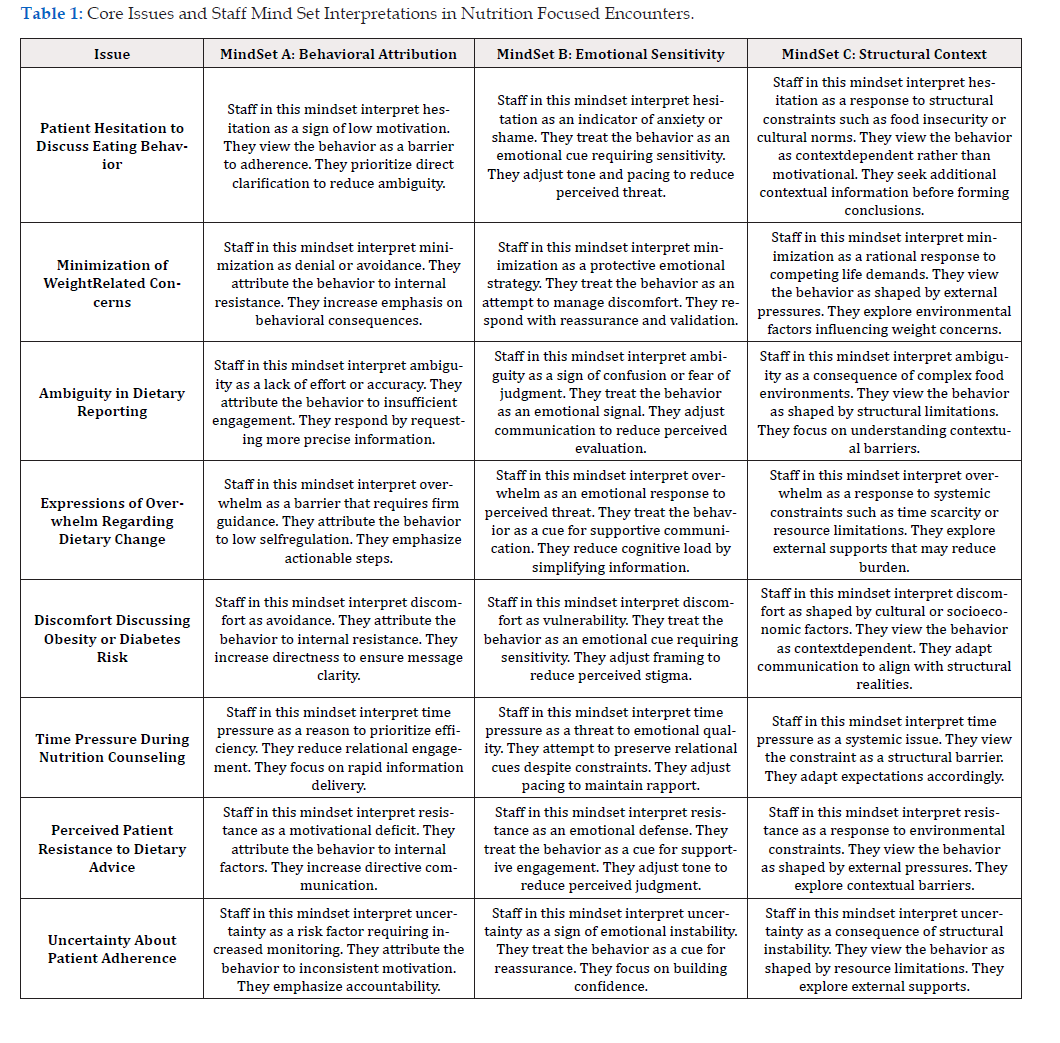
Table 1:Core Issues and Staff Mind Set Interpretations in Nutrition Focused Encounters.
These interpretive patterns demonstrate how staff mind sets diverge in their appraisal of identical patient cues. Mind Set A emphasizes internal behavioral attributions, Mind Set B emphasizes emotional meaning, and Mind Set C emphasizes structural context. These differences shape the emotional architecture of nutrition focused encounters and influence how staff respond to discussions involving obesity or diabetes risk. The next segment expands the Mind Genomics analysis and introduces additional diagnostic tables that map staff responses across more complex combinations of elements.
Identification of Staff Mindsets in Nutrition-Focused Encounters
The Mind Genomics framework enables a granular analysis of how clinic staff interpret complex nutrition related encounters by examining responses to systematically varied combinations of elements. These elements represent micro situations that staff frequently encounter when discussing eating behavior, weight concerns, or perceived risk for diabetes or obesity. The framework identifies stable interpretive patterns—mind sets—that persist across variations in patient behavior, environmental constraints, and institutional expectations. These mind sets reflect differences in attributional tendencies, emotional sensitivity, and structural awareness.
Mind Genomics treats each encounter as a composite of discrete informational units. These units include patient verbal statements, nonverbal cues, contextual pressures, and institutional demands. Research on cognitive segmentation shows that individuals parse complex situations into manageable interpretive components, and these components guide appraisal and decision making [9]. By presenting staff with systematically varied combinations of these components, Mind Genomics reveals the interpretive structures that shape staff responses to nutrition related interactions.
The second phase of analysis expands the interpretive space by introducing additional elements that reflect deeper layers of staff cognition. These elements include perceptions of patient credibility, interpretations of dietary inconsistency, reactions to emotional disclosure, and responses to perceived risk escalation. Staff mind sets diverge sharply in these domains, revealing distinct patterns of meaning making that influence how staff approach discussions involving obesity or diabetes risk. The following table presents eight additional issues that shape staff interpretation during nutrition focused encounters. Each issue is analyzed across the same three mind sets introduced earlier: Mind Set A (Behavioral Attribution), Mind Set B (Emotional Sensitivity), and Mind Set C (Structural Context). Each cell contains three sentences in formal scientific tone, describing how a particular mind set interprets the issue. These descriptions remain strictly behavioral and avoid clinical recommendations. In (Table 2), additional and more complex interaction scenarios are presented to further examine how these three staff mindsets interpret nuanced patient behaviors and contextual factors.
These interpretive patterns deepen the understanding of how staff mind sets shape responses to nutrition related encounters. Mind Set A emphasizes internal behavioral attributions, Mind Set B emphasizes emotional meaning, and Mind Set C emphasizes structural context. These differences influence how staff interpret patient cues, prioritize nutritional concerns, and construct emotional meaning during discussions involving obesity or diabetes risk. The next segment introduces the opportunity analysis and expands the Mind Genomics framework into forward looking behavioral insights. Beyond identifying interpretive differences, the analysis also highlights actionable areas for improving staff interpretation.
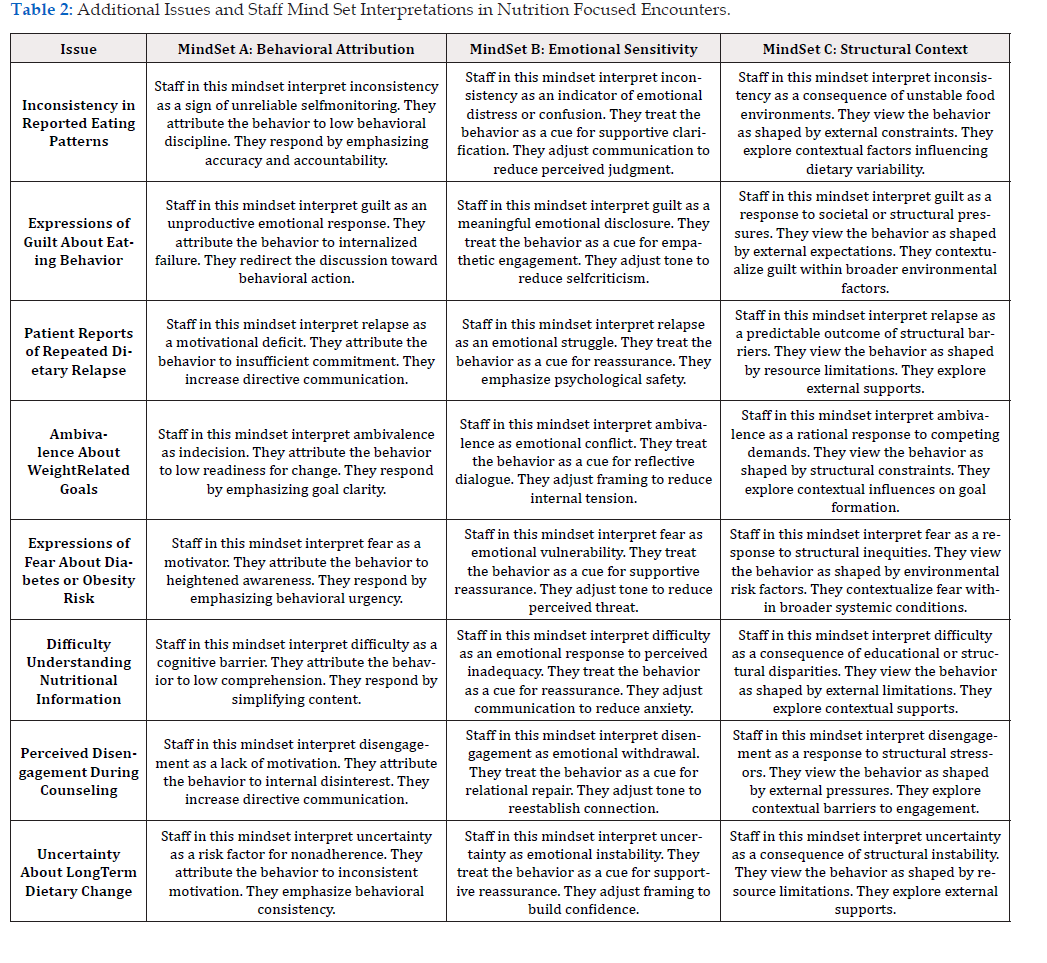
Table 2:Additional Issues and Staff Mind Set Interpretations in Nutrition Focused Encounters.
Opportunity Analysis: Six Opportunities for Improving Staff Interpretation in Nutrition Focused Encounters
The Mind Genomics analysis reveals systematic differences in how staff interpret patient cues during nutrition focused encounters. These differences create identifiable opportunities for improving communication, reducing interpretive bias, and strengthening the psychological quality of discussions involving obesity or diabetes risk. Opportunity analysis focuses on forward looking behavioral insights that emerge from the mind set structure, emphasizing how staff can refine appraisal processes, adjust interpretive filters, and enhance meaning making under institutional pressure. The following six opportunities reflect domains in which staff interpretation can shift toward greater accuracy, contextual awareness, and emotional attunement without entering clinical or dietary guidance.
1) Opportunity 1: Enhancing Recognition of Emotional Cues in Nutrition Related Disclosures: Staff frequently encounter emotional signals embedded in discussions of eating behavior, weight concerns, or perceived disease risk. Enhancing recognition of these signals can reduce misinterpretation and improve the quality of nutrition related dialogue. Research on affective perception suggests that individuals may misinterpret the emotional content of ambiguous cues, particularly when interpretive conditions are constrained [10]. Improved recognition supports more accurate appraisal and reduces reliance on schema based assumptions.
2) Opportunity 2: Reducing Over Attribution to Internal Motivation
Staff often interpret patient hesitation, inconsistency, or minimization as indicators of low motivation. Reducing over attribution to internal factors can improve interpretive accuracy and reduce frustration. Attribution theory demonstrates that individuals frequently overestimate dispositional causes when evaluating others’ behavior [7]. Adjusting attributional tendencies allows staff to incorporate contextual and structural factors into their interpretations.
3) Opportunity 3: Increasing Sensitivity to Structural Barriers Affecting Eating Behavior
Nutrition related encounters often involve structural constraints such as food access, time scarcity, or socioeconomic pressure. Increasing sensitivity to these constraints can improve staff understanding of patient behavior. Research on structural determinants of health shows that environmental factors strongly influence dietary patterns [11]. Recognizing these influences supports more accurate interpretation of patient disclosures.
4) Opportunity 4: Strengthening Interpretation of Ambiguous Nutritional Information
Ambiguous dietary reporting is common in discussions involving obesity or diabetes risk. Strengthening interpretation of ambiguous information can reduce misclassification and improve communication clarity. Cognitive processing research shows that individuals rely on heuristics when interpreting incomplete information [12]. Improved interpretive strategies reduce reliance on default assumptions.
5) Opportunity 5: Improving Emotional Regulation Under Institutional Time Pressure
Time pressure intensifies appraisal processes and increases reliance on interpretive shortcuts. Improving emotional regulation under these conditions can enhance staff accuracy and reduce emotional leakage. Research on emotional labor shows that regulation demands increase cognitive load and influence interpersonal perception [6]. Strengthened regulation supports more stable interpretive patterns.
6) Opportunity 6: Enhancing Role Clarity in Nutrition Focused Interactions
Staff differ in how they perceive the institutional importance of nutrition counseling. Enhancing role clarity can stabilize interpretive tendencies and reduce variability in responses to patient cues. Role identity research shows that individuals interpret tasks through the lens of perceived professional purpose [8]. Clearer role definitions support more consistent meaning making during nutrition related encounters.
In (Table 3), key opportunities for improving interpretive accuracy are mapped across the three staff mindsets, illustrating how each mindset engages with potential areas of refinement.
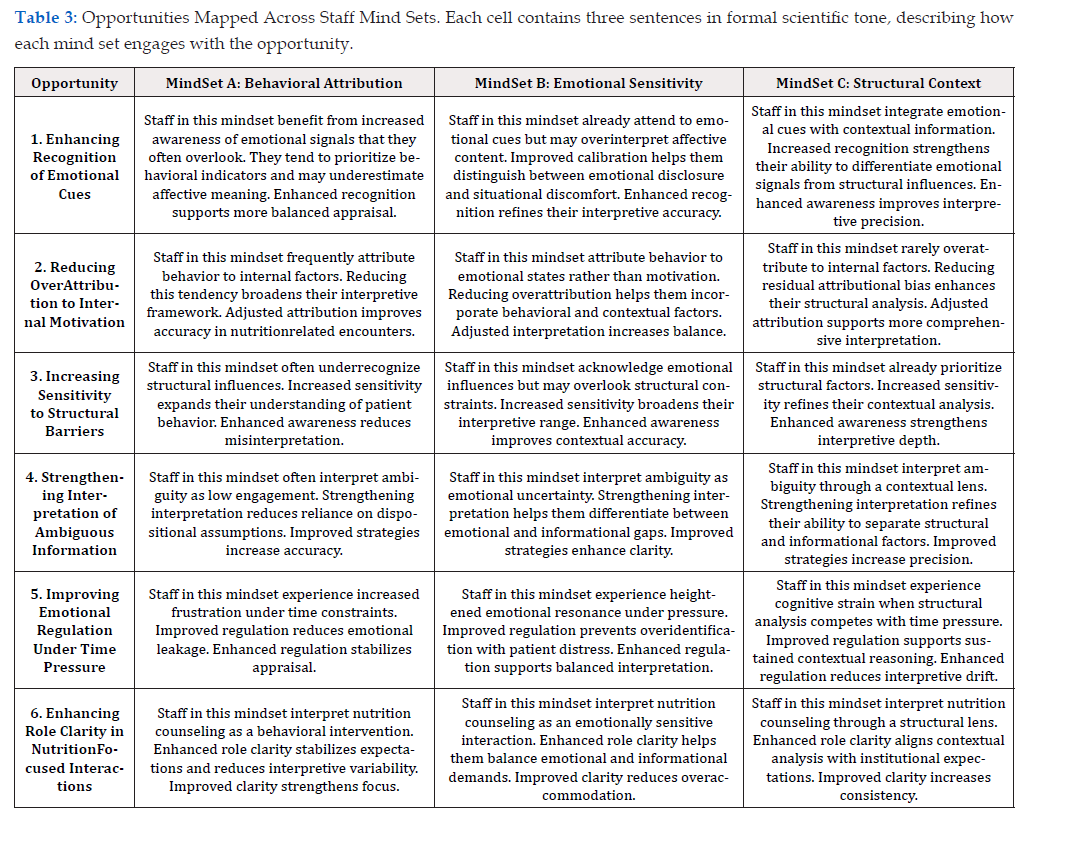
Table 3:Opportunities Mapped Across Staff Mind Sets. Each cell contains three sentences in formal scientific tone, describing how each mind set engages with the opportunity.
Discussion
The findings presented above can be interpreted through established behavioral and cognitive frameworks.
The contribution of mind-set thinking offered by Mind Genomics
Staff interpretation of nutrition related encounters emerges from the interaction of appraisal processes, schema activation, attributional tendencies, and emotional labor. These processes operate under institutional time pressure, which increases reliance on interpretive shortcuts and reduces the availability of relational cues. Mind Set A may emphasize internal behavioral attributions, Mind Set B may emphasize emotional meaning, and Mind Set C may emphasize structural context. These differences create systematic variation in how staff interpret identical patient cues involving eating behavior, weight concerns, or perceived risk for diabetes or obesity.
The Mind Genomics framework reveals that staff mind sets remain stable across variations in patient behavior and environmental conditions. This stability indicates that interpretive patterns reflect underlying cognitive structures rather than situational fluctuations. Mind Set A consistently attributes behavior to internal motivation, Mind Set B consistently interprets behavior through emotional signals, and Mind Set C consistently contextualizes behavior within structural constraints. These patterns shape the emotional architecture of nutrition focused encounters. Nutrition related discussions frequently involve ambiguous or emotionally charged cues. Staff must interpret hesitation, minimization, inconsistency, or expressions of overwhelm while managing institutional expectations and time constraints. Research on cognitive appraisal shows that individuals evaluate such cues through rapid judgments about control and relevance, and these judgments influence emotional interpretation [1]. The Mind Genomics analysis demonstrates that these judgments diverge sharply across staff mind sets.
Emotional labor plays a central role in shaping staff interpretation. Staff must regulate emotional expression while addressing sensitive topics such as obesity or diabetes risk, and this regulation consumes cognitive resources that would otherwise support nuanced appraisal [6]. Mind Set B experiences the strongest emotional resonance, which increases interpretive sensitivity but also increases vulnerability to emotional overload. Mind Set A experiences the greatest frustration under pressure, which increases reliance on dispositional attributions. Structural awareness influences interpretive accuracy in nutrition related encounters. Mind Set C consistently incorporates environmental constraints such as food access, socioeconomic pressure, and time scarcity into its interpretations. Research on structural determinants of dietary behavior shows that these constraints strongly influence eating patterns [11]. Staff who recognize these influences demonstrate greater contextual accuracy when interpreting patient disclosures.
Ambiguity in dietary reporting presents a significant interpretive challenge. Staff must differentiate between informational gaps, emotional uncertainty, and structural barriers. Cognitive processing research shows that individuals rely on heuristics when evaluating incomplete information, especially under time pressure [12]. Mind Set A interprets ambiguity as low engagement, Mind Set B interprets it as emotional uncertainty, and Mind Set C interprets it as structural complexity. Role perception further shapes staff interpretation. Staff differ in how they conceptualize the institutional importance of nutrition counseling, and these differences influence engagement and emotional investment. Role identity research shows that individuals interpret tasks through the lens of perceived professional purpose [8]. Mind Set A views nutrition counseling as a behavioral intervention, Mind Set B views it as an emotionally sensitive interaction, and Mind Set C views it as a structurally informed dialogue.
Opportunity analysis identifies domains in which staff interpretation can shift toward greater accuracy and stability. Enhancing recognition of emotional cues improves affective appraisal, reducing misinterpretation of patient vulnerability. Increasing sensitivity to structural barriers improves contextual accuracy, reducing over attribution to internal motivation. Strengthening interpretation of ambiguous information reduces reliance on heuristics. The six opportunities identified in the analysis provide a framework for improving staff interpretation without altering clinical content. These opportunities target appraisal processes, attributional tendencies, emotional regulation, and role clarity. Each opportunity aligns with evidence based models of cognitive and affective processing. Together, they support more consistent meaning making across staff mind sets. The Mind Genomics framework demonstrates that staff interpretation of nutrition related encounters reflects stable cognitive structures rather than situational variability. These structures influence how staff perceive patient behavior, prioritize nutritional concerns, and construct emotional meaning during discussions involving obesity or diabetes risk. The analysis provides a foundation for future research on staff cognition in high pressure clinical environments. The findings highlight the importance of interpretive accuracy in shaping the psychological quality of nutrition related interactions.
6.2. Implications for Practice: Eight Recommendations
1) Recommendation 1: Staff should increase attention to
emotional cues during nutrition related encounters to improve
interpretive accuracy. Enhanced recognition reduces reliance
on schema based assumptions. This adjustment strengthens
appraisal processes under time pressure.
2) Recommendation 2: Staff should reduce over attribution
to internal motivation when interpreting patient hesitation
or inconsistency. Adjusted attributional tendencies improve
fairness and accuracy. This shift aligns interpretation with
evidence based models of behavioral constraint.
3) Recommendation 3: Staff should incorporate structural
factors such as food access and socioeconomic pressure into
their interpretations of eating behavior. Increased sensitivity
improves contextual accuracy. This adjustment reduces
misclassification of structural barriers as motivational deficits.
4) Recommendation 4: Staff should strengthen strategies
for interpreting ambiguous nutritional information. Improved
differentiation between informational gaps and emotional
uncertainty increases precision. This refinement reduces
reliance on heuristics.
5) Recommendation 5: Staff should enhance emotional
regulation during nutrition focused encounters conducted
under institutional time pressure. Improved regulation
stabilizes appraisal processes. This adjustment reduces
emotional leakage and interpretive drift.
6) Recommendation 6: Staff should clarify their professional
role in nutrition related interactions to reduce interpretive
variability. Enhanced role clarity aligns expectations with
institutional priorities. This adjustment supports more
consistent meaning making.
7) Recommendation 7: Staff should calibrate their
interpretation of patient affect to avoid over or under estimating
emotional content. Improved calibration increases accuracy in
discussions involving obesity or diabetes risk. This adjustment
strengthens the emotional quality of the encounter.
8) Recommendation 8: Staff should integrate behavioral,
emotional, and structural cues into a unified interpretive
framework. Integrated interpretation reduces reliance on
single dimension appraisal. This adjustment enhances overall
interpretive stability.
Conclusion
This paper examines the psychological experience of clinic staff who engage in nutrition related interactions with patients in high pressure environments. The analysis focuses on how staff interpret patient eating behavior, weight related disclosures, and discussions involving diabetes or obesity risk. The paper uses Mind Genomics to segment staff interpretive patterns into distinct mind sets, enabling a structured examination of how staff construct meaning from patient cues, institutional constraints, and their own emotional and cognitive frameworks. The analysis remains strictly within behavioral and cognitive science and does not address medical treatment, dietary prescriptions, or clinical recommendations. The clinic is treated as a high demand social environment in which staff evaluate patient communication, time pressure, and institutional expectations to determine relevance, emotional significance, and appropriate behavioral responses. The objective is to provide a rigorous account of how staff mind sets shape the emotional and interpretive landscape of nutrition focused encounters.
Artificial intelligence contributed to the creation of this paper by generating structured simulations that modeled how clinic staff interpret nutrition related encounters through distinct Mind Genomics mind sets. AI organized behavioral, emotional, and structural elements into systematically varied combinations, enabling the identification of stable interpretive patterns across staff responses. This capability allowed the analysis to reveal how attributional tendencies, emotional sensitivity, and contextual awareness shape staff meaning making during discussions involving obesity or diabetes risk. AI also synthesized theoretical frameworks from appraisal theory, schema activation, attribution research, and emotional labor literature, integrating them into a coherent analytic structure. These integrations supported the development of diagnostic tables that mapped interpretive differences across mind sets with precision. AI further enhanced analytic clarity by identifying opportunities for improving staff interpretation without altering clinical content. This contribution demonstrates how AI can function as a simulation engine that models cognitive diversity in high pressure clinical environments. As a result, AI serves as both an analytic partner and a methodological accelerator in the study of staff cognition.
Competing Interests
The authors declare that they have no financial or non-financial competing interests.
Acknowledgements and Funding
This research did not receive any specific grant from funding agencies in the public, commercial, or not-for-profit sectors.
References
- Xu J, Lian W, Li L, Huang Z (2017) Generation of induced cardiac progenitor cells via somatic reprogramming. Oncotarget 8(17): 29442-29457.
- Shouman S, Zaher A, Abdelhameed A, Elshaboury S, Sakr S, et al. (2021) Cardiac Progenitor Cells. Adv Exp Med Biol 1312: 51-73.
- Fathi E, Valipour B, Vietor I, Farahzadi R (2020) An overview of the myocardial regeneration potential of cardiac c-Kit+ progenitor cells via PI3K and MAPK signaling pathways. Future Cardiol 16(3): 199-209.
- Jia G, Preussner J, Chen X, Guenther S, Yuan X, et al. (2018) Single cell RNA-seq and ATAC-seq analysis of cardiac progenitor cell transition states and lineage settlement. Nat Commun 9(1): 4877.
- Farah EN, Hu RK, Kern C, Zhang Q, Lu TY, et al. (2024) Spatially organized cellular communities form the developing human heart. Nature. 627(8005): 854-864.
- He J, Yang Y, Jiang R, Zheng Y, Yang X, et al. (2025) Integration of single-cell and spatial transcriptomics by SEU-TCA reveals the spatial origin of early cardiac progenitors. Genome Biol 26(1): 158.
- Lee JW, Lee SH, Youn YJ, Ahn MS, Kim JY, et al. (2014) A randomized, open-label, multicenter trial for the safety and efficacy of adult mesenchymal stem cells after acute myocardial infarction. J Korean Med Sci 29(1): 23-31.
- Makkar RR, Kereiakes DJ, Aguirre F, Kowalchuk G, Chakravarty T, et al. (2020) Intracoronary ALLogeneic heart STem cells to Achieve myocardial Regeneration (ALLSTAR): a randomized, placebo-controlled, double-blinded trial. Eur Heart J 41(36): 3451-3458.
- Bolli R, Mitrani RD, Hare JM, Pepine CJ, Perin EC, et al. (2021) A Phase II study of autologous mesenchymal stromal cells and c-kit positive cardiac cells, alone or in combination, in patients with ischaemic heart failure: the CCTRN CONCERT-HF trial. Eur J Heart Fail 23(4): 661-674.
- Song YS, Joo HW, Park IH, Shen GY, Lee Y, et al. (2017) Bone marrow mesenchymal stem cell-derived vascular endothelial growth factor attenuates cardiac apoptosis via regulation of cardiac miRNA-23a and miRNA-92a in a rat model of myocardial infarction. PLoS One 12(6): e0179972.
- Fernández Ruiz I (2018) Cardiac regeneration: A hydrogel-miRNA complex stimulates heart recovery. Nat Rev Cardiol 15(2): 68-69.
- Liu X, Meng H, Jiang C, Yang S, Cui F, et al. (2016) Differential microRNA Expression and Regulation in the Rat Model of Post-Infarction Heart Failure. PLoS One 11(8): e0160920.
- Lindner K, Eichelmann AK, Matuszcak C, Hussey DJ, Haier J, et al. (2018) Complex Epigenetic Regulation of Chemotherapy Resistance and Biohlogy in Esophageal Squamous Cell Carcinoma via MicroRNAs. Int J Mol Sci 19(2): 499.
- Wang K, Ding R, Ha Y, Jia Y, Liao X, et al. (2018) Hypoxia-stressed cardiomyocytes promote early cardiac differentiation of cardiac stem cells through HIF-1α/Jagged1/Notch1 signaling. Acta Pharm Sin B 8(5): 795-804.
- Liu X, Wang X, Chai B, Wu Z, Gu Z, et al. (2022) miR-199a-3p/5p regulate tumorgenesis via targeting Rheb in non-small cell lung cancer. Int J Biol Sci 18(10): 4187-4202.
- Sun Y, Zhao JT, Chi BJ, Wang KF (2020) Long noncoding RNA SNHG12 promotes vascular smooth muscle cell proliferation and migration via regulating miR-199a-5p/HIF-1α. Cell Biol Int 44(8):1714-1726.
- Guo C, Zhang M, Su W, Xu M, Zhao S (2022) miR-199a-5p Relieves Obstructive Sleep Apnea Syndrome-Related Hypertension by Targeting HIF-1α. J Immunol Res 2022:7236647.
- Chauhan SKS, Feldbrügge L, Schmelzle M, Wedemeyer H, Heinrich B (2025) Protocol for optimized mononuclear cell isolation from liver and tumor tissue using mechanical or enzymatic digestion. STAR Protoc 7(1): 104289.
- Yadav SK, Mishra PK (2019) Isolation, Characterization, and Differentiation of Cardiac Stem Cells from the Adult Mouse Heart. J Vis Exp (143):10.3791/58448.
- Beltrami AP, Barlucchi L, Torella D, Baker M, Limana F, et al. (2003) Adult cardiac stem cells are multipotent and support myocardial regeneration. Cell 114(6): 763-776.
- Kozomara A, Birgaoanu M, Griffiths Jones S (2019) miRBase: from microRNA sequences to function. Nucleic Acids Res 47(D1): D155-D62.
- Smith CL, Baek ST, Sung CY, Tallquist MD (2011) Epicardial-derived cell epithelial-to-mesenchymal transition and fate specification require PDGF receptor signaling. Circ Res 108(12): e15-26.
- Chomczynski P, Sacchi N (2006) The single-step method of RNA isolation by acid guanidinium thiocyanate-phenol-chloroform extraction: twenty-something years on. Nat Protoc 1(2): 581-585.
- Wu H, Jiang X, Fan H, Li J, Li Y, et al. (2025) Inhibition of circALPK2 enhances proliferation and therapeutic potential of human pluripotent stem cell-derived cardiomyocytes in myocardial infarction. Stem Cell Res Ther 16(1): 107.
- Wang XZ, Chen L, Sun H, Li XQ, Wang H, et al. (2023) MiR-199a-3p promotes repair of myocardial infarction by targeting NACC2. Int J Clin Exp Pathol 16(3): 57-66.
- Liang CC, Park AY, Guan JL (2007) In vitro scratch assay: a convenient and inexpensive method for analysis of cell migration in vitro. Nat Protoc 2(2): 329-333.
- Yang L, Zhu S, Li Y, Zhuang J, Chen J, et al. (2020) Overexpression of Pygo2 Increases Differentiation of Human Umbilical Cord Mesenchymal Stem Cells into Cardiomyocyte-like Cells. Curr Mol Med 20(4): 318-324.
- Deng G, Yang Y, Qing O, Linhui J, Haotao S, et al. (2025) Chrysin Attenuates Myocardial Cell Apoptosis in Mice. Cardiovasc Toxicol 25(11): 1791-1806.
- Chong JJ, Reinecke H, Iwata M, Torok Storb B, Stempien Otero A, et al. (2013) Progenitor cells identified by PDGFR-alpha expression in the developing and diseased human heart. Stem Cells Dev 22(13): 1932-1943.
- Zhang GY, Gao Y, Guo XY, Wang GH, Guo CX (2022) MiR-199a-5p promotes ferroptosis-induced cardiomyocyte death responding to oxygen-glucose deprivation/reperfusion injury via inhibiting Akt/eNOS signaling pathway. Kaohsiung J Med Sci 38(11): 1093-1102.
- Zuo Y, Wang Y, Hu H, Cui W (2016) Atorvastatin Protects Myocardium Against Ischemia-Reperfusion Injury Through Inhibiting miR-199a-5p. Cell Physiol Biochem 39(3): 1021-1030.
- Zhang H, Li S, Zhou Q, Sun Q, Shen S, et al. (2016) Qiliqiangxin Attenuates Phenylephrine-Induced Cardiac Hypertrophy through Downregulation of MiR-199a-5p. Cell Physiol Biochem 38(5): 1743-1751.
- Leri A, Rota M, Hosoda T, Goichberg P, Anversa P (2014) Cardiac stem cell niches. Stem Cell Res 13(3 Pt B):631-646.
- Hnatiuk AP, Ong SG, Olea FD, Locatelli P, Riegler J, et al. (2016) Allogeneic Mesenchymal Stromal Cells Overexpressing Mutant Human Hypoxia-Inducible Factor 1-α (HIF1-α) in an Ovine Model of Acute Myocardial Infarction. J Am Heart Assoc 5(7): e003714.
- Cheng Y, Feng Y, Xia Z, Li X, Rong J (2017) ω-Alkynyl arachidonic acid promotes anti-inflammatory macrophage M2 polarization against acute myocardial infarction via regulating the cross-talk between PKM2, HIF-1α and iNOS. Biochim Biophys Acta Mol Cell Biol Lipids 1862(12): 1595-1605.
- Yang X, Zheng Y, Tan J, Tian R, Shen P, et al. (2021) MiR-199a-5p-HIF-1α-STAT3 Positive Feedback Loop Contributes to the Progression of Non-Small Cell Lung Cancer. Front Cell Dev Biol 8: 620615.
- Li S, Zhang C, Liu Y, Meng C, Xie Y, et al. (2025) miR-199a-5p inhibited HIF-1α to suppress the proliferation, migration, and differentiation of cardiac stem cells. Eur J Histochem 69(4): 4239.
- Isanejad A, Alizadeh AM, Amani Shalamzari S, Khodayari H, Khodayari S, et al. (2016) MicroRNA-206, let-7a and microRNA-21 pathways involved in the anti-angiogenesis effects of the interval exercise training and hormone therapy in breast cancer. Life Sci 151: 30-40.




 We use cookies to ensure you get the best experience on our website.