
Research Article 
 Creative Commons, CC-BY
Determination of Mastoid Ventilation Types in Pediatric Patients Undergoing Cochlear Implant Surgery
*Corresponding author:Asiye Merve Erdoğan, Department of Otorhinolaryngology of Adana Acıbadem Hospital
Received:March 17, 2026; Published:March 24, 2026
DOI: 10.34297/AJBSR.2026.30.003951
Abstract
Objective: Evaluation of mastoid pneumatization patterns in pediatric patients with bilateral severe sensorineural hearing loss after cochlear implantation is important for understanding surgical outcomes. This study aimed to investigate whether there is a difference in mastoid pneumatization types between children who underwent cochlear implant surgery due to bilateral severe sensorineural hearing loss and a healthy control group.
Materials and Methods: This study was conducted at the Department of Otorhinolaryngology of Adana City Training and Research Hospital between January 2023 and January 2025. Temporal bone computed tomography (CT) images of 30 pediatric patients who underwent cochlear implantation for bilateral severe sensorineural hearing loss were retrospectively evaluated for mastoid pneumatization type. These findings were statistically compared with temporal bone CT images of 30 healthy children in the control group.
Results: The study cohort consisted of 30 pediatric patients in the cochlear implant group (18 males [60%] and 12 females [40%]) and 30 age-matched controls (14 males [46.7%] and 16 females [53.3%]). No statistically significant difference was found between the groups regarding mastoid pneumatization types (p = 0.719).
Conclusion: Mastoid pneumatization patterns in pediatric patients with bilateral severe sensorineural hearing loss were not significantly different from those of age-matched healthy children.
Keywords: Cochlear implant, Mastoid pneumatization, Sensorineural hearing loss
Introduction
Cochlear Implantation (CI) is widely accepted as the gold standard treatment for auditory rehabilitation in pediatric patients with severe-to-profound sensorineural hearing loss who derive limited or no benefit from conventional hearing aids. Despite its well-established efficacy, cochlear implantation in children presents unique surgical challenges, In the pediatric population, incomplete mastoid bone development, relatively increased bone marrow content, and developmental variations of the mastoid antrum may complicate surgical exposure and increase technical difficulty [1]. The mastoid pneumatization pattern represents a critical anatomical variable that may directly influence the surgical approach, operative time, and the risk of intraoperative and postoperative complications. Comprehensive preoperative radiological assessment-particularly temporal bone Computed Tomography (CT)-plays a pivotal role in evaluating mastoid pneumatization and guiding surgical strategy [2,3] CT-based classifications generally categorize mastoid pneumatization as well-pneumatized, sclerotic, or diploic [1,3] In addition, detailed morphometric analysis of temporal bone anatomy may provide valuable information regarding surgical corridors and approach selection, thereby enhancing procedural safety [4].
Although mastoid pneumatization has been extensively investigated in otologic pathology, limited data exist regarding its distribution and clinical relevance in pediatric cochlear implant candidates. A clearer understanding of mastoid aeration patterns in this specific population may improve preoperative risk stratification and optimize individualized surgical planning [4]. The present study aims to systematically characterize mastoid pneumatization types in pediatric CI patients, examine their association with age and relevant clinical variables, and evaluate their potential implications for surgical planning. By clarifying these anatomical considerations, we aim to contribute to the refinement of preoperative assessment protocols and to support the development of strategies that may reduce intraoperative complications.
Materials and Methods
Study Design and Population
This retrospective comparative study was conducted at the Department of Otorhinolaryngology of Adana City Training and Research Hospital. Between January 2023 and January 2025, 30 pediatric patients who underwent cochlear implantation for bilateral severe sensorineural hearing loss were included in the study group. Temporal bone Computed Tomography (CT) images were reviewed to determine mastoid pneumatization type. The findings were statistically compared with temporal bone CT images of 30 age-matched healthy pediatric subjects who constituted the control group. Mastoid pneumatization patterns were classified according to established radiological criteria. The study protocol was approved by the Institutional Scientific Research Ethics Committee of Adana City Training and Research Hospital. (Approval No: 632, dated July 10, 2025). The study was conducted in accordance with the principles of the Declaration of Helsinki.
Statistical Analysis
All statistical analyses were performed using JASP (version 0.19.3). Categorical variables were summarized as frequencies and percentages. Continuous variables were expressed as mean ± standard deviation, as appropriate. Comparisons between two independent groups were performed using the independent samples t-test for continuous variables. Associations between categorical variables were analyzed using the chi-square test. A p-value <0.05 was considered statistically significant.
Results
The study cohort consisted of 30 pediatric patients in the cochlear implant group (18 males [60%] and 12 females [40%]) and 30 age-matched controls (14 males [46.7%] and 16 females [53.3%]) (Figure 1).
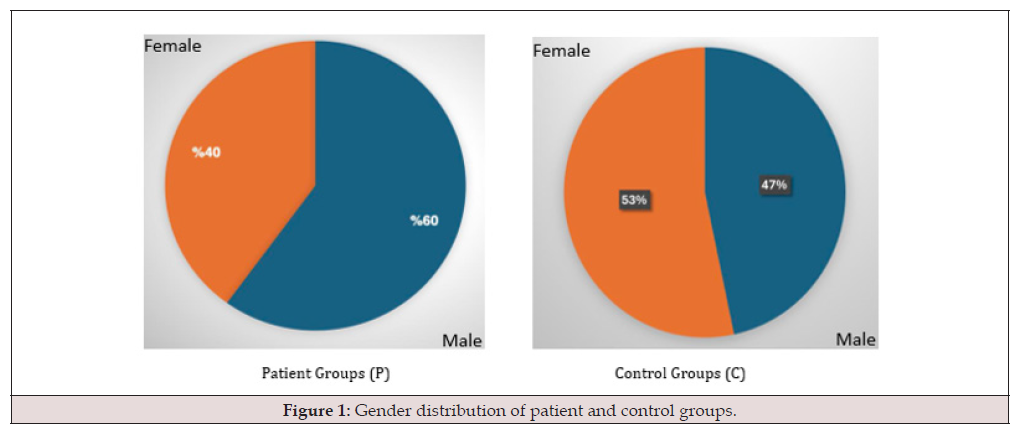
Figure 1:Gender distribution of patient and control groups.
Based on temporal bone computed tomography (CT) findings, mastoid pneumatization patterns in the patient group were classified as follows: 22 cases (73.3%) well-pneumatized (Type 1), 6 cases (20.0%) diploic (Type 2), and 2 cases (6.7%) sclerotic (Type 3). In the control group, 22 cases (73.3%) were well-pneumatized (Type 1), 8 cases (26.7%) were diploic (Type 2), and no cases (0%) were classified as sclerotic (Type 3) (Figure 2). There was no statistically significant difference between the groups in terms of mastoid pneumatization types (p = 0.217).
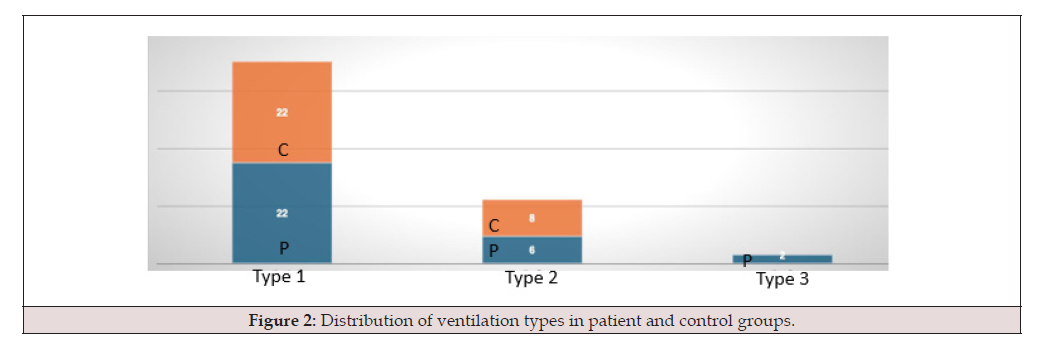
Figure 2:Distribution of ventilation types in patient and control groups.
Conclusion
Mastoid pneumatization patterns in pediatric patients with bilateral severe sensorineural hearing loss were not significantly different from those observed in age-matched healthy controls. Nevertheless, careful preoperative radiological evaluation remains essential in pediatric patients undergoing mastoidectomy or cochlear implantation to optimize surgical planning and minimize the risk of complications.
Discussion
Evaluation of mastoid pneumatization patterns in pediatric patients with bilateral severe-to-profound sensorineural hearing loss is clinically relevant for understanding surgical exposure, technical difficulty, and potential complications during cochlear implantation. In the present study, mastoid pneumatization types were analyzed in children undergoing cochlear implantation and compared with those of age-matched healthy controls. The pneumatized type was the predominant pattern in both groups. In the patient cohort, pneumatized, diploic, and sclerotic types were observed in 73.3%, 20.0%, and 6.7% of cases, respectively, whereas in the control group the corresponding rates were 73.3%, 26.7%, and 0%. No statistically significant intergroup difference was detected (p=0.217).
These findings are largely consistent with previously published data. Blake Papsin and A. L. James (2020) reported mastoid pneumatization rates of 78% pneumatized, 12% diploic, and 6% sclerotic, demonstrating a similar predominance of the pneumatized type [5]. The close agreement between their distribution and that observed in our patient group supports the external validity of our findings. However, the proportion of diploic mastoids in our cohort (20%) was higher than that reported in their series, which may reflect demographic variability, age distribution differences, or sample size limitations.
Mastoid development is known to continue throughout childhood, and pneumatization patterns may vary according to age. Matsumoto, et al., (2023) demonstrated significant expansion of mastoid air cells during infancy, emphasizing the dynamic nature of temporal bone development [6]. Similarly, Sayles, et al., (2022) reported that temporal bone pneumatization increases with age and exhibits substantial interindividual variability [7]. In light of these data, the difference in mean age between our patient and control groups (6.93±3.76 vs. 8.4±5.22 years) may have influenced the observed distribution of mastoid pneumatization types. Furthermore, Eser, et al., (2023) reported that mastoid volume in children with cochlear implants continues to increase with age and may demonstrate ongoing growth even in the postoperative period [6]. This observation suggests that mastoid pneumatization patterns are not only age-dependent but may also evolve during the post-implant developmental process. In addition, Jace Wolfe Waltzman and J. Thomas Roland Jr. (2021) emphasized the auditory developmental advantages of early cochlear implantation while noting that surgical complexity may be closely associated with mastoid pneumatization patterns [8]. From this perspective, accurate radiological assessment of mastoid aeration is essential not only for surgical planning but also for optimizing long-term auditory rehabilitation outcomes. Overall, our findings are broadly consistent with the existing literature regarding the predominance of the pneumatized mastoid type in pediatric populations. The relatively higher rate of diploic mastoids observed in our series may be attributable to age-related factors, individual anatomical variability, or the modest sample size. Larger, prospective, multicenter studies are warranted to further clarify the relationship between mastoid development, surgical difficulty in cochlear implantation, and long-term auditory outcomes.
Acknowledgements
None.
Conflict of Interest
None.
References
- Akash N Naik, Varun V Varadarajan, Prashant S Malhotra (2021) Early pediatric Cochlear implantation: An update. Laryngoscope Investig Otolaryngol 6(3): 512-521.
- Stany Jerosha, Sakthi Ganesh Subramonian, Arunkumar Mohanakrishnan, Yuvaraj Muralidharan, Paarthipan Natarajan, et al. (2024) Preoperative Assessment Using CT and MRI Scans of the Temporal Bone to Determine the Degree of Difficulty in Cochlear Implant Surgery. Cureus 16(7): e65196.
- Alam Eldeen MH, Rashad UM, Ali AHA (2017) Radiological requirements for surgical planning in cochlear implant candidates. Indian J Radiol Imaging 27(3): 274-281.
- E Szczepanek, P Ostrowski, D Rams, M Bonczar, J Batko, et al. (2023) Air spaces of the temporal bone: a morphometric analysis with clinical implications. Folia Morphologica 82(4): 909-920.
- Eser O, Gökdoğan O, Tarkan Ö (2023) The growth of the mastoid volume in children with a cochlear implant. Eur Arch Otorhinolaryngol 280(5): 2183-2190.
- Matsumoto N, Nishimura S, Enomoto T (2023) The Age-Related Growth of Mastoid Air Cells in Infancy. Laryngoscope Investig Otolaryngol 8(2): 354-359.
- Sayles M, Jeong S, Morris DP (2022) Temporal bone pneumatization: A scoping review on the growth and size of mastoid air cell system with age. Clin Anat 35(8): 1067-1080.
- Waltzman SB, Roland JT Jr (2021) Early pediatric cochlear implantation: An update. Cochlear Implants Int 22(3): 119-127.




 We use cookies to ensure you get the best experience on our website.