
Research Article 
 Creative Commons, CC-BY
A Practical Guide for How to Use the Parekh-Berger Hierarchical Interpretive Phenomenological Analysis Model with Application to Inclusive Research
*Corresponding author:Stephen Berger, The Chicago School, 2400 East Katella Avenue, Anaheim, CA 92806, United States.
Received:March 09, 2026; Published:March 16, 2026
DOI: 10.34297/AJBSR.2026.30.003940
Abstract
One approach to gaining insight into research participant’s lived experience is through qualitative approaches. One such methodology is through interviews. A specific methodology for analyzing such interviews has been termed Interpretive Phenomenological Analysis (IPA). In this Guide, we present the Parekh-Berger Hierarchical Interpretive Phenomenological Analysis methodology (HIPA). This model is especially appropriate for use with individuals who marginalized experiences result in not being comfortable with and having trust of the traditional research community. Through the use of individualized interviews, it is possible to be culturally sensitive and to earn the trust of individuals. [1] This Guide explains the conceptualization of the HIPA method. It goes on to explain how semi-structured interviews are construct and administered. The Guide presents two methods for determining interrater reliability. The Guide then details how Specific Themes are derived from the interviews. Then, the Guide explains how the Specific Themes are then clustered into Higher Order Themes. In addition, the Guide details the special status that Specific Themes that are expressed by every participant have. These Specific Themes are called Universal Specific Themes. The Guide then explains the special role that these Universal Specific Themes play. The Guide also details how it is possible, sometimes, to cluster the Higher Order Themes into Superordinate Higher Order Themes. Finally, the Guide details how to present these Results and constructing a Discussion section presentation. Specific examples are provided within the Guide.
Keywords: Qualitative Design, Interviews, Interpretive Phenomenological Analysis
Introduction
What is Interpretive Phenomenological Analysis?
Interpretive Phenomenological Analysis is a qualitative research method that emphasizes the lived experience of participants. [2,3] Through semi-structured interviews, participants are enabled to explore the personal meanings of their life experiences. This process is very appealing to marginalized populations who often find that their personal experiences are lost when embedded in normative, quantitative studies. By interacting with participants in a personalized interview, it facilitates participants in challenging assumptions and stereotypes in their own voice. Inclusivity requires more than recruiting diverse samples. Inclusivity demands careful listening, cultural sensitivity and analytic practices that minimize researcher bias. The Parekh-Berger approach involves discerning themes that emerge from the expressed phenomenological experience of the participants and interpreting/extrapolating from those themes, Higher Order Themes that encapsulate and give broader meaning to the individual Specific Theme s that emerge from the individual interviews. The Parekh-Berger Hierarchical Interpretive Phenomenological Analysis Model (HIPA) allows for the possibility that Higher Order Themes can be further grouped into Superordinate Higher Order Themes. [1,4] The Parekh-Berger HIPA Model provides for assessment of reliability and a specific protocol for constructing the semi-structure interviews that are based on a review of the Literature. It has been especially effective for doctoral student research where issues of sample size are not problematic for this model, which also facilitates obtaining participants who often are not included in meaningful ways is quantitative studies.
The Basic Steps in the Parekh-Berger HIPA Model
Of course, the first step is an extensive review of the literature. It is essential, as with all research, that a study have a solid foundation is what has come before, in what has been found, and what are the questions not yet answered, what are the controversies that have not been resolved. However, the special niche that HIPA addresses is giving individual voice to the actual experience of people and not just averages summed across an entire sample. In order to accomplish that goal, a semi-structured interview has to be constructed derived from that review of the literature.
Thus, the second step in the Parekh-Berger Model is the creation of the interview. The pre-determined questions that are derived from the Literature Review are to be as open-ended as possible. It is essential to have as few constraints as possible on the participant’s voice. It is that openness on the part of the researcher to the individual’s own words that make it so appealing to individuals who have been marginalized and whose experience is too often not included in the research design. Accordingly, there are not formal (null) hypotheses. The goal is not to test what the researcher believes is the case, but rather to learn from the participants what are the (specific) themes that are what the researcher needs to learn.
When interviews are conducted, it is most desirable that they occur in places and conditions that are most comfortable for the participants. This approach communicates to people whose perspective and situation is often not respected that the researcher (interviewer) values the comfort of the participant. This attitude of respect helps facilitate the trust of the participants, thus further facilitating their openness to genuinely sharing their lived experience.
Planning, Conducting and Interrater Reliability in the Parekh-Berger (HIPA) Method
Determining Specific Themes and Interrater Reliability
After all interviews are completed, a primary member of the research team then reviews each interview transcript, one at a time. When used in doctoral dissertations, that person would be the doctoral student it is their study. In traditional IPA approaches, the transcripts are read multiple times with the researcher noting down what appear to be Specific Themes. [5,6] Again, this is done one interview at a time. When all interviews are completed, and a proposed list of Specific Themes are created, an interrater reliability can be computed.
It is at this stage that the Parekh-Berger Model proposes that a second person is also to review the transcripts to obtain a second list of proposed Specific Themes. It is highly recommended that this second individual be someone who is not part of the research team. In regard to a doctoral dissertation, that means that the Dissertation Chair and any Dissertation Committee members should not be involved in the creation of this second proposed list of Specific Themes. The purpose here is to remove a possible factor of bias. The goal is to produce a second proposed list that is not influenced by any knowledge of the aims, goals and unspoken hypotheses as to what are expected to emerge as Specific Themes. It is recommended that this second reviewer have research competence at least equivalent to that of the primary researcher, and in the case of a doctoral dissertation, that could be another doctoral student who is NOT involved in the study in any way. It is common that 10 individuals are interviewed with the HIPA methodology. It is the experience of the authors that with 1 individual, semi-structured interviews that 35-45 Specific Themes is a likely range to emerge. Obviously, in any individual study more or less Specific Themes could emerge, but we want to provide a guide from our experience. It is essential that there be a method for determining interrater reliability. [7] In regard to the Parekh-Berger HIPA Model, there are two basic ways this interrater reliability can be determined. We reference one method as: Blind Review and the other method as Independent Check Review.
Interrater Reliability Method One: In Blind Review, second reviewer is to go through each transcript and develop their own list of Specific Themes as described above. Thus, it is important to examine if the second reviewer will find the same Specific Themes in the transcripts. The next step is for the two reviewers to compare their lists. In doing so, they may find that there are two Specific Themes that are the same, but that they have given different names to them. If so, they agree on a name. For any proposed Specific Themes about which they still disagree, then the number of those compared to the number upon which they agree can then permit computation of the level or degree of interrater reliability. Of course, the disagreed upon proposed Specific Themes are then dropped from the final list. The level of agreement between reviewer 1 and reviewer 2 is calculated using an interrater reliability analysis. Unfortunately, this method can be very time intensive and requires a significant commitment on the part of the second reviewer, which can be especially problematic with doctoral dissertations.
Interrater Reliability Method Two: This method is not as cumbersome as the Blind Review Method. In this method, the second reviewer receives the list of proposed Specific Themes from the first reader. The second reviewer denotes the frequencies or number of times they find a proposed Specific Theme across all of the transcripts and can compare that to the frequency count of those provided by the first reviewer AFTER they compute their frequency count. Thus, the second reviewer is not privy to that information and must evaluate the frequencies blindly/ independently. Consequently, there is still a blind component to this variation as to how to determine the interrater reliability. This method is less difficult to implement and still provides a solid assessment of interrater reliability. The current authors believe that these two methods are essential to bolstering the consistency of IPA designs. It is readily apparent that researcher’s individual training, experiences, and possible biases may impact the review of transcripts. The current authors believe that reliability checks are a method by which to enhance the empirical robustness of IPA designs.
Interpreting and Phenomenological Analysis: Creating Higher Order Themes
Creation of Higher Order Themes Follows a Layered Approach
The first layer was the creation of the final list of Specific Themes. They are given a name and they are numbered according to the order in which they emerged in the individual interviews. Thus, their number is part of their name. The name assigned to the Specific Themes will involve some interpretation of what the participant’s word choice was and the meaning to be given to that Specific Theme through the words used as the name of that Specific Theme. Clearly, the research team will have to reach agreement on the name to be used. Preferably the name is one or two words whenever possible. In regard to dissertations, the Chair and possibly Committee members will have a voice in determining such names.
The task in the second layer, after the Specific Themes have been delineated and named, is to group them together into clusters. The clusters are thought of as Higher Order Themes. An analogy can be made to Factor Analysis that will elucidate what is the goal in this process of creating Higher Order Themes out of the Specific Themes. In a Factor Analysis, participants receive scores on a number of measures. Then, through correlational techniques, various measures) are found to be correlated with each other. Thus, these correlated measures are grouped together under the label: Factor. It is our perspective that IPA can be thought of as a nonquantitative factor analysis. The Specific Themes can be thought of as non-quantitative measures that in normative, large sample studies, could be the basis for choosing scales to be administered and quantitatively scored. Through logical and conceptual analysis (HIPA), the researcher will group Specific Themes together creating a Higher Order Theme. The researcher (research team, dissertation committee) gives a name to that Higher Order Theme that captures/expresses a thread that appears to connect those Specific Themes. An example of a similar concept can be found with the Wechsler Intelligence Scales. There are individual measures (e.g., Coding and Symbol Search). These are found to correlate with each other and are grouped together under a Higher Order concept called: Processing Speed. The third layer in the Parekh-Berger HIPA Model is to determine if Higher Order Themes can be arranged in a sequence that “tells the story” Of what emerges across all of the interviews. Thus, if such an arrangement, numbered ordering of the Higher Order Themes, can be created, the names of those Higher Order Themes, when read in that sequencing, will be a short-hand expression of the story that the participants have shared about their phenomenological experience of the life events, of their lives. An example of this is provided at the end of the next section of this report.
A fourth layer to the Parekh-Berger HIPA model is nothing Specific Themes that were expressed by every one of the participants. We have termed these: Universal Specific Themes. This is another variation of the original IPA model. [2,3,6] It turns out in our experience that it is not a coincidence when every participant independently expresses the same Specific. It is important to remember that the interviewer does not probe for such Themes, and does not modify the semi-structured interview based on what prior interviewees have expressed. In other words, each interview is as independent as can be from prior interviews, thus again minimizing the possibility of interviewer bias affecting the interview. Specific Themes get expressed spontaneously during the course of each and every interview, and their conceptualization does not occur until all interviews are complete. We have found that when these Universal Specific Themes occur, they tell the story that emerges across the interviews of the experience that the participants have had in regard to the matter being investigated. Below, we provide a Figure from the dissertation of Dr. Carolyn Ortega. [8] She interviewed psychologists who conduct child custody evaluations on referral from the Family Law Court. Figure 1 clearly shows how Universal Specific Themes provide a short-hand version of the story that the Higher Order Themes reveal. The story that emerged was that one has to start from a legal, ethical approach and then progress to addressing parent variables, then child variables, and then the psychologist her or himself is a variable with psychological testing g to complete the evaluation. Finally, the figure shows that each factor influences the others.
Superordinate Higher Order Themes
Sometimes, it is even possible to have Superordinate Higher Themes that subsume the Higher Order Themes In a study by one of our students’ women and men who had been sexually abused, and who reported that they had forgiven their abuser were interviewed [9]. A number of Higher Order Themes were extracted in this investigation of the phenomenological experience of these individuals regarding the forgiveness process. Upon further analysis, it could be seen that the Higher Order Themes themselves could be further grouped into a Hierarchy of Superordinate Higher Order Themes that subsumed the Higher Order Themes and their included Specific Themes. It was clear that the Superordinate Higher Order Themes reflected the model that had been proposed for how such forgiveness could occur psychologically. Table 1 presents the Superordinate Themes and the Higher Order Themes subsumed within them.

Table 1:Superordinate Themes and Concomitant Higher Order Themes that Reflect the Forgiveness Process Experienced by Women and Men Who Were Sexually Abused and Report Having Forgiven Their Abuser hierarchical ordering of Specific Themes, Higher Order Themes, possible Universal Specific Themes and Superordinate Themes.

Table 2:Higher Order Themes and Component Universal Specific Themes.
Note*: The number of the Universal Specific Themes is presented in brackets
Reporting the Final Perspectives of the Study
a) Our method for reporting the results of the Parekh-Berger
HIPA Model is to first present the list of Specific Themes with
their sequential number as part of their name.
b) Next, present a Table showing the Higher Order Themes.
These are presented in their sequenced, numbered order. The
constituent Specific Themes are listed under them in the Table.
c) If Universal Specific Themes are found, then a chart or
Figure is constructed such as is seen in Figure 1.
d) Next, if Superordinate Higher Order Themes are created,
those are then presented in a Table or Chart as is seen in Table
1.
e) Finally, a huge Table or multiple Tables are presented.
This Table or Tables present the Higher Order Themes with
the Specific Themes subsumed under each Higher Order
Themes, with quotes from the interviews that give life to the
Specific Themes themselves. Usually just one or two quotes
for each Specific Theme is sufficient. Of course, if there were
Superordinate Themes, then those become the bases for order
this Table or Tables.
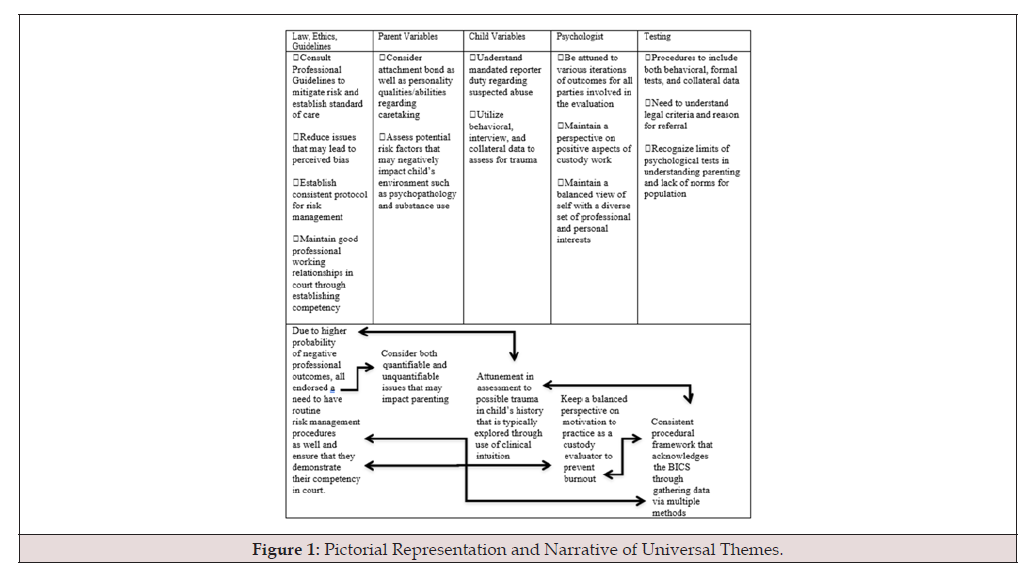
Figure 1:Pictorial Representation and Narrative of Universal Themes.
Creating the Discussion Section
Now comes the task of explaining the interpretations and to expand upon the perspectives gained from the interviews.
The most traditional method for reporting the results and conclusions from a study is to create a journal article with introduction, methods, results and discussion section. Often, the traditional method also works well for reporting Parekh-Berger HIPA Model. However, we have found that the traditional journal format does not always do justice to the wealth of personal experience that is revealed through IPA methodology.
An example is the dissertation of another of our former students. [10] She interviewed therapists who conducted psychotherapy using sign language with hearing impaired patients. Reporting the HIPA results of the experiences of these therapists would not be properly communicated by a traditional journal article. Consequently, an e-book was created. Presented below is her Table 5, our Table 2 from her dissertation that depicts the Higher Order Themes that were created with their constituent Specific Themes, with their name and number.
Conclusion
The Parekh-Berger Hierarchical Interpretive Phenomenological Analysis (HIPA) Method is designed to elicit and capture the lived experience of participants. It takes advantage of personal interviews of a small sample of individuals. [1,4,11-13] Thus, it is especially valuable and applicable in dissertations and studies with individuals who have sensitivities from their marginalized life experiences. The Model provides for several methods of obtaining interrater reliability. The Parekh-Berger HIPA model is designed to conceptualize the Themes that are derived from the interviews into Higher Order Themes that express (in a summary and conceptual form) the “story” that emerges from the semi-structured interviews.
Acknowledgements
None.
Conflict of Interest
None of the authors have a conflict of interest.
References
- Berger SE, Parekh B (2025) Enhancing Cultural Inclusion in Human Research: A Hierarchical Interpretive Phenomenological Approach for Interview Research and AI Integration. International Forum on Research Excellence (IFoRE).
- Smith J A, Flowers P, Larkin M (2009) Interpretative phenomenological analysis: Theory, method and research. Los Angeles CA.
- Smith J A (2004) Reflecting on the development of interpretative phenomenological analysis and its contribution to qualitative research in psychology. Qualitative Research in Psychology 1: 39-54.
- Parekh B, Berger S E (2022) The Parekh-Berger Hierarchical Interpretive Phenomenological Analysis Model. Nov Reseach Science 10(5): 000746.
- Alase A (2017) The Interpretative Phenomenological Analysis (IPA): A Guide to a Good Qualitative Research Approach. International Journal of Education & Literacy Studies 5: 9-19.
- Smith JA (1996) Beyond the divide between cognition and discourse: Using interpretative phenomenological analysis in health psychology. Psychology and Health 11(2): 261-271.
- McHugh M L (2012) Interrater reliability: the kappa statistic. Biochemia medica 22(3): 276-282.
- Ortega C, Berger S E (2014) Qualitative analysis of child custody evaluation practices. Presented at the Annual Meeting of the American Psychological Association, Washington DC.
- You M, MacMillin M, Berger S E (2022) Intrinsic Motivation, The Process of Forgiveness, and The Effect of Forgiveness on Healing for Sexual Abuse Survivors. Unpublished Dissertation.
- Tucker M, Berger S E, Parekh B (2020) A Phenomenological Examination of the Hearing Therapist-Deaf Patient Dyad: Barriers, Language, Culture, and Training, e-book, Journal of Complementary and Alternative Medicine. Iris Publishers.
- Stephanie Fade (2004) Using interpretative phenomenological analysis for public health nutrition dietetic research: A practical guide. Proceedings of the Nutrition Society 63: 647-653.
- Smith JA, Osborn M (2003) Interpretative phenomenological analysis. In J. A Smith (Ed.) Qualitative Psychology: A Practical Guide to Methods (pp. 51-80) London, United Kingdom: Sage.Complementary and Alternative Medicine. Iris Publishers.
- Willig C (2001) Qualitative research design. In C. Willig (2001) Introducing qualitative research in psychology: Adventures in theory and method. Buckingham: Open University Press.




 We use cookies to ensure you get the best experience on our website.