
Case Report 
 Creative Commons, CC-BY
Erythrocyte Ghosts and Plasma Beads as Antigen Peptide Delivery Systems in Animals and Humans
*Corresponding author: FUKUDA Yujiro, Kawasaki Medical School, Department of Otolaryngology-Head and Neck Surgery, 577 matsushima Kurashiki Okayama, Japan.
Received:November 24, 2025; Published: December 01, 2025
DOI: 10.34297/AJBSR.2025.29.003789
Introduction
Multiple Symmetric Lipomatosis (MSL), often termed benign symmetric lipomatosis or Madelung disease [1], is a rare disorder characterized by symmetric, nonencapsulated adipose deposits in the head, neck, trunk, and limbs [1,2]. Although alcohol overuse has frequently been implicated, the etiology remains incompletely understood [3-5]. A particularly rare manifestation is Symmetrical Lipomatosis Confined to the Tongue (symmetric lipomatosis of the tongue, SLT). Few cases have been reported, and the relationship between SLT and classical MSL remains controversial. We report herein a case of presumed SLT presenting with macroglossia and dysphagia, along with a literature review and discussion of disease mechanisms.
Case Presentation
An 89-year-old man presented with progressive enlargement of the tongue and resultant difficulty in oral intake. Over several years, bilateral enlargement of the lateral margins of the tongue was noted, gradually worsening to the point of functional impairment. The patient’s medical history included prostate carcinoma, metastatic bone disease, chronic renal failure, interstitial lung disease, heart failure, and bilateral knee septic arthritis. He had a history of alcohol consumption. No smoking history was present. Physical examination revealed symmetric, yellowish submucosal masses on both lateral tongue margins, smooth-surfaced, soft-elastic, and with relatively defined borders (Figure 1). The protruded tongue could not be fully accommodated within the oral cavity. No pain, tenderness, trismus, or tongue motor restriction was evident. No other mass lesions were present on the body surface. Neck ultrasonography and laryngoscopy did not reveal significant lesions in adjacent structures. On CT imaging, the bilateral tonguemargin masses showed homogeneous low-attenuation areas with somewhat indistinct margins. On MRI, the lesions measured 42 × 19 × 30 mm (right) and 48 × 21 × 26 mm (left), exhibited slight hyperintensity on T1-weighted images, and signal suppression consistent with adipose tissue on fat-suppression sequences. The boundaries with intrinsic tongue muscles were somewhat indistinct, but no invasion into extrinsic muscles was evident (Figure 2).

Note*: Both lateral borders of the tongue are symmetrically swollen, preventing complete mouth closure. No mucosal erosion or ulceration was observed on the surface, and tongue mobility was preserved.
Figure 1: Intraoral photograph at initial presentation (with tongue protrusion).

Note*: (A, B) Non-contrast CT images show ill-defined, homogeneous low-density areas along both lateral borders of the tongue (arrowheads). (C–F) MRI demonstrates mass lesions measuring 42 × 19 × 30 mm on the right side and 48 × 21 × 26 mm on the left side of the tongue. Each lesion exhibits slightly high signal intensity on T1-weighted images and slightly low signal intensity on T2-weighted images, comparable to that of adipose tissue (arrows). Although the margins with the intrinsic tongue muscles are somewhat indistinct, no invasion into the extrinsic tongue muscles is observed.
Figure 2: Radiological findings.
Needle biopsy of the right margin lesion showed proliferation of mature adipocytes intermixed with muscle tissue, arranged in clustered fashion, without atypia. Based on the symmetric clinical appearance, imaging consistent with fatty tissue, and benign histopathology, a diagnosis of symmetrical lipomatosis of the tongue was made (Figure 3). Because of functional impairment and cosmetic concerns, surgical excision under general anesthesia was planned. However, before surgery could proceed, the patient died three months later from acute exacerbation of his comorbid conditions.

Note*: Clusters of mature adipocytes are proliferating within the skeletal muscle tissue (arrowheads). A fibrous capsule, such as that seen in lipoma, is absent.
Figure 3: Histopathological findings (Hematoxylin and Eosin staining).
Discussion
Symmetric lipomatosis of the tongue is an extremely rare benign disorder characterized by diffuse fatty proliferation without encapsulation. It is considered a localized variant of multiple symmetric lipomatosis (MSL), also known as Madelung’s disease [1], which predominantly affects the neck and shoulder regions [6,7]. The condition is believed to be associated with mitochondrial dysfunction, alcohol abuse, or autonomic neuropathy [8,9]. In the Japanese literature that we were able to search, there were not many reports, shown in Table 1 (Table 1) [10-23]. While some prior Japanese reports labeled such cases as BSL, these lacked extra-lingual fat deposits and more appropriately align with SLT. In the published series, the age at diagnosis ranged from 61 to 89 years (mean 70.7), with all cases in males; 43.7 % had concurrent alcoholic liver disease, and 68.7 % had a history of alcohol consumption, pointing to a possible association.
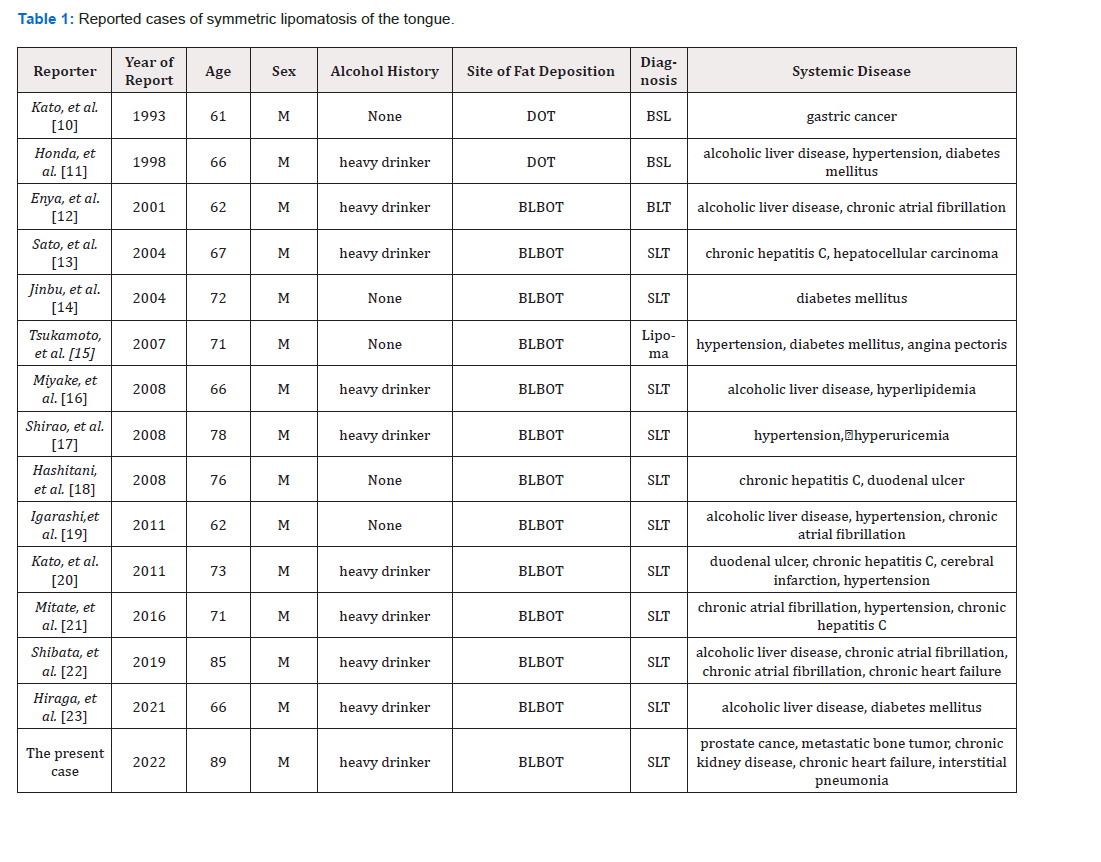
Table 1: Reported cases of symmetric lipomatosis of the tongue.
Note*: M: male, F: female, DOT: dorsum of the tongue, BLBOT: bilateral lateral borders of the tongue, BSL: benign symmetric lipomatosis, BLT: bilateral lipomatosis of the tongue, SLT: symmetric lipomatosis of the tongue.
The distinction between SLT and classic MSL remains unsettled. Some authors consider SLT a localized variant within the MSL spectrum; others argue for a distinct disease entity. Given the overlap in imaging and histology, SLT may represent a siterestricted form of symmetric lipomatosis.
A key component in establishing the diagnosis of symmetrical tongue lipomatosis lies in the radiologic characterization of the lesions. In soft-tissue tumors of fat origin, magnetic resonanc autonomic neuropathyures consistent with adipose tissue [24,25] On T1-weighted sequences, the lesions showed homogeneous high signal intensity comparable to subcutaneous fat. On fat-suppressed (or STIR/fat-sat) sequences, the signals were uniformly suppressed, confirming fatty composition. The absence of thick or irregular enhancing septa or nodular non-fatty components argues against well-differentiated liposarcoma or atypical lipomatous tumor, a distinction supported by prior imaging series demonstrating specificity of MRI for simple lipomas in well-defined fatty masses [26,27]. Moreover, the margins between the fatty lesions and the residual intrinsic tongue musculature were somewhat indistinct, consistent with a non-encapsulated or infiltrative pattern rather than a discrete encapsulated lipoma. This infiltrative or interdigitating appearance is characteristic of lipomatosis rather than isolated lipomas. In previous reports of symmetrical tongue lipomatosis, similar ill-defined margins and partial infiltration into muscle have been documented on MRI, supporting the notion of diffuse fatty overgrowth rather than mass-forming tumors [24,25].
Another discriminating point is the lack of enhancement after contrast administration: adipose tissue typically does not take up contrast, and any internal septa—if present—tend to be thin and nonenhancing. Thickened septa (>2 mm), nodular enhancing foci, or areas of non-fat signal raise suspicion for malignancy and should prompt further evaluation. In our imaging, no such suspicious features were apparent. Additionally, the bilateral, symmetric distribution in the same anatomical region (tongue margins) strengthens the diagnosis of a systemic or symmetric process rather than random isolated lipomas. Combined with the imaging features of mature fat signal, lack of aggressive MRI signs, and consistent symmetry, the radiologic evidence strongly supports a diagnosis of symmetrical lipomatosis of the tongue rather than differential diagnoses such as intramuscular lipoma, liposarcoma, or other infiltrative lesions.
The pathogenesis of symmetrical lipomatosis of the tongue remains uncertain, yet several plausible mechanisms have been proposed.
a) Mitochondrial dysfunction and altered lipid metabolism are considered the most compelling explanations. Studies of multiple symmetric lipomatosis have demonstrated mitochondrial DNA mutations leading to defective oxidative phosphorylation, impaired lipid degradation, and aberrant proliferation of brown adipose–like tissue. A similar mitochondrial defect could promote localized and bilaterally symmetric adipose accumulation within the tongue, where oxidative metabolism is physiologically active [5,28].
b) Autonomic dysregulation has also been implicated. Impaired adrenergic control of lipolysis may result in reduced fat breakdown and consequent deposition. Given the tongue’s dense sympathetic and parasympathetic innervation, focal disturbances in autonomic signaling could account for the remarkably symmetrical distribution of fatty tissue.
c) Alcohol-related or local metabolic factors may further contribute. Chronic ethanol exposure disrupts mitochondrial function, modifies adrenergic tone, and enhances lipogenesis while suppressing lipolysis. Even in the absence of overt alcohol abuse, subtle metabolic alterations or microvascular changes could trigger localized adipose proliferation [29,30].
Taken together, these observations suggest that symmetrical lipomatosis of the tongue may represent a localized phenotypic expression of systemic metabolic dysfunction, possibly driven by mitochondrial or autonomic impairment. The tongue’s unique muscular and vascular architecture may amplify such disturbances, resulting in the characteristic bilateral pattern. Further molecular and metabolic analyses are warranted to elucidate the precise mechanisms underlying this distinctive lesion. Clinically, differentiation from lipoma, lipomatosis of other origins, and infiltrative neoplasms such as well-differentiated liposarcoma is essential. MRI typically demonstrates diffuse, nonencapsulated, symmetrical fatty infiltration, which aids in distinguishing this condition from encapsulated lipomas. Histopathology remains the diagnostic gold standard. Treatment is primarily conservative, with surgical reduction indicated for functional or esthetic reasons. Recurrence is uncommon when complete excision is achieved, though residual fatty tissue may persist given the nonencapsulated nature of the lesion. Long-term follow-up is advised, as metabolic disturbances could predispose to further adipose proliferation. Therapeutically, symptomatic lesions are often resected [31,32]. However, complete excision may risk functional deficits, recurrence is possible, and many patients may benefit more from symptomatic and longitudinal management. In our case, surgical intervention was precluded by the patient’s overall condition - a limitation of this report.
Conclusion
We report a rare case of SLT in an elderly man with alcohol history. The case adds to the limited literature regarding tonguepredominant symmetric lipomatosis and supports, but does not prove, the potential involvement of alcohol and mitochondrial dysfunction in its pathogenesis.
Acknowledgment
None.
Conflicts of Interest
All relevant information regarding the human subject has been fully disclosed. The authors declare no conflicts of interest related to this work.
References
- Madelung OW, Ueber den Ftthals (1888) Arch Klin Chir 37: 106-130.
- Mariko Higa, Eiko Yoshida, Ayumi Yoshifuji (2012) Mitochondrial Diabetes Accompanied by Benign SymmetricLipomatosis―ACaseReport Japan Diab. Soc 55(1): 17-22.
- Calvo Garcia N, Prieto Prado M, Alonso Orcajo N, L M Junquera Gutierrez (1999) Symmetric lipomatosis of the tongue:Report of a case and review of the literature. Oral Surg Oral Med Oral Pathol Oral Radiol Endod 87(5): 610-612.
- Ko MJ, Chiu HC (2010) Madelung’s disease and alcoholic liver disorder. Hepatology 51(4): 1466-1467.
- Berkovic SF, Andermann F, Shoubridge EA, S Carpenter, Y Robitaille, et al. (1991) Mitochondrial dysfunction in multiple symmetric lipomatosis. Ann Neurol 29(5): 566-569.
- Enzi G (1984) Multiple symmetric lipomatosis: an updated clinical report. Medicine (Baltimore) 63(1): 56-64.
- Zhang X, Ma Y, Li Y, Lei Li (2024) Research progress on the pathogenesis of multiple symmetrical lipomatosis. Front Endocrinol (Lausanne) 15: 1442275.
- Sawyer SL, Ng AC, Innes AM, Justin D Wagner, David A Dyment, et al. (2015) Homozygous mutations in MFN2 cause multiple symmetric lipomatosis associated with neuropathy. Hum Mol Genet 24(18): 5109-5114.
- Holme E, A Playán, A L Andreu, C Bruno, C Navarro, et al. (1998) Familial multiple symmetric lipomatosis associated with the A8344G mutation of mitochondrial DNA. Neurology 51(1):258-260.
- F Kato, N Shirai, K Motegi, R Satoh, S Satoh, et al. (1993) Symmetrical lipomatosis of the tongue presenting as macroglossia. Report of two cases. J Craniomaxillofac Surg 21(7): 298-301.
- Yasuo HONDA, Satoru OZEKI, Kazunari OOBU (1998) Two cases of benign symmetric lipomatosis of the tongue. Jpn J Oral Maxillofac. Surg 44: 342-344.
- Enya Tojo Kawahara Yasushi HOTTA Fumio (2001) Bilateral Lipomatosis of the Tongue: Report of a Case. Aichi Gakuin J Dent Sci 39: 519-523.
- SATO Yuho, TAKAHASHI Etsuko, TAKAHASHI Yuzo (2004) A case of symmetric lipomatosis of the tongue J. Oral Maxillofac. Surg 50: 297-300.
- Jinbu Y, Otawa K, Obi Y (2004) Symmetric Lipomatosis of the Tongue: Report of a Case. Oral Med Pathol 9(4): 123-126.
- Tsukamoto Hikaru, Hamada Tomohiro, Koita tsutom (2007) A case of lipomas occurring on the bilateral tongue margins. Ohu University Dental Journal 34: 1.
- Miyake tetsu, Takeda Hiroto, Fujimoto yoko (2008) Lipomatosis of the bilateral tongue border: a case report. J Jpn Soc Oral Mucous Membr 14: 9-13.
- Shirao kotaro, Yamada Ryuhei, Otake ippei (2008) Two cases of symmetric lipomatosis of the tongue. Medical journal of Osaka General Medical Center 30: 59-62.
- Hashitani S, Toyohara Y, Sakurai K, et al (2008) Intramuscular Lipoma of the Cheek: Report of Two Cases. Oral Sci Int 5: 6971.
- IKARASHI Yuki, IIDA Akihiko, KOBAYASHI Takanori (2011) Symmetric lipomatosis of the tongue arising in a patient with alcoholic liver cirrhosis. Jpn J Oral Maxillofac. Surg 57: 119-123.
- Reiko KATO, Yoshinori JINBU, Yuri IOKA (2011) Symmetric Lipomatosis of the Tongue: Report of a Case. Jpn. Soc. Oral Mucous Membr 17: 17-21.
- Eiji Mitate, Shintaro Kawano, Tamotsu Kiyoshima (2016) Symmetric lipomatosis of the tongue presenting as macroglossia: A case report. J Jpn Soc Oral Tumor 28: 293-298.
- Yukiko Shibata, Shunsuke Tezuka, Hidenori Tamate (2019) A case of symmetrical lipomatosis on the bilateral tongue edges. Journal of Tochigi Dental Association 71: 33-37.
- HIRAGA Chiho, KOMATSU Masumi, OOMURA Yuusuke (2021) A case of Madelung disease in the tongue J. Oral Maxillofac. Surg 67: 243-247.
- Gaskin CM, Helms CA (2004) Lipomas, lipoma variants, and well-differentiated liposarcomas: results of MRI evaluations of 126 consecutive fatty masses. AJR Am J Roentgenol 182(3): 733-739.
- Kransdorf MJ, Bancroft LW, Peterson JJ, Mark D Murphey, William C Foster, et al. (2022) Imaging of fatty tumors: distinction of lipoma and well-differentiated liposarcoma. Radiology 224(1): 99-104.
- Knebel C, Neumann J, Benedikt J Schwaiger, Dimitris C Karampinos, Daniela Pfeiffer, et al. (2019) Differentiating atypical lipomatous tumors from lipomas with magnetic resonance imaging: a comparison with MDM2 gene amplification status. BMC Cancer 19(1): 309.
- Murphey MD, Carroll JF, Donald J Flemming, Thomas L Pope, Francis H Gannon, et al. (2004) Benign musculoskeletal lipomatous lesions. Radiographics 24(5): 1433-1466.
- Gámez J, Playán A, Andreu A L, C Bruno, C Navarro, et al. (1998) Familial multiple symmetric lipomatosis associated with the A8344G mutation of mitochondrial DNA. Neurology 51(1): 258-260.
- Vasileiadis I, Mastorakis G, Leromonachou P (2013) Symmetrical lipomatosis of the tongue-a rare cause of macroglossia:Diagnosis, surgical treatment, and literature review. Laryngoscope 123(2): 422-425.
- Lieber CS (2004) Alcoholic fatty liver: Itspathogenesis and mechanism of progression to inflammation and fibrosis. Alcohol 34(1): 9-19.
- Constantinidis J, Steinhart H, Zenk J, Holger Gassner, Heinrich Iro, et al. (2003) Combined surgical lipectomy and liposuction in the treatment of benign symmetrical lipomatosis of the head and neck. Scand J Plast Reconstr Surg Hand Surg 37(2): 90-96.
- Milisavljevic D, Zivic M, Radovanovic Z, P Stankovic (2010) Severe dyspnea as atypical presenting symptom of Madelung’s disease. HIPPOKRATIA 14(2): 133-135.




 We use cookies to ensure you get the best experience on our website.