
Research Article 
 Creative Commons, CC-BY
Status Of Postpartum Consultation Within the Family Planning Center in Kairouan, Tunisia
*Corresponding author: Marwen Nadia, Department of Obstetrics and Gynecology, Ibn Jazzer Hospital of Kairouan, Faculty of Medicine of Sousse, Tunisia.
Received:November 19, 2025; Published: November 26, 2025
DOI: 10.34297/AJBSR.2025.29.003784
Abstract
Introduction: The postnatal consultation is crucial to assess the physical and psychological health of the mother after childbirth. This appointment
allows to discuss the risks associated with short pregnancy intervals. Despite its importance, the postnatal consultation is often perceived as
a formality and can be neglected by women.
Methods: This is a prospective, single-center, descriptive quantitative study, taking place at the regional delegation of the National Office for
Family and population of Kairouan spread over 6 months by means of an anonymous questionnaire.
Results: Our sample includes 110 women with an average age of 28.62±5.91 years. 56.3% did not use contraceptive methods before this pregnancy.
Contraception was discussed by a health professional during the prenatal consultation for 44.5% of patients. The time of the consultation in
relation to the delivery was between 9thday and 40thday for 44.6% while 17.3% had a delay of more than 40 days.87.3percentage stated that the
interest of the postpartum consultation was to offer effective contraception. While44.5percentage cited the benefit of encouraging breastfeeding.
During the interview 58.8% the IUD, 51.4% by the pill, 36.4% by the implant, advised patients. According to38.1percentage patients, the long distance
was a barrier to postpartum consultation, whereas for15.4percentage the poor reception of the providers was the cause. Most of the patients
(75.5%) were satisfied with the postpartum consultations.
Conclusions: Concerted efforts to raise awareness and educate both patients and professionals are needed to improve this essential practice.
Keywords: Post partum, Contraception, Family planning
Introduction
Breastfeeding is widely recognized for its benefits to both infant and maternal health. The World Health Organization (WHO) recThe postpartum period is the period following the expulsion of the product of conception, during which the mother’s physiological and anatomical changes return to the non-pregnant state [1]. This interval is also called puerperium, which begins after the expulsion of the placenta until the complete physiological recovery of various organ systems. It is divided into three arbitrary phases, namely the acute phase - the first 24 hours after the expulsion of the placenta, the early phase - up to 7 days, and the late phase - up to 6 weeks to 6 months [1]. The World Health Organization (WHO) recommends that healthy women and newborns should receive postnatal care in the facility for at least 24 hours, and at least three additional postnatal contacts are recommended for healthy women and newborns: between 48 and 72 hours, between 7 and 14 days, and during the 6th week after birth. In other words, WHO suggests earlier and more frequent appointments, given the importance of the puerperium for maternal and infant health [2]. Indeed, postpartum care for the mother within 24 hours of delivery is essential to manage hemorrhage and sepsis, which are the leading causes of maternal and neonatal death [3]. Moreover, the postpartum consultation is defined as a closing of the pregnancy monitoring taking place within 6 to 8 weeks following childbirth by a qualified healthcare provider (gynaecologist, general practitioner, midwife. [4] Its aim is to synthesize the data of the woman in labor, to raise awareness and inform the patient. Hence an identification of the after-effects and consequences of the pregnancy in order to offer the patient appropriate care. It must also make it possible to look for risk factors for a future pregnancy, in particular those which would be accessible to treatment outside of pregnancy which would improve the prognosis of a subsequent pregnancy [3,4].
Integrating postpartum family planning into areas where women regularly contact the health system, such as during antenatal care, labor and delivery, postnatal care, immunization, and child health care, is essential to address the significant unmet need for Family Planning (FP) among postpartum women and reduce the risk of short interpregnancies. Immediate postpartum Family Planning (FP) is an integrated service, and opportunities exist for women to provide FP counseling and contraceptives as part of 48-hour postpartum care [5]. Postnatal care should include counseling on birth spacing and contraception, as well as provision of contraceptive methods on demand. Postpartum contraceptive counseling and provision of methods are effective, high-impact interventions that can raise awareness of the benefits of birth spacing, reach women and their partners during the health facility stay, and offer a range of contraceptives appropriate for postpartum women [6]. In Tunisia, the MICS 6 survey revealed that 40.5% of mothers did not have any postnatal consultation during the first six days following. This percentage is highest in the South East region (64.5%) and is higher in rural areas (46.3% in rural areas versus 37.2% in urban areas [7]. It is in this context that we initiated this study with the objectives of identifying the progress of the early and the deferred postpartum consultation at the gynecology-obstetrics department in Kairouan and evaluating patients’ opinions and their satisfaction with the interview they received.
Materials and Methods
We conducted a prospective, single-center, descriptive quantitative study of months from January 2024 to June 2024 at the regional delegation of the national office for family and population in Kairouan. The sample for this study consisted of 110 randomly selected women who gave birth at the Kairouan maternity and neonatology center during that period, regardless of the method of delivery, and who presented to the family planning center for the postpartum consultation within a period not exceeding 6 weeks. Our study is based on a questionnaire constructed from the literature (appendix), self-administered, written in French, including various questions which are asked in a methodical manner in order to respond to the objective of our study. In order to verify the reliability of our questionnaire, a pre-test was carried out with 11 patients, and from this test we found that the questions asked were clear and understandable for all the participants. The data from of the questionnaire were processed using SPSS statistical software.27 and the results obtained were presented in tables and graphs. Ethical and professional rules were respected. The agreement of the person responsible for the data collection site was granted. Oral consent was given by respondents to participate in the study. So can the anonymity and confidentiality of the questionnaire be guaranteed.
Results
Our sample included 110 women with an average age of 28.62±5.91 years. Nearly a quarter of patients (24.5%) had a primary level of education while 22.7% had a higher level. More than half of the patients (53.6%) were housewives while26.4%were workers. The majority of patients (93.6%) were married. On the other hand, 6.4%were single. More than a third of patients (34.5%) were primiparous while 30% were few parous. In our series, gestational diabetes was found in 9.1% and high blood pressure was in 4.5%patients. More than half of the patients (56.3%), did not use contraceptive methods before current pregnancy or 18.2%were on progestin-only pills. The time from consultation to delivery was between 9th day and 40th day for44.6% while 17.3%had a delay of more than 40 days. The vast majority of patients (90.9%) had been offered a consultation. Most patients (70.9%) had an idea about the existence of a postpartum consultation. Almost all women (97.3%) have had information about postpartum’s contraception during their stays in the maternity ward. The provider who provided information about postpartum contraception was mostly the educator (84.1%) and the midwife for10.2%parturients. For 79.1% among patients, it was found that the health care provider did not take the initiative to ask which method of contraception they preferred after delivery. During the interview 58.8% patients were advised by the IUD, 51, 4% by the pill, and 36.4% by the implant (Table 1-6).
More than half (56.4%) patients were not informed about contraindicated contraception methods after childbirth. The majority of patients (86.4%) stated that the proposed methods met their expectations.
More than three-quarters of patients (75.7%) said they felt that the health professional took the time to discuss a personal story with the respondent. Most patients (61.8%) received information provided by the provider on the contraceptive method. More than half of the patients (56.4%) have not received information regarding the side effects of the chosen method. In our study,68.2%respondents were not informed about what to do if they forgot to take their pills. The method of contraception prescribed when leaving the maternity ward was microprogestins for 85.5%patients. According to 38.1% patients, the long distance was a barrier to postpartum consultation, whereas for 15.4%the poor reception of the service providers was the cause. The infected cesarean scar was recorded in 6.6%patients and amenorrhea in 4.5%. Almost all (97.3%) of patients reported that they really wanted to adopt contraceptive method. More than half (59.1%) of patients reported having an idea about the desired contraceptive method. The IUD is the contraceptive method considered by 39.1% of patients. On the other hand, 22.7% cited the implant. Most patients (75.5%), were satisfied with postpartum consultations (Table 7-11).

Table 1: Distribution of patients according to history of dysgravida.
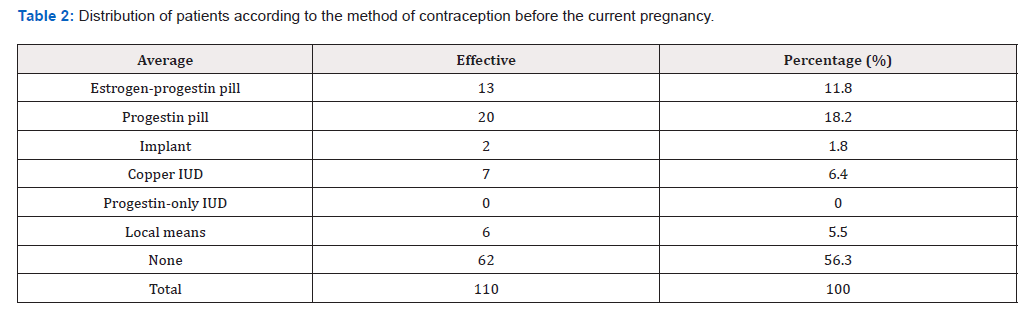
Table 2: Distribution of patients according to the method of contraception before the current pregnancy.

Table 3: Distribution of patients according to the time of consultation compared to childbirth.

Table 4: Distribution of patients according to the interest of the post-consultation partum (N=110).
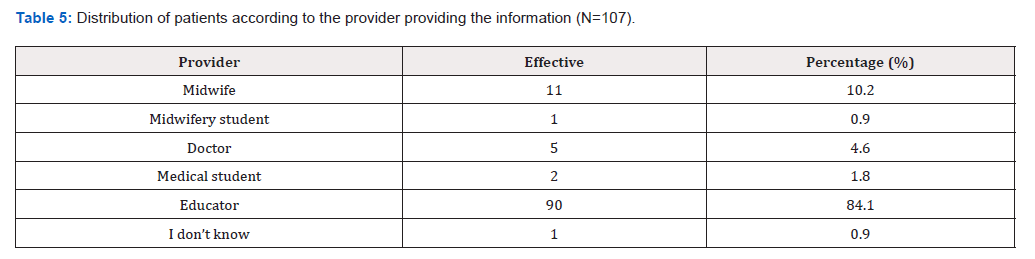
Table 5: Distribution of patients according to the provider providing the information (N=107).
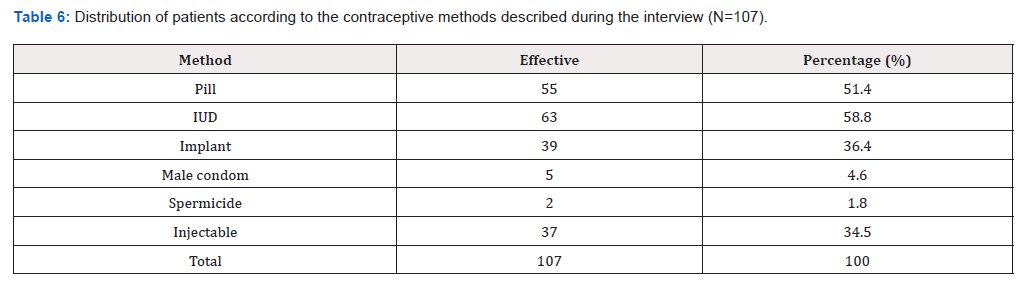
Table 6: Distribution of patients according to the contraceptive methods described during the interview (N=107).
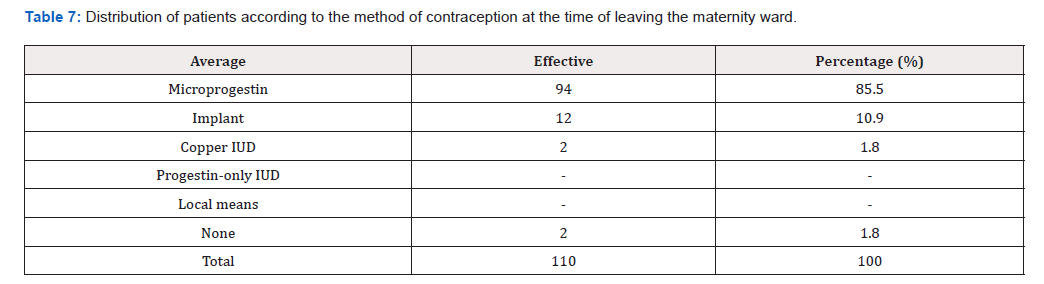
Table 7: Distribution of patients according to the method of contraception at the time of leaving the maternity ward.
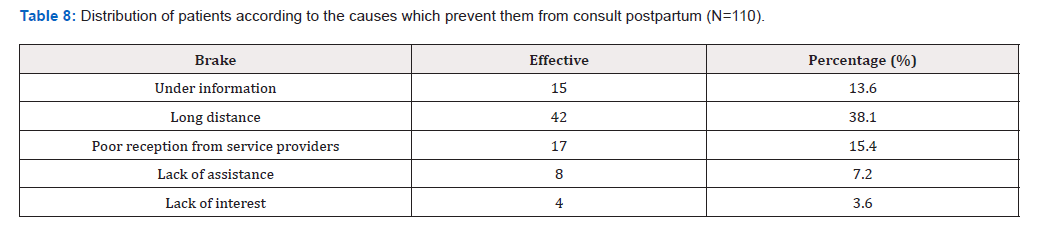
Table 8: Distribution of patients according to the causes which prevent them from consult postpartum (N=110).
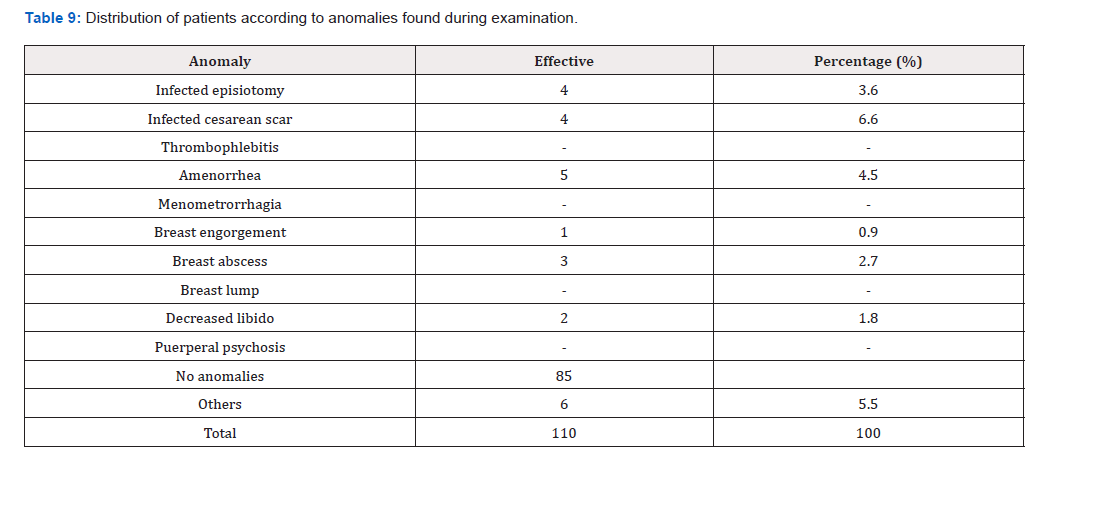
Table 9: Distribution of patients according to anomalies found during examination.
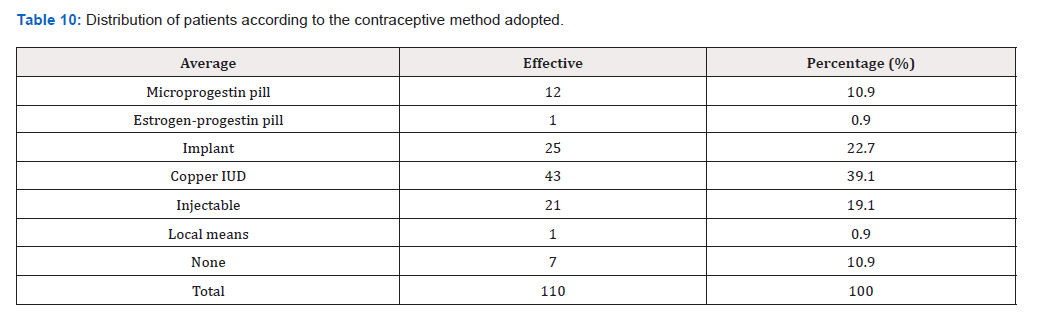
Table 10: Distribution of patients according to the contraceptive method adopted.

Table 11: Distribution of patients according to the level of satisfaction of postpartum consultations.
Discussion
Postpartum consultation is defined as an opportunity to meet with a health professional before a possible next pregnancy [4]. It is in this context that we conducted a study whose objective was to take stock of the postpartum consultation within the family planning center of Sousse. To reduce the risk of adverse maternal, perinatal and infant outcomes, the World Health Organization (WHO) recommends that after a live birth, an interval of at least 24 months be allowed before attempting a next pregnancy [2]. In total, we recruited 110 patients in our study, 60.9% of them were between 18 and 31 years old with a mean age of 28.62±5.91.
Our results are close to the work carried out in 2019 on the evaluation of the quality of postnatal consultation at the reference health center in the commune of Bamako, the 18-35 age group was the most represented with 65.1% of cases [8]. In our study, for contraception before current pregnancy,56.3% of patients, did not use contraception before this pregnancy, 18.2% were on progestinonly pills. Current data have shown that 61% of postpartum women in low- and middle-income countries have an unmet need for contraception [9]. All women should be offered effective contraception after pregnancy, regardless of the outcome. Yet the opportunity is often missed [7,8]. Data from 57 low- and middleincome countries showed that 62% of women who gave birth in the previous year did not start contraception immediately after delivery [5]. According to a study carried out in 2015 by Hesse on the contraceptive choices and practices of women who gave birth at the Nancy Regional Maternity Hospital, the pill was the contraception of choice before pregnancy for 65% of the population surveyed compared to 4% of patients who were without contraception [10].
According to the 2020 study by Goulding et al, on health care providers’ advice and women’s decisions regarding family planning during the postpartum period, 63% of respondents were aged ≥ 30 years [11].
For contraception before current pregnancy, 56.3% of patients, did not use contraception before this pregnancy, 18.2% were on progestin-only pills. According to a study carried out in 2015 by Hesse on the contraceptive choices and practices of women who gave birth at the Nancy Regional Maternity Hospital, the pill was the contraception of choice before pregnancy for 65% of the population surveyed compared to 4% of patients who were without contraception [10]. Indeed, according to the results of the MICS 7 survey, 69% of Tunisian women use modern methods of contraception. According to Thaxton et al, it is strongly recommended that providers giving prenatal care use this opportunity to discuss complex issues, including desired family size and spacing, and present contraceptive tools to achieve these goals while assessing patient priorities as well as medical risks and contraindications [12].
This was demonstrated by the intervention study of Korn et al in 2023 aimed at evaluating the impact of antenatal counseling on the adoption of postpartum contraception. Patients in the intervention group during the antenatal period regarding contraception had a greater use of contraception in the six weeks following delivery, of which 67% wanted postpartum contraception including permanent methods, such as tubal ligation [13]. Moreover, our results showed that the time between the consultation and the delivery was between the 9thth day and 40thday for 44.6% of respondents while 17.3% had a delay of more than 40 days.
According to the National College of French Gynecologists (CNGOF) in 2015: Postnatal consultation must be systematically offered. It is carried out within 6 to 8 weeks following childbirth by a gynecologist, a general practitioner or a midwife in the case of a normal pregnancy and eutocic childbirth. In the case of obstetric complications, it is provided by an obstetrician-gynecologist [14]. Similarly, the American College of Obstetricians and Gynecologists recommend a medical appointment within 3 weeks of delivery, which should include a general assessment of physical and mental well-being, with emphasis on issues related to reproductive planning, assessment of breastfeeding, and screening for postpartum depression [15]. In Tunisia, according to the national perinatal program, in postpartum the current recommended maternal health care is distributed as follows: Consultation on the 8th day, 40eme day [16]. Regarding the idea about the existence of a postpartum consultation, 70.9% of patients had an idea about its existence. Indeed, the use of health services in general is influenced by the awareness of health care seekers [17].
According to the Ethiopian study by Beyene et al, women who are aware of the benefits of postpartum care services were more likely to use these services. Similarly, women who are aware of postpartum complications were more likely to use the postpartum care as opposed to those that fail to recognize potential complications after delivery [18]. Previous studies have also reported the same results [19,20].
For the interest of postpartum consultation, we stated that in 87.3% of the cases, the interest of the postpartum consultation was to offer effective contraception. While 44.5% cited the interest of encouraging breastfeeding. This consultation is of capital importance, both from a purely clinical aspect, which aims to assess the physical and psychological consequences of childbirth and any after-effects that could be treated, and from a more social aspect, which aims to help the patient adapt to her new role as mother and the difficulties that this may entail [21-23].
According to the WHO Practical Guide to the Care of the Newborn and the Postpartum Maternal Life, the needs of the mother in the postpartum period are defined as follows [24]: baby care and breastfeeding, detection of possible complications, individual care (hygiene and healing), sexuality, contraception and food. As for the information received during the stay at the maternity ward about postpartum contraception, it appears that almost all women (97.3%) received information during their stay at the maternity ward. According to Froger’s 2014 study, the aim of which was to study the factors influencing postpartum patient satisfaction with contraception, 77.1% of patients had received information during the postpartum period at the maternity ward [25]. The High Authority of Health has insisted on the need to address contraception during the immediate postpartum period and to inform women about the different contraceptive options [26,27].
In our family planning center, the provider who provided information about postpartum contraception was mainly the educator (84.1%) and the midwife for 10.2% of the parturients. It is essential that professionals intervene in women’s choice of contraception. Their role of information is crucial and allows them to guide women in their contraceptive choices. Contraceptive education is generally considered a standard component of postpartum care. According to Lopez et al, educational interventions delivered to individuals or groups can increase contraceptive uptake as well as method use and continuation [28].
Counseling may involve a single contact or multiple sessions. Personal interaction can help women choose an appropriate method and obtain detailed information about its use [29,30,31]. In this context, the Pourtier study, whose objective was to measure the satisfaction of new mothers regarding the information received on postpartum contraception, showed that 64% of respondents had benefited from an interview with the midwife [32]. Regarding the provider and the contraception desired by the patients, for 79.1% of the patients, it was found that the health care provider did not take the initiative to ask which method of contraception they preferred after delivery. The contraceptive methods described during the interview were the IUD for 58.8%, the pill for 51.4%, and the implant for 36.4%. According to the Blangis et al study, prescribers must provide clear information to patients in order to offer them the contraception that is most suitable for them and that best meets their needs. The study showed that 92.4% of women received a prescription for contraception after giving birth. However, at the postnatal visit, only 70.9% of women returned with a current contraception and approximately 30% of women stopped their contraceptive methods [33].
For information on methods that are contraindicated after childbirth. More than half (56.4%) patients were not informed about methods that were contraindicated after childbirth. The method of contraception prescribed when leaving the maternity ward was microprogestins for 85.5%patients, 68.2% of whom were not informed about what to do if they forgot to take their pills. And (68.7%) of pill patients said that their knowledge in case of forgetting was not at all clear. The postpartum period has specific features that play a large role in the optimal contraceptive strategy for each woman. Most often detailed and prescribed during the stay at the maternity ward, postpartum contraception must be effectively used again during the postnatal visit. Its use depends on various factors, including the return of fertility, the resumption of sexual activity and the desire to space out possible future pregnancies [34].
In France, the HAS recommends the insertion of the IUD after the fourth week postpartum, although the CNGOF suggests that the IUD be inserted before the mother is discharged from the maternity hospital, in order to avoid loss of follow-up and unwanted pregnancies. But this practice seems uncommon. The lack of knowledge or information could be responsible for this specificity limiting the use of an interesting method of contraception [35,36]. According to Curtis et al, microprogestin contraception during the postpartum period, is considered the woman’s preferred method, or as a bridge to estrogen- containing contraception, because progestin-only pills are well tolerated, have few contraindications, and are safe for breastfeeding women [37,38]. According to the Pourtier study, 41% of respondents chose the microprogestin pill upon leaving the hospital and started taking it 10 days after giving birth [32]. The obstacles that prevent women from consulting postpartum, 38.1% of patient declared that the long distance was an obstacle to postpartum consultation while for 15.4% the poor reception of providers was the cause. According to Guo et al, barriers such as lack of available resources, lack of education among postpartum women on how to access care, and lack of existing relationships between patients and health facilities contribute to the underutilization of postpartum care [39].
Similarly, also according to a study conducted in Ghana, 4% of women receive postpartum care 3 to 41 days after delivery. Some influencing factors include: young age, lack of autonomy of women, low level of education, negative attitude of providers and lack of information on danger signs. For the desire to adopt a contraceptive method, almost all (97.3%) of the patients stated that they really wanted to adopt a contraceptive method. (59.1%) of the patients stated that they had an idea about the desired contraceptive method. The IUD is the contraceptive method considered for 39.1% of patients. Our results do not agree with the study of Blangis et al, during the postnatal visit, 30% of women did not resume or abandoned their contraception. The levonorgestrel IUD was inserted for 12.6% of women at the postnatal visit; 13.4% of copper IUDs [36]. As for the level of satisfaction with postpartum consultations, most patients (75.5%), were satisfied. According to Froger’s study, patients appeared satisfied with the postpartum contraception interview, the majority considered that it was useful [25]. All of these findings highlited that almost half of the respondents received information on postpartum consultation.
However, several findings highlight significant gaps in this awareness. This can be attributed to insufficient communication from health professionals, who do not always highlight the benefits of this consultation. It would be beneficial to allocate more time in postnatal consultations to allow for more in-depth discussion on a variety of topics, thereby addressing the varied concerns of the consultants. Consultations should take a holistic approach, addressing not only breastfeeding but also other aspects of postnatal health, including emotional well-being, contraception and family dynamics. There is scope to improve the quality of these consultations and promote better postnatal well-being. Attention to these aspects will help to strengthen women’s trust in the health system and improve their postpartum experience
Conclusion
The postnatal consultation is crucial to assess the mother’s physical and psychological health after childbirth. Despite its importance, the postnatal consultation is often perceived as a formality and can be neglected by women. Is also hampered by misperceptions and a lack of information. Therefore, concerted efforts to raise awareness and educate both patients and professionals are needed to improve this essential practice.
Competing Interests
The authors declare no competing interest.
Acknowledgement
None.
References
- Chauhan G, Tadi P (2024) Physiology, Postpartum Changes. In: StatPearls Treasure Island (FL): StatPearls Publishing.
- (2016) Committee WGA by the GR. WHO recommendations on antenatal care for a positive pregnancy experience. Geneva: World Health Organ Copyright.
- Berwick DM (2002) A user's manual for the IOM's Quality Chasm report. 21(3): 80-90.
- Raccah-Tebeka B, Plu-Bureau G (2015) Postpartum contraception: Guidelines for clinical practice. J Gynecology Obstetrics Biol Reprod 44(10): 1127‑11
- Glasier A, Bhattacharya S, Evers H, Gemzell‐Danielsson K, Hardman S, et al. (2019) Contraception after pregnancy. Acta Obstet Gynecol Scand 98 (11): 1378-1385.
- Immediate Postpartum Family Planning Counseling and Services. HIPs.
- (2019) Results of the Multiple Indicator Cluster Survey (MICS) | UNICEF.
- Koné Evaluation of the quality of postnatal consultation at the reference health center of commune II of Bamako.
- Sully EA, Biddlecom A, Darroch JE, Riley T, Ashford LS, et al. (2019) Adding It Up: Investing in Sexual and Reproductive Health
- Hesse S (2015) Postpartum contraception: status report on contraceptive choices and practices of women who gave birth at the Nancy Regional Maternity Hospital [PhD Thesis]. University of Lorraine.
- Goulding AN, Bauer AE, Muddana A, Bryant AG, Stuebe AM et al. (2020) Provider Counseling and Women's Family Planning Decisions in the Postpartum Period. J Womens Health 29 (6): 847-853.
- Thaxton L, Hofler LG (2023) Prenatal Contraceptive Counseling. Obstet Gynecol Clin North Am 50(3): 509-523.
- Korn E, Yan X, Schmidt-Swartz J, Rahimi S, Moon F, et al. (2023) Is enhanced, structured prenatal counseling in third trimester associated with postpartum contraceptive uptake? Sex Reprod Healthc 35:100818.
- Marpeau L, Sentilhes L, Senat MV (2015) Recommendations for clinical practice: postpartum–Introduction. J Gynecology Obstetrics Biol Reprod 44(10): 1067.
- McKinney J, Keyser L, Clinton S, Pagliano C (2018) ACOG Committee Opinion No. 736: Optimizing Postpartum Care. Obstet Gynecol132 (3): 784-785.
- Tej Dellagi R, Ben Salah F, Zribi L, Balti S (1997) Reflections on the national perinatal program in the Tunis region. Tunis Médicale 75 (12): 938‑9
- Gonçalves JTT, Silveira MF, Campos MCC, Costa LHR (2016) Sobrepeso and obesidade and factors associated with climate control. Ciênc Saúde Coletiva 21:1145‑1156.
- Beyene T, Melka AS, Yadecha B (2022) Determinants of postnatal care service utilization among married women in rural areas in western Ethiopia. J Health Popul Nutr 41(1):38.
- Rahman MM, Haque SE, Zahan MS (2011) Factors affecting the utilization of postpartum care among young mothers in Bangladesh. Health Soc Care Community. 19 (2): 138-147.
- Limenih MA, Endale ZM, Dachew BA (2016) Postnatal Care Service Utilization and Associated Factors among Women Who Gave Birth in the Last 12 Months prior to the Study in Debre Markos Town, Northwestern Ethiopia: A Community-Based Cross-Sectional Study. Int J Reprod Med. 2016: 7095352
- Assarag B, Dubourg D, Maaroufi A, Dujardin B, De Brouwere V, et al. (2013) Maternal postpartum morbidity in Marrakech: what women feel, what doctors diagnose? BMC Pregnancy Childbirth 13: 225.
- Xiang YX, Xiong JY, Tian MM, Yuan F, Feng ZC, et al. (2014) Factors influencing the utilization of postpartum visits among rural women in China. J Huazhong Univ Sci Technol Med Sci 34 (6): 869-874.
- High Authority of Health. Pregnancy project: information, prevention messages, tests to propose.
- (1998) World Health Organization (WHO) Maternal and Newborn Health and Nutrition Unit. Postpartum maternal and newborn care: a practical guide.
- Amélie F. Postpartum contraception: contraceptive information in the postpartum period: are we in the right place?
- (2005) High Authority of Health. Contraception Memo Sheet: Prescription and advice to women. HAS; 2013.High Authority of Health. How to better inform pregnant women. Recomm For Health Prof 25-
- Lopez LM, Gray TW, Hiller JE, Chen M (2015) Education for contraceptive use by women after childbirth. Cochrane Database Syst Rev (7): CD001863.
- Nguyen Toan Tran, Armando Seuc, Abou Coulibaly, Sihem Landoulsi, Tieba Millogo, et al. (2019) Postpartum family planning in Burkina Faso (Yam Daabo): a two group, multi-intervention, single-blinded, cluster- randomized controlled trial. Lancet Global Health 7 (8): e1109-11
- Henderson V, Stumbras K, Caskey R, Haider S, Rankin K, et al. (2016) Understanding Factors Associated with Postpartum Visit Attendance and Contraception Choices: Listening to Low- Income Postpartum Women and Health Care Providers. Maternal Child Health J 20(1): 132-143.
- Fanello S, Parat Pateu V, Dagorne C, Hitoto H, Collet J, et al. (2007) Postpartum contraception: medical recommendations, women's point of view. J Gynecology Obstetrics Biol Reprod 36(4): 369-3
- Pourtier E. (2013) Postpartum contraception: patient satisfaction with contraceptive maintenance following childbirth.
- Blangis F, Lopes P, Branger B, Garnier P, Philippe HJ, et al. (2013) Postpartum contraception: about 600 patients including 129 reviewed at the postnatal consultation. Gynecology Obstetrics Fertil 41 (9): 499-
- (2024) High Authority of Health. Contraception in postpartum women.
- (2005) World Health Organization (WHO). Eligibility criteria for the adoption and continued use of contraceptive methods. In: Eligibility criteria for the adoption and continued use of contraceptive methods 65-66.
- (2018) National Council of French Gynecologists and Obstetricians. Postpartum: CNGOF recommendations for clinical practice. Elsevier Health Sciences 386.
- Curtis KM, Tepper NK, Jatlaoui TC, Berry Bibee E, Horton LG, et al. (2016) US Medical Eligibility Criteria for Contraceptive Use, 2016. MMWR Recomm Rep 65(3): 1-
- Uhm S, Garcia Ruiz N, Creinin MD, Blanton A, Chen MJ, et al. (2020) Progestin-only pill use over 6 months postpartum. Contraception 102(4): 251-253.
- Guo N, Bindt C, Bonle MT, Appiah Poku J, Tomori C, et al. (2014) Mental health associated determinants of parenting stress among urban mothers of young children–results from a birth-cohort study in Ghana and Côte d'Ivoire. BMC Psychiatry 14(1): 156.
- Ganle JK, Parker M, Fitzpatrick R, Otupiri E. (2014) A qualitative study of health system barriers to accessibility and utilization of maternal and newborn healthcare services in Ghana after user fee abolition. BMC Pregnancy Childbirth 14: 425.




 We use cookies to ensure you get the best experience on our website.