
Research Article 
 Creative Commons, CC-BY
Resveratrol, Exercise, and their Combination Effects on Elderly Mice Livers with Oxidative Mitochondrial Damage
*Corresponding author:Jia Ping Wu, Department of Medical Technology, Medical College of Shaoguan University, China.
Received:August 20, 2025; Published:August 26, 2025
DOI: 10.34297/AJBSR.2025.28.003668
Abstract
Backgrounds: Aging is a mitochondrial oxidative damage process. We explore the anti-aging effect of resveratrol, exercise, and their combination to
rescue some of the damage that occurs during aging and increase life and health span.
Methods: We treated eighteen-month-old aged mice with resveratrol (20 mg/kg, oral dosing) and exercise training for 4 weeks. We examined the
survival and apoptosis signaling molecular biology interaction in natural aging mice liver after exercise training. Resveratrol intake in combination
with exercise was examined using western blotting and histological pathophysiology of age-related liver disease using hematoxylin-eosin and Masson’s
trichrome staining.
Results: Results showed SIRT-1 induced increase and Foxo1a/Foxo3a decrease was observed in natural aging after resveratrol intake and exercise
combination. Upregulation of survival and downregulation of apoptosis was observed in western blotting analysis protein expression levels.
Combination exercise training and resveratrol intake facilitated IGF-1/PI3K/AKT/Bcl2 increase and decreased Bad/Cytochrome and c/Caspase-9/
Cspase-3.
Conclusions: An exercise regimen is medicine. Polyphenol resveratrol can activate the same pathways and acts as a partial mimetic of exercise activity.
Fortunately, their combination has excellent interaction function in survival and apoptosis signaling pathways. We suggest resveratrol intake
can help exercise training therapy in age-related liver disease and promotes healthy aging in the elderly.
Keywords:Resveratrol, Exercise training, Aging process, Oxidative damage, Apoptosis
Introduction
Aging is a universal, unavoidable, progressive, cumulative and deleterious internal and external biological response caused by physiological decline [1]. Life span extension can be established by a support system of family, friends, and health care providers, who together focus on good nutrition, lifestyle habits and good stress management to prevent disease and lessen the impact of chronic conditions [2]. Aging is a major risk factor for most chronic diseases in which a person gradually loses the ability to maintain homeostasis due to structural alteration or dysfunction. Aging has been shown to accelerate the progression from fatty liver to steatohep atitis to acute liver injury. Aging also increases susceptibility to fibrotic response. With aging, the mitochondrial function decreases accompanied by diabetes or metabolic syndromes and increase in fatty liver. Aging in individuals is relative in the severity and prognosis of various liver diseases including nonalcoholic fatty liver disease, alcoholic liver disease, hepatitis C, and liver transplantation. Simple practices such as exercise can make some differences.
Exercise training with resveratrol intake impact the aging process and aged-related diseases [3]. However, it has not been seriously addressed or systematically explained. Exercise regimen is medicine. Exercise induces changes in endogenous antioxidant activities in the liver. However, the effects depend on the age of the animal at the beginning of the intervention [4]. Oxidative liver damage increases with aging. Exercise increases the body’s antioxidant activities. Exercise is one of the keys to lowering blood pressure. Working out also boosts the effectiveness of blood pressure medication. Resveratrol supplements can slow the aging process and promote longer cell life in the body [5]. An exercise regimen helps prevent and manage a wide range of health problems, including metabolic syndrome and type 2 diabetes. Exercise delivers oxygen and nutrients to your tissue and helps the cardiovascular system work more efficiently [6]. Resveratrol is a natural compound found in some foods and both white and red wine. Polyphenol is known as an antioxidant and general anti-aging agent. Apoptosis, programmed cell death, is a recognized mechanism for the elimination of redundant cells in human liver disorder pathogenesis in the elderly [7]. IGF-I triggers intracellular signaling cascades that are involved in modulating and facilitating cell growth and survival and promotes apoptosis [8]. The death-receptor-induced apoptotic pathway is initiated by death-agonists and involves the Fas ligand. IL-6/caspase 8-caspase 3 is reportedly involved in the pathogenesis of liver disease [9]. The mitochondria play an important role in apoptosis by releasing cytochrome c, bad, bcl2 and caspase 3 [10]. In cell survival, Insulin-like Growth Factor (IGF-I) activates PI3K/ Akt signaling which is considered to play a role in preventing apoptosis. The important role of resveratrol intake with exercise in cell growth, development and cell apoptosis prevention are elucidated in this study.
Material and Methods
Animal Designs
Eighteen-month-old elderly mice were treated with exercise training and resveratrol administration. Mice were purchased from the National Science Council Animal Center in accordance with the Helsinki Declaration guidelines. All animal procedures were approved by the Institutional Animal Care and Use Committee (IACUC), Fooyin University (107-RDH-002). Only male mice were used due to a decrease in the potential for variability caused by gender differences in senescence.
Exercise Training Regimen: Each mouse was placed in one lane of a stationary treadmill in front of the backstop. When all subjects were in place, the treadmill was turned on to slow walking speed, 6 m/min. All experimental group mice walked on the treadmill for 5–10 min/day for 3 consecutive days each week for 4 weeks to ensure that the potential effects from the forced exercise regimen were clearly observed. Resveratrol intake: During these experiments 18-month-old mice were administered resveratrol (20 mg/ kg) via daily oral gavage for a period of 4 weeks. Combined exercise and resveratrol: Resveratrol intake (20 mg/kg, oral dosing) was administered to mice for four weeks during habitual treadmill slow walking. All animals were sacrificed two days after the last exercise session.
Hematoxylin-Eosin and Pinus Masson’s Trichrome Staining
After resting in buffered formalin for 15 minutes, the mice liver was cut into six equal cross slices from the apex starting base. Two of these sections were embedded in paraffin and the remaining sections were cut into 6-micron sections and stained with Hematoxylin- Eosin (H&E) or Masson and trichrome stains. Slides were then dewatered. Slides were then passed from 100% alcohol through a series of graded alcohols from 90% to 70% for 5 minutes each time. Fibrosis was quantified through liver slices. Masson pine, S trichomes were prepared by incubation at room temperature for 5 minutes. After washing with Phosphate Buffered Saline (PBS), each slide was then soaked with 85% alcohol, 15% 100% alcohol. The stained sections were then rinsed with PBS and dried in the air before installation. A Pinus Massoniana section was stained with S trichomes. Color image cross sections were made with the Nikon E600 at 200x magnification. Microscope lighting was optimized and improved by visualization in the appropriate collagen cross-section. Statistical analysis determined collagen cross - sectional area.
Western Blot
Liver samples (20μg) were separated via 10.5% SDS-PAGE conducted at 100 V constant voltage for 90 min in 1X Tris/Glycine containing 1% SDS running buffer (Bio-Rad) then transferred onto nitrocellulose membranes (Bio-Rad, CA, USA) for 2 h at 200 mA constant current in ice-cold 1X Tris/Glycine buffer (Bio-Rad, CA, USA) containing 20% methanol. Following the transfer, membranes were washed with Tris-Buffered Saline (TBS) and blocked with 5% non- fat milk in 1X TBS with 0.1% Tween-20 (TBS-T) for 1 h at room temperature. After transfer the membranes were incubated with primary antibody against anti-SIRT-1, anti-Foxo3a, anti-Foxo1a, anti- IGF-I, anti-PI3K, anti-AKT, anti-Bcl2, anti-Bad, anti-cytochrome c, anti-Fas-L, anti-IL-6, anti-Caspase 9, anti-Caspase 3, anti-Tubulin, in 5% BSA overnight at 4℃. After washing the membranes were incubated with an HRP-conjugated secondary antibody, goat anti-rabbit IgG, rabbit anti-mouse IgG, anti-mouse IgG, 1:1000, Invitrogen in 5% BSA for 1 h in room temperature and enhanced chemiluminescence was applied for 5 min. The antibody-reactive bands were revealed by chemiluminescence (Amersham Pharmacia Biotech, Piscataway, NJ). Blots were imaged using a single 60 s exposure on a Kodak camera (Gel Logic 1500 Imaging System) and band density was performed using the public domain NIH Image program.
Quantification of Western Blot
The intensity (area x density) of the individual bands on western blots was measured by densitometry. The background was subtracted from the calculated area. The area density of the individual bands on Western blot was measured by densitometry.
RT-PCR (Reverse Transcriptase-Polymerase Chinese Reaction)
Total RNA (2ug) was used as a template for oligo (dT) primer– driven cDNA synthesis. The product from each reaction was used as the target genes (SIRT-1, Foxo1a, Foxo3a and GAPDH) for a PCR reaction that contained forward and reverse primers (Table 1), MgCl2, deoxynucleotide triphosphate, and Taq polymeras (Invitrogen, Fisher Scientific, USA). For PCR, the samples were subjected to pre-denaturation at 94 ℃ for 1 min, followed by 35 cycles of denaturation for 30 s at 94 ℃, annealing for 30 s at 56–60 ℃, and extension for 1 min at 72 ℃. Appropriately product was verified by agarose gel electrophoresis. Finally, the bands were detected with the imaging system and quantified by densitometry using the Image J programming software.
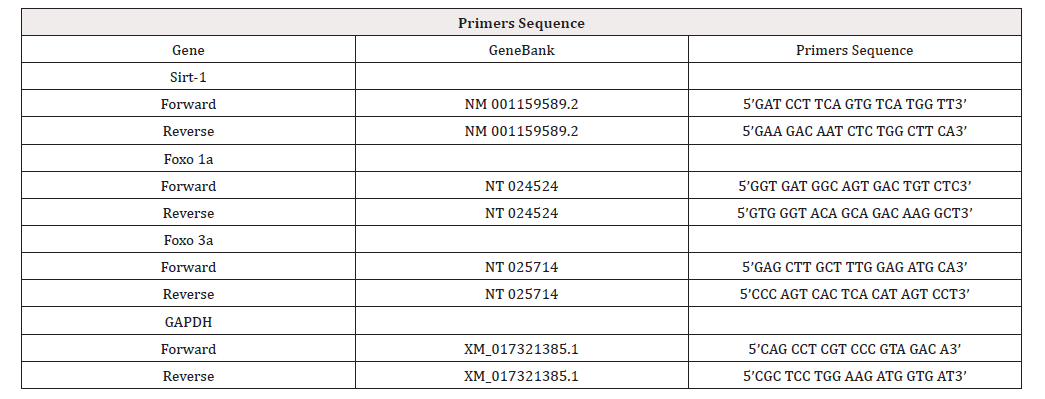
Table 1:Primer sequences of the target genes for RT-PCR.
Statistical Analysis
Scanning and analysis counting was performed using FUJIFILM Imagine. The hybridization signal intensity was determined using the Western blot analysis program. Data statistical analysis was performed using SigmaStat 10 software. The results are expressed as mean ± SEM. Statistical analysis was performed using Student’s t-test analysis.
On the Space Fp of Proton’s Wave Functions
The Interaction Between Exercise Training and Resveratrol Intake is Regulated Through the Sirt-1/Foxo3a/Foxo1a Signaling Pathway in Long-Term Experimental Mice Natural Age-Related Liver Disease
The most well recognized risk factor for many chronic diseases is physiological aging. The pathophysiology of Nonalcoholic Fatty Liver Disease (NAFLD) is a specifically relevant disease in the elderly. We used the long-term rearing of normal animals into senility to test the liver organ. Three-month-old mice were used to carry out preventive tests against 18-month-old mice aging mice. The liver cross-section pathophysiology was detected in aging mice, aging exercise training mice, aging resveratrol intake and aging combined with exercise training and resveratrol intake mice using Hematoxylin-Eosin (H&E) and Masson’s trichrome staining. The results showed that adipocytes occurred in the aging section. After exercise training or resveratrol intake, adipocytes and collagen accumulation became less. In exercise training and resveratrol intake combination group has recovered (Figure 1A). Based on this finding, we further identify the accurate SIRT-1/Foxo3a/Foxo1a pathway molecular mechanisms signaling pathway in individual elderly mice. During mitochondrial function, SIRT-1 activity increases with exercise and resveratrol in the aging mice (p<0.05). Foxo1a is also central to the decision for a preadipocyte to commit adipogenesis. We observed adipocytes in the aging exercise training mice in the cross section and little collagen using hematoxylin-eosin and Masson’s trichrome staining (Figure 1A). However, resveratrol intake in aging mice found only Foxo3a (p<0.05) increased, but exercise training has no significant difference, when compared with the aging control mice. In contrast, exercise training in aging mice only found increased Foxo1a (p<0.01), but resveratrol intake has no significant difference (Figure 1B). The combination of exercise training and resveratrol intake induced increased SIRT-1 and decreased Foxo1a/ Foxo3a. We suggest that combined exercise training and resveratrol intake can suppress aging related mitochondrial damage protein expression and enhance anti-aging mitochondrial function protein expression levels.
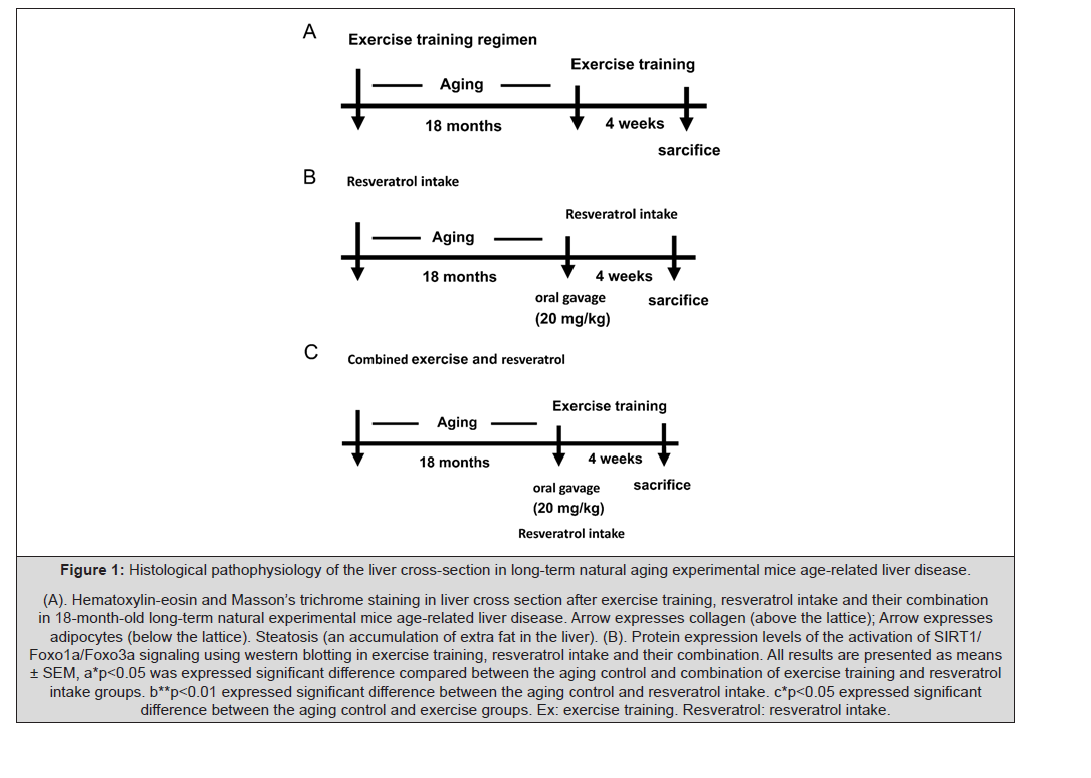
Figure 1:Histological pathophysiology of the liver cross-section in long-term natural aging experimental mice age-related liver disease. (A). Hematoxylin-eosin and Masson’s trichrome staining in liver cross section after exercise training, resveratrol intake and their combination in 18-month-old long-term natural experimental mice age-related liver disease. Arrow expresses collagen (above the lattice); Arrow expresses adipocytes (below the lattice). Steatosis (an accumulation of extra fat in the liver). (B). Protein expression levels of the activation of SIRT1/ Foxo1a/Foxo3a signaling using western blotting in exercise training, resveratrol intake and their combination. All results are presented as means ± SEM, a*p<0.05 was expressed significant difference compared between the aging control and combination of exercise training and resveratrol intake groups. b**p<0.01 expressed significant difference between the aging control and resveratrol intake. c*p<0.05 expressed significant difference between the aging control and exercise groups. Ex: exercise training. Resveratrol: resveratrol intake.
Exercise Training, Resveratrol Intake and their Combination Facilitate IGF-I/PI3K/AKT Survival Signaling Pathway Balance in Long-Term Natural Experimental Mice Animal Model
Increased mitochondrial biogenesis and capacity may take place during exercise or nutrition resveratrol intake to balance many biochemical adaptations in aging process. However, IGF-I/ PI3K/AKT survival signaling pathway balance detection is very important. With aging, exercise training, resveratrol intake and combination facilitated the IGF-I/PI3K/AKT signaling pathway. This result showed us the IGF-I protein expression level increased in the resveratrol intake (p<0.05) and combined exercise training and resveratrol intake groups (p<0.01). The PI3K protein expression level increased in the combined exercise training and resveratrol intake group (p<0.05). The Akt protein expression level increased in the exercise training (p<0.05), resveratrol intake (p<0.01), and combined exercise training and resveratrol intake groups (p<0.001) (Figure 2). We suggest that combined exercise training and resveratrol intake is effective in increasing the IGF-I/PI3K/AKT survival signaling pathway in the long-term naturally aged experimental mice animal model.
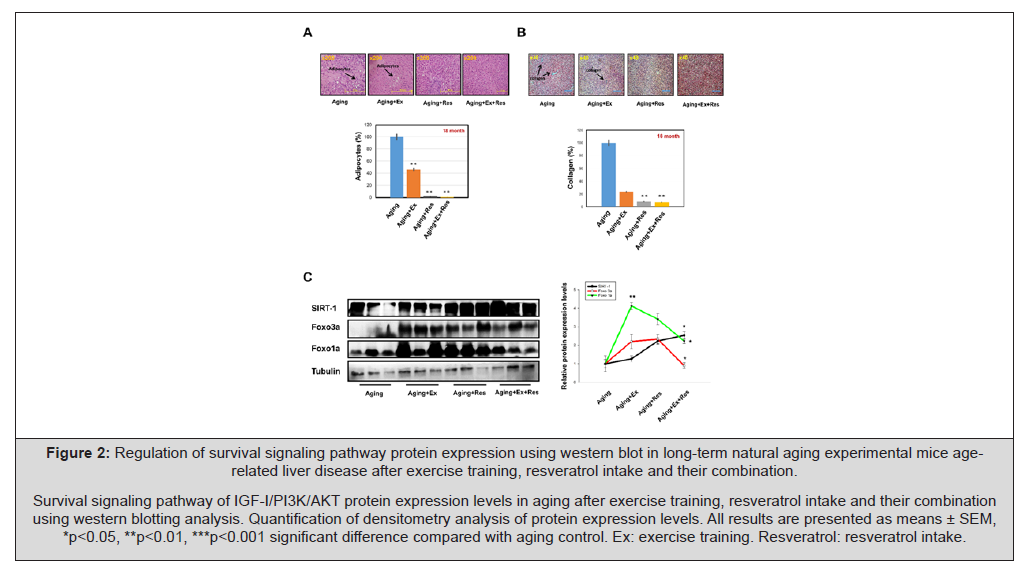
Figure 2:Regulation of survival signaling pathway protein expression using western blot in long-term natural aging experimental mice agerelated liver disease after exercise training, resveratrol intake and their combination. Survival signaling pathway of IGF-I/PI3K/AKT protein expression levels in aging after exercise training, resveratrol intake and their combination using western blotting analysis. Quantification of densitometry analysis of protein expression levels. All results are presented as means ± SEM, *p<0.05, **p<0.01, ***p<0.001 significant difference compared with aging control. Ex: exercise training. Resveratrol: resveratrol intake.
Mitochondrial Function in the Long-Term Naturally Aged Experimental Mice Animal Model
In cell survival, IGF-1 activates PI3K/Akt signaling and plays a role in preventing apoptosis. The mitochondria may play an important role in apoptosis by releasing Cytochrome c, Bad and Bcl 2. The Bcl 2 protein expression level increased in both the resveratrol intake and their combination groups (p<0.01). The Bad protein expression level decreased only in the combined exercise training and resveratrol intake group (p<0.05). The exercise training and resveratrol intake groups showed no significant differences. However, the Cytochrome c protein expression level decreased in the exercise training (p<0.05), resveratrol intake (p<0.01) and combined exercise training and resveratrol intake groups (p<0.001) (Figure 3). IGF-I triggers PI3K/Akt intracellular signaling cascades that modulate and facilitate growth and survival and promotes apoptosis.
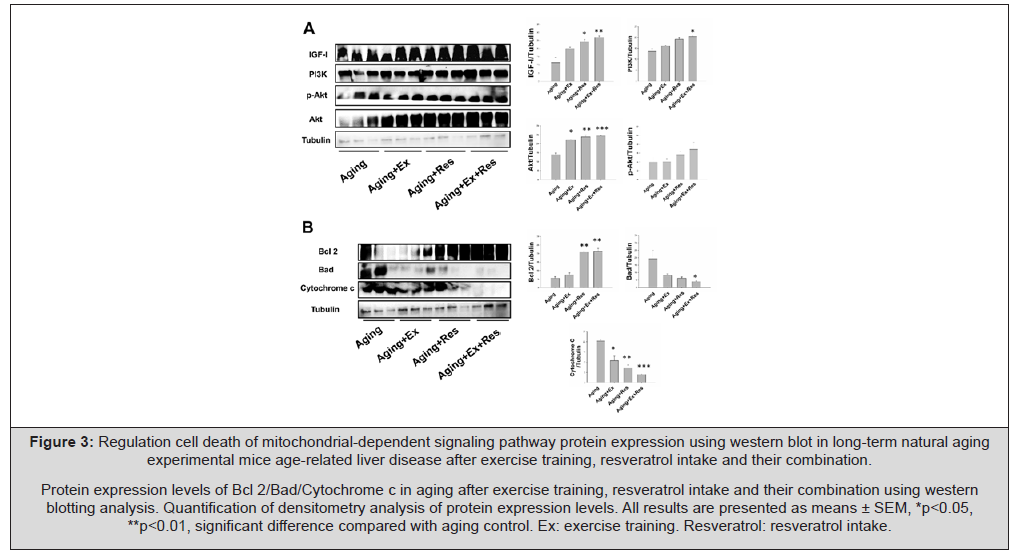
Figure 3:Regulation cell death of mitochondrial-dependent signaling pathway protein expression using western blot in long-term natural aging experimental mice age-related liver disease after exercise training, resveratrol intake and their combination. Protein expression levels of Bcl 2/Bad/Cytochrome c in aging after exercise training, resveratrol intake and their combination using western blotting analysis. Quantification of densitometry analysis of protein expression levels. All results are presented as means ± SEM, *p<0.05, **p<0.01, significant difference compared with aging control. Ex: exercise training. Resveratrol: resveratrol intake.
The Pro-Inflammatory Cytokines, IL-6, And Pro-Apoptosis, Fas-L, Protein Expression Level in the Long-Term Natural Experimental Mice Animal Model
The death-receptor-induced apoptotic pathway is initiated by the death-agonists, Fas-L, and IL-6, which is reportedly in the liver disease. Figure 4 shows the exercise training and resveratrol intake groups exhibit reduced Fas-L protein expression level (p<0.05). Strangely, the combination group did not exhibit significantly decreased levels. The pro-inflammatory cytokine, IL-6, was suppressed in the exercise training (p<0.05), resveratrol intake (p<0.01) and their combination groups (p<0.01).
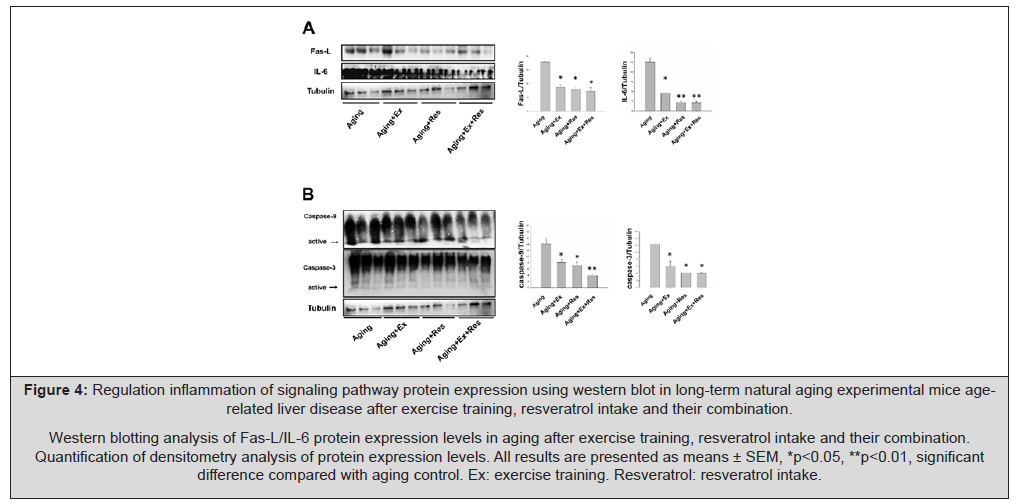
Figure 4:Regulation inflammation of signaling pathway protein expression using western blot in long-term natural aging experimental mice agerelated liver disease after exercise training, resveratrol intake and their combination. Western blotting analysis of Fas-L/IL-6 protein expression levels in aging after exercise training, resveratrol intake and their combination. Quantification of densitometry analysis of protein expression levels. All results are presented as means ± SEM, *p<0.05, **p<0.01, significant difference compared with aging control. Ex: exercise training. Resveratrol: resveratrol intake.
Exercise Training, Resveratrol Intake and their Combination Suppressed the Apoptosis Signaling Pathway Imbalance in the Long-Term Natural Aging Experimental Mice Animal Model
Apoptosis is for the elimination of redundant cells in liver disorder pathogenesis during aging. Caspase-9 and Caspase-3 mediate mitochondria-dependent and death-receptor-dependent apoptotic pathways. Caspase-9 and Caspase-3 protein expression levels were decreased in the exercise training, resveratrol intake and their combined groups (Figure 5). The important role of resveratrol intake and exercise training interaction in cell survival and cell apoptosis prevention is elucidated.
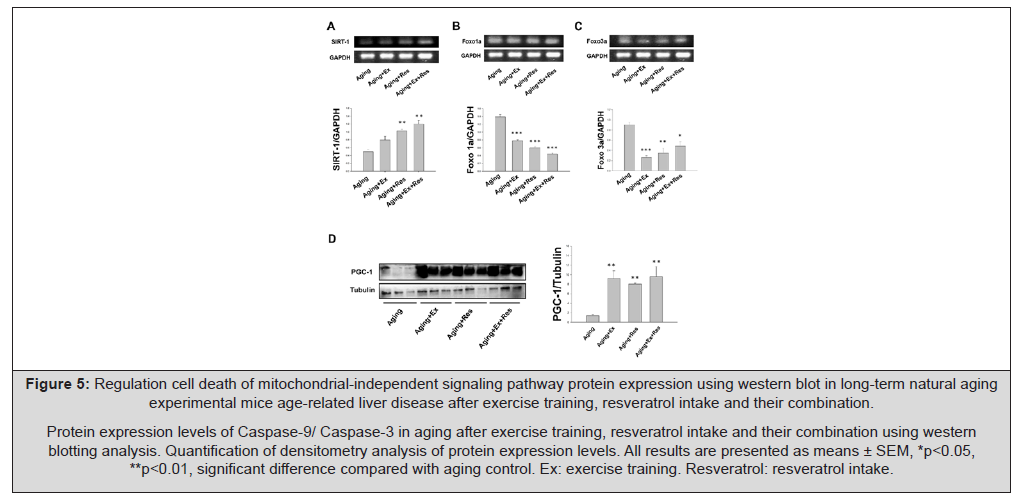
Figure 5:Regulation cell death of mitochondrial-independent signaling pathway protein expression using western blot in long-term natural aging experimental mice age-related liver disease after exercise training, resveratrol intake and their combination. Protein expression levels of Caspase-9/ Caspase-3 in aging after exercise training, resveratrol intake and their combination using western blotting analysis. Quantification of densitometry analysis of protein expression levels. All results are presented as means ± SEM, *p<0.05, **p<0.01, significant difference compared with aging control. Ex: exercise training. Resveratrol: resveratrol intake.
Discussion
Life span shortening can occur as the result of genetic alterations. Reduced cell suicide rate due to DNA damage can therefore make life span longer [11,12]. Aging is an inevitable process involving random and passive declines in biological functions, leading to loss of homeostasis over time [13]. Successful aging is the accumulation of gradual structural changes in a person over time, but not due to disease or disability-free eventually leading to death [14,15]. Once the amount of free radicals in the body exceeds the body’s natural defenses, resulting in oxidative stress, a variety of diseases and aging ensues [16]. However, the aged liver can be a factor in the reduction of liver functions, adipocytes and collagen if unfavorable conditions like morbidities accompany it (Figure 1A). Exercise training, resveratrol intake and their combination facilitate cell death and survival interactions [17]. SIRT-1 expression and Foxo1a/Foxo3a down regulation promote anti-apoptosis and cell death through exercise training, resveratrol intake and combination (Figure 1B). Foxo1a upregulates Fas-L/IL-6 transcriptionally resulting in Foxo1a regulating gluconeogenesis and glycogenolysis by insulin signaling. This is also central to the decision for a preadipocyte to commit to adipogenesis [18,19]. Fas-L and IL-6 exhibit different regulation mechanisms in the long-term natural aging experimental mice animal model following exercise training, resveratrol intake and their combination (Figure 4). Natural aging induces age-related liver disease to ameliorate aging liver apoptosis after exercise training, resveratrol intake and their combination [20]. Exercise training, resveratrol intake and their combination lead to IGF-I-PI3K-Akt increases (Figure 2). Exercise training improves the vasodilatory properties of the vasculature thereby optimizing O2 transport throughout the body [21]. While moderate exercise accelerates O2 entering the body via the lungs to the liver and functionally optimizes the organ systems to maintain or improve an active lifestyle [22,23]. Mitochondrial function aging grade induced different degrees of cell life and apoptosis interaction. Exercise training, resveratrol intake and their combination leads to different Bcl-2/Bad/Cytochrome c (Figure 3) and Caspase-9/ Caspase-3 regulations (Figures 5,6). Physical exercise is considered important for maintaining physical fitness promoting physiological well-being and strengthening the immune system [24]. Supplementing aging mice with resveratrol during exercise training could improve their exercise performance and oxidative metabolism. We therefore suggest that a combination of exercise training and complementary resveratrol intake will promote excellent biological function.
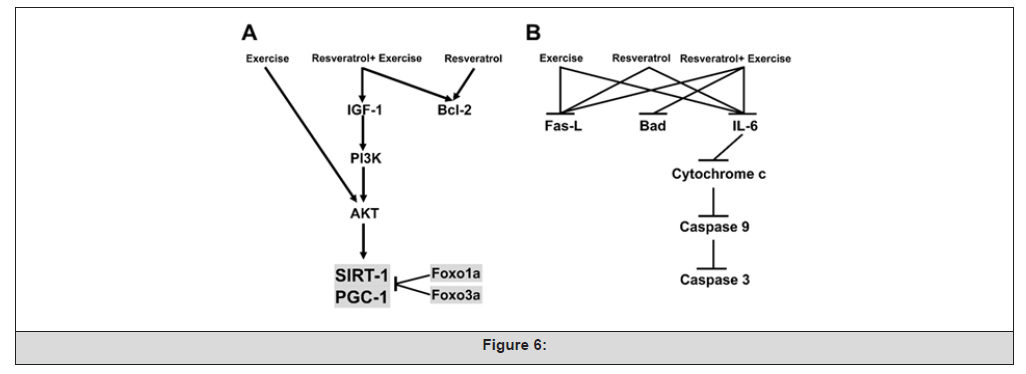
Figure 6:
Acknowledgements
This work was supported in part by grants from the National Science Council of Taiwan. All authors have declared that no competing interest exists.
Funding/Support Statement
This work was supported by Shaoguan University Grant provided (No. TJ20227050).
Author Contributions
JP Wu and Dan Guo designed this study, analyzed the patient data, and wrote the manuscript.
Disclosure of Conflicts of Interest
All authors declare no conflicts of interest, including financial relationships such as honoraria; educational grants; participation in speakers’ bureaus; membership, employment, consultancies, stock ownership, or other equity interest; expert testimony or patent- licensing arrangements. Non-financial conflicts include personal or professional relationships, affiliations, academic competition, intellectual passion, knowledge or beliefs that might affect objectivity.
Ethical Approval of Studies and Informed Consent
No human patients participated in this experimental investigation. All animal procedures were approved by the Institutional Animal Care and Use Committee, Fooyin University (107-RDH-002). The principles outlined in the Declaration of Helsinki were followed (World Medical Association). All surgical procedures performed on animals, the preanesthetic and anesthetic agents used, and the amount or concentration and route and frequency of administration are described in the manuscript text. Manuscripts involving animals indicate that the study was approved by the Fooyin University Animal Care and Use Committee. Reports of studies on animals indicate that the procedures followed were in accordance with Fooyin University guidelines.
References
- Tung Bui Thanh, Rodríguez Bies Elisabet, Manuel Ballesteros Simarro, Virginia Motilva, Placido Navas, et al. (2014) Modulation of Endogenous Antioxidant Activity by Resveratrol and Exercise in Mouse Liver is Age Dependent. J Gerontol A Biol Sci Med Sci 69(4): 398-409.
- Gliemann L, Nyberg M, Hellsten Y (2016) Effects of exercise training and resveratrol on vascular health in aging. Free Radic Biol Med 98: 165-176.
- Kan NW, Ho CS, Chiu YS, Wen Ching Huang, Pei Yu Chen, et al. (2016) Effects of Resveratrol Supplementation and Exercise Training on Exercise Performance in Middle-Aged Mice. Molecules 21(5): 661-672.
- Kelly G (2010) A Review of the Sirtuin System, its Clinical Implications, and the Potential Role of Dietary Activators like Resveratrol: Part 1. Altern Med Rev. Alternative Medicine Review 15(3): 245-263.
- Alkhouli MF, Hung J, Squire M (2019) Exercise and resveratrol increase fracture resistance in the 3xTg-AD mouse model of Alzheimer's disease. BMC Complementary and Alternative Medicine 19: 39.
- Liao ZY, Chen JL, Xiao MH, Yue Sun, Yu Xing Zhao, et al. (2017) The effect of exercise, resveratrol or their combination on Sarcopenia in aged rats via regulation of AMPK/Sirt1 pathway. Exp Gerontol 98: 177-183.
- Han S, Bal NB, Sadi G, Suzan E Usanmaz, M Orhan Uludag, et al. (2018) The effects of resveratrol and exercise on age and gender-dependent alterations of vascular functions and biomarkers. Exp Gerontol 110: 191-201.
- Joris PJ, Mensink RP, Adam TC, Thomas T Liu (2018) Cerebral Blood Flow Measurements in Adults: A Review on the Effects of Dietary Factors and Exercise. Nutrients 10(5): 530.
- Murase T, Haramizu S, Ota N (2009) Suppression of the aging-associated decline in physical performance by a combination of resveratrol intake and habitual exercise in senescence-accelerated mice. Biogerontology 10(4): 423-34.
- Rodríguez Bies, Elizabeth T, Bui T (2016) Resveratrol primes the effects of physical activity in old mice. BR J NUTR 116(6): 979-88.
- Ringholm S, Olesen J, Pedersen JT, Christina Tingbjerg Brandt, Jens Frey Halling, et al. (2013) Effect of lifelong resveratrol supplementation and exercise training on skeletal muscle oxidative capacity in aging mice; impact of PGC-1α. Exp Gerontol 48(11): 1311-1318.
- Olesen J, Ringholm S, Nielsen MM, Christina T Brandt, Jesper T Pedersen, et al. (2013) Role of PGC-1α in exercise training- and resveratrol-induced prevention of age-associated inflammation. Exp Gerontol 48(11): 1274-1284.
- Olesen J, Gliemann L, Biensø R, Jakob Schmidt, Ylva Hellsten, et al. (2014) Exercise training, but not resveratrol, improves metabolic and inflammatory status in skeletal muscle of aged men. Journal of Physiology 592(8): 1873-1886.
- Dolinsky VW, Dyck JR (2014) Experimental Studies of the Molecular Pathways Regulated by Exercise and Resveratrol in Heart, Skeletal Muscle and the Vasculature. Molecules 19: 14919-14947.
- da Luz PL, Tanaka L, Brum PC, Paulo Magno Martins Dourado, Desidério Favarato, et al. (2012) Red wine and equivalent oral pharmacological doses of resveratrol delay vascular aging but do not extend life span in rats. Atherosclerosis 224(1): 136-42.
- Simioni C, Zauli G, Martelli AM, Marco Vitale, Gianni Sacchetti, et al. (2018) Oxidative stress: role of physical exercise and antioxidant nutraceuticals in adulthood and aging. Oncotarget 9(24): 17181-17198.
- Gliemann L, Olesen J, Biensø RS, Jakob Friis Schmidt, Thorbjorn Akerstrom, et al. (2014) Resveratrol modulates the angiogenic response to exercise training in skeletal muscles of aged men. American Journal of Physiology: Heart & Circulatory Physiology 307(8): H1111-9.
- Novelle MG, Wahl D, Diéguez C, Michel Bernier, Rafael de Cabo, et al. (2015) Resveratrol supplementation: Where are we now and where should we go? Ageing Res Rev 21: 1-15.
- Sin TK, Yu AP, Yung BY, Shea P Yip, Lawrence W Chan, et al. (2015) Effects of long-term resveratrol-induced SIRT1 activation on insulin and apoptotic signaling in aged skeletal muscle. Acta Diabetol 52(6): 1063-1075.
- Ungvari Z, Kaley G, de Cabo R, William E Sonntag, Anna Csiszar, et al. (2010) Mechanisms of vascular aging: new perspectives. J Gerontol A Biol Sci Med Sci 65(10): 1028-1041.
- Gliemann L, Schmidt JF, Olesen J, Rasmus Sjørup Biensø, Sebastian Louis Peronard, et al. (2013) Resveratrol blunts the positive effects of exercise training on cardiovascular health in aged men. Journal of Physiology 591(20): 5047-5059.
- Ballak SB, Jaspers RT, Deldicque L, Sreeda Chalil, Eva L Peters, et al. (2014) Blunted hypertrophic response in old mouse muscle is associated with a lower satellite cell density and is not alleviated by resveratrol. Exp Gerontol 62: 23-31.
- Mercken EM, Carboneau BA, Krzysik Walker SM, et al. (2012) Of mice and men: The benefits of caloric restriction, exercise, and mimetics. Ageing Res Rev 11(3): 390-398.
- López Lluch G, Irusta PM, Navas P, et al. (2008) Mitochondrial biogenesis and healthy aging. Exp Gerontol 43(9): 813-819.




 We use cookies to ensure you get the best experience on our website.