
Research Article 
 Creative Commons, CC-BY
A Compendium of 23 Papers Critical of US Public Health Policy on Pain Management and Ad
*Corresponding author: Ibrahim Ismail Mohammed Abu, Department of Community Medicine, Faculty of Medicine, King Abdulaziz University, Jeddah, Saudi Arabia and Community Medicine Department, Faculty of Medicine, El Fasher University, El Fashir city, North Darfur State, Sudan.
Received: December 24, 2024; Published: March 04, 2025
DOI: 10.34297/AJBSR.2025.26.003402
Abstract
This prospective hospital-based descriptive study was conducted in-two main pediatric hospitals in Kassala from September 2020 to February- 2021 to assess the prevalence of malaria and investigate the clinical characteristics of Plasmodium vivax (P.vivax) infection in children under 18 years of age in Kassala state, Sudan. The overall prevalence of P. vivax infection (mono infection) with P. vivax or coinfection with P. falciparum) was 0.49%. Children under 5 years of age were the most affected group (76.5%). Fever was the most common symptom (98.1%), followed by vomiting (53%). Survival was associated with severe malaria complications, including convulsions (10.2%), in 22,23% of the patients. P. vivax malaria poses a significant health risk for children in Kassala state, can cause severe illness and should not be considered a benign condition. Studies are needed to explore and better understand the burden of P. vivax malaria in Sudan.
Keywords: P. vivax, Malaria, Burden, Prevalence, Kassala, Sudan
Background
Malaria is one of the most prominent and oldest diseases and is well known and studied. is a major public health problem, especially in tropical countries. Malaria is one of the greatest burdens to humans, and the mortality rate of malaria is not comparable of all other diseases other than tuberculosis. Malara is caused by different parasites, but the following four agents are common in Sudan: Plasmodium falciparum, Plasmodium vivax, Plasmodium malaria and Plasmodium ovule. Malaria is one of the major health problems in most tropical countries [1]. Studies have revealed that there may be hundreds of millions of new malaria cases annually, an addition al million deaths annually world wide caused by malaria, and more than 90% of these deaths occur around tropical regions and in sub-Saharan Africa [2]. The WHO reported on morbidity and mortality in 2020 and estimated that there 241 million malaria cases and 62700 malaria deaths worldwide [3].
The Ministry of Health (MOH) reported that the incidence of malaria cases exceeded 6 million episodes in 2010, and there were more than 22,000 malarial deaths. [data from MOH unpublished report] One of the major contributing factors to malaria mortality is delayed or inaccurate diagnosis. There fore, one of the main strategic directions of the [Roll Back Malaria strategic plan for Sudan], early diagnosis and treatment of malaria, is a necessary component in the control of malaria [4].
In Kassala state, the incidence of malaria in 2012 and 2013 was 132248 episodes, and the number of deaths was 43[data from MOH unpublished reports]. Although Plasmodium vivax is prevalent after Plasmodium falciparum is prevalent, it has a wider geographical distribution than does P. falciparum, because of the greater risk to people and its difficulty in control due to the hypnozoite forms of the parasite [5-7]. Recent reports on P. vivax infections suggest that this parasite may evolve and adapt to new epidemiological contexts, becoming not only more virulent but also more frequent in countries where the incidence has traditionally been low [6,8,9]. Furthermore, these reports show that P. vivax can infect even Duffy-negative African patients [10]. Malaria has become a common public health problem in Kassala state and other parts of Sudan [11]. and few studies have determined the rate and severity of P.vivax infection in Sudan.
Methods
This prospective hospital-based descriptive study was conducted in two main pediatric hospitals in Kassala, namely; Kassala Teaching Hospital and Kuwait Hospital for Children. Both are located in Kassala, the capital city of Kassala state in the eastern part of Sudan. Kassala teaching hospital is located in the center of Kassala town eat of the Algash River and is a training hospital for medical students at Kassala University. Health care for patients from all over the states should be provided. Kuwait Hospital for children located west of Algash River is also a training center for medical students and provides medical services for nearby urban and peri-urban children.
The study included all children less than 18 years of who presented at Kassala and Kuwait Hospitals with symptoms suggestive of malaria and positive blood film immunochromatographic test (ICT), and malaria antigen test (MAT) result for P. vivax. All the children who were younger than 18 years of age had clinical features such as fever, vomiting, etc., with positive blood result and ICT or malaria antigen tests for P. vivax admitted or observed in our patients. Children with negative laboratory tests for P.vivax or whose parents disagreed to participate in the study were excluded.
A standardized questionnaire collected demographic information (age, sex, address) and clinical examination findings (pallor, splenomegaly, jaundice, level of consciousness), blood film for malaria (BFFM), (ICT) for malaria, malaria antigen test and hemoglobin (Hb) levels. The study depended on two Giemsa microscopy methods and rapid diagnostic tests. Giemsa 10% was used to prepare and stain both thin and thick blood films for investigation, and 100 oil immersion fields were examined for vivax. The parasite density was evaluated by counting the number of asexual parasites for every 200 leukocytes, assuming a leukocyte count of 8000 leukocytes/ μl. All the slides were double-checked in a blinded manner and considered negative only if no parasites were detected in 100 oil immersion fields.
The data were collected and coded and then entered into a computer software program (SPSS version 16.0). Descriptive statistics were used to analyze the demographic and clinical data. Chi-square (χ²) tests were performed to assess significant differences between variables (p- values <0.05 were considered significant).
Approval for the study was obtained from the medical specialization board and the administration of both participating hospitals. Informed consent was obtained verbally from the parents or guardians of all the enrolled children.
Study Results
This study included 157 children. A total of 94.3% were from Kuwaiti Hospital, and 5.7% were from Kassala Teaching Hospital. The study included {58.0%} males and {42.0%} females, and the male: female ratio was {1.38:1} The overall prevalence of P. vivax mono- or coinfection with P. vivax and P. vivax was 0.49% in the two hospitals. A total of 66.9% of the study population resided in Kassala town, 16.6% in peri-urban areas and 16.66% in rural areas (Table 1)
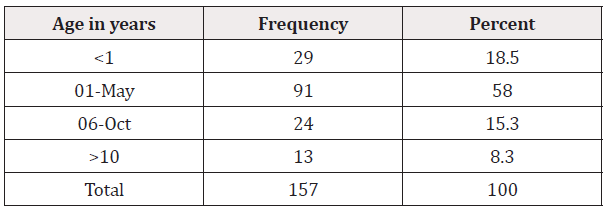
Table 1: Distribution of the study population according to age.
According to the above table, 77.5% of the affected by malaria in study area are Children under five years of age, followed by those between five years and ten years of age. (Table 2)

Table 2: Distribution of malaria cases in Kassala according to the seasonal variations, in Kassala state.
The Table above shows that the highest incidence of malaria was in the rainy season months from September, October, and November to December in Kassala state. (Table 3)

Table 3: The main symptoms of malaria among the patients in Kassala state.
As shown above, fever was present in 98.1% of the patients, followed by vomiting 53%, the headache and diarrhea which present only in 9.6% of patients.
In terms of the frequency of the main signs, the Pallar was present in 28.6% of patients, and splenomegaly and-hepatomegaly were found in 16.6% of the patients. (Table 4)

Table 4: WHO criteria for severe malaria among malaria cases in Kassala state.
The table above, shows that 35 of cases (22.3%) of patients who ceased malaria fulfilled at least one of the WHO criteria for severe malaria. The Table revealed that 10% of cases present with convulsions followed by high grate fever, and in less extent with severe anemia and no cases presented by hypotension.
Table 5 shows that P. vivax was detected in 75% of the patients and that approximately 22.9% of the patients with malaria were considered with blood samples.

Table 5: Distribution of malaria cases according to mono and co-infection status in Kassala state.
As shown in Figure 1 above, among the; 157 patients with malaria, 40 patients, accounting for 22.5% were admitted to award and received quinine infusion and eradication with primaquine for 14 days, where as the other patients, accounting for 117, accounting 74.5% were treated as outpatients (88 patients received artemether, and 29 patients received artesunate), followed by primaquine for 14 days.
All admitted patients improved after they started quinine with primaquine, and no deaths were reported in this study. Even patients presented with severe infection.

Figure 1: Distribution of malaria cases according to antimalaria treatment.
Discussion
This study is a hospital based descriptive study carried out in two hospitals in Kassala State [Kassala Teaching and Kuwaiti Hospital for Children and may not represent the situation of P. vivax infection status.
The overall prevalence rate of malaria observed in this study was 0.49% among children seen in these two hospitals from September- to February. The present study included 157 patient with P. vivax infection, and most of the children were < 5 years (120 cases =76.5%) in our study. In this age group, severe anemia with a low concentration of Hb was prevalent, suggesting that children in this age group constitutes a biological risk group. The development of poor immunity against disease is related to a lack of exposure. However, as they age and are repeatedly exposed to the disease, they gradually develop protective immunity [12,13].
Fever represented 98.1% of the patients, which confirms previous observations made in Colombia. This finding is also in line with classic findings of malaria and with recent studies conducted at the institute of Tropical Medicine Sao Paulo in different geographical regions of Brazil, which reported that fever accounted for 91.1% of cases [14]. The frequency of vomiting was age dependent and was 51% in our study, which is similar to the finding of a retrospective study conducted by Malik, et al. in the Asir region in Saudi Arabia, which included children under 5 years of age and vomiting was the second most common symptom, accounting for 54% of vomiting cases [15]. Furthermore, in the present study, the frequency of diarrhea was 9.6% in children, which is in accordance with Da Silva, et al. who reported 13% diarrhea in children from a study conducted in Rio in 1999 in-Brazil [16].the frequency of P.vivax-associated severe malaria complications in this study was 22.2%, which is higher than that reported in studies conducted in eastern Sudan{halfa Al Gadema} among children admitted to the hospital due to severe P. vivax malaria. However, this study agreed with the results of half of previous studies, where most patients presented with sever malaria complications, especially hyperpyrexia, severe malaria, jaundice and convulsion, such as cerebral malaria [17]. Convulsion was observed in {10.2%} of patients as Sachdew and Mohan to study the clinical laboratory profiles of six patients with P. vivax included cerebral malaria [complications of P. vivax infection, confirming the results of study performed by [18]. Our data confirmed the findings of a study performed by Wurtzn, et al. in Mauritania, who reported that P. vivax is not a rare disease in Africa, including Sudan [10].
Conclusions
P. vivax malaria poses a significant health threat to children in Kassala state, Sudan. Despite its historical reputation as a less severe form of malaria, this study demonstrates the potential for P. vivax to cause severe illness, including complications similar to those associated with P. falciparum. While microscopic errors and coinfections with P. falciparum can complicate the assessment of P. vivax severity, the findings underscore the need for ongoing research and improved clinical management strategies for this parasite.
Recommendations:
To address the burden of P. vivax malaria in Kassala state: i. Invest in community-based studies: Conducting research to identify P. vivax infections, especially in peri-urban areas, to inform targeted interventions. ii. Enhance access to treatment: Collaborate between governmental and nongovernmental organizations to ensure free and accessible P. vivax treatment for children. iii. Expand surveillance: Conduct prevalence studies for P. vivax malaria in other regions of Sudan to assess the national burden of the disease. iv. Improving laboratory diagnostics: P. vivax species identification should be incorporated into routine laboratory investigations to facilitate accurate diagnosis and treatment. v. Develop treatment guidelines: Establish clear guidelines for the treatment of both simple and complicated P. vivax infections in children, including eradication strategies.
References
- Breman JG, Egan A, Keusch GT (2001) The intolerable burden of malaria: a new look at the numbers. Am J Trop Med Hyg 64(1-2 Suppl): iv-vii.
- (2010) WHO Global Malaria Programme: World Malaria Report Geneva. Geneva: World Health Organization.
- Liu Q, Yan W, Qin C, Du M, Liu M, et al. (2022) Millions of excess cases and thousands of excess deaths of malaria occurred globally in 2020 during the COVID-19 pandemic. Journal of Global Health 12: 05045.
- Abdalla SI, Malik EM, Ali KM (2007) The burden of malaria in Sudan: incidence, mortality and disability--adjusted life--years. Malar J 6: 97.
- Guerra CA, Howes RE, Patil AP, Gething PW, Van Boeckel TP, et al. (2010) The international limits and population at risk of Plasmodium vivax transmission in 2009. PLo SNeglTrop Dis 4(8): e774.
- Baird JK (2009) Resistance to therapies for infection by Plasmodium vivax. Clinical Microbials Rev 22: 508-534.
- Sattabongkot J, Tsuboi T, Zollner GE, Sirichaisinthop J, Cui L (2004) Plasmodium vivax transmission: chances for control? Trends Parasite 20(4): 192-198.
- Galinski MR, Barnwell JW (2008) Plasmodium vivax: who cares? Malaria J 7(Suppl 1): S9.
- Mueller I, Galinski MR, Baird JK, Carlton JM, Kochar DK, et al. (2009) Key gaps in the knowledge of Plasmodium vivax, a neglected human malaria parasite. Lancet Infect Dis 9(9): 555-566.
- Wurtz N, Mint Lekweiry K, Bogreau H (2011) Vivax malaria in Mauritania includes infection of a Duffy-negative individual. Malaria J 10: 336.
- WHO (2011) Emergency preparedness and humanitarian action (EHA). Sudan, Sudan Health Highlights, World Health Organization, Geneva, Switzerland.
- Le Port A, Cottrell G, Martin-Prevel Y, Migot Nabias F, Cot M, et al. (2012) First malaria infections in a cohort of infants in Benin: biological, environmental and genetic determinants. Description of the study site, population methods and preliminary results. BMJ 2(2): e000342.
- Doolan DL, Dobano C, Baird JK (2009) Acquired Immunity to Malaria. Clin Microbiol Rev 22(1): 13-36.
- Marcela Echeverri, Alberto Tobón, Gonzalo Álvarez; Jaime Carmona, Silvia Blair (2003) Clinical and laboratory findings of Plasmodium vivax malaria in Colombia, 2001. Rev Inst Med trop S Paulo 45(1): 29-34.
- Malik G M, Seidl O, El taher A, A S Mohammed (1998) Clinical aspects of malaria in the Asir region, Saudi Arabia. Ann. Saudi Med 18(1): 15-17.
- Dasilvia Ventura AMR, PInto, et al. (1999) Clinical and laboratory finding of plasmodium vivax. J Pediat (Rio de J.) 75: 187-194.
- Mahgoub H, Gasim I Gasim, Imad R Musa, Ishag Adam (2012) Severe Plasmodium vivax malaria among Sudanese children at New Halfa Hospital, Eastern Sudan. Parasites & Vectors 5: 154.
- Sachdev HPS, Mohan M (1985) Vivax cerebral malaria. J Trop Pediatr 31(4): 213-215.




 We use cookies to ensure you get the best experience on our website.