
Research Article 
 Creative Commons, CC-BY
Storage Study of Encapsulated Peanut Oil: Assessing Shelf Life and Oxidative Resistance
*Corresponding author: Sachin S Bhuva, Department of Processing and Food Engineering, CAET, JAU, Junagadh, Gujarat, India.
Received: August 05, 2024; Published: August 20, 2024
DOI: 10.34297/AJBSR.2024.23.003123
Abstract
Peanut oil, renowned for nutty flavour and nutritional value, faces challenges in storage due to high susceptibility to oxidative deterioration. In this study, encapsulation was employed using corn starch and whey protein isolate using microwave technique to enhance peanut oil stability. The unencapsulated and encapsulated peanut oil were stored under ambient conditions for 180days. Bio-chemical characteristic was monitored during storage. The results revealed that the peroxide value increased during storage, remained significantly lower in encapsulated peanut oil (8.040meq/ kg oil) as compared to un-encapsulated peanut oil (16.823meq/kg oil). The un-encapsulated peanut oil exhibited a higher rate of increase in Free Fatty Acids (FFA). The encapsulated peanut oil confirmed a minor change in antioxidant activity (14.04%). Un-encapsulated peanut oil showed a higher rate of decrease in total phenol content. Overall, encapsulation proved to be an effective technique in protecting peanut oil from oxidative deterioration and extending its shelf life, thus can be used in biomedical science to provide the peanut oil and its’ benefits to their respective site in effective form.
Keywords: Peanut oil, Encapsulation, Storage stability, Oxidative resistance, Peroxide value
Introduction
Peanut (Arachis hypogaea L) oil is widely recognized and consumed for its distinctive nutty flavour, high smoking point, and nutritional value. However, the susceptibility of peanut oil to oxidation poses a significant challenge to its storage and shelf life [1]. Oxidative degradation of peanut oil can lead to the development of undesirable flavours, rancidity, and a decline in its nutritional quality [2]. To address this issue, encapsulation techniques have been investigated to enhance the storage stability. Encapsulation involves enclosing a substance within a protective coating or matrix, providing a barrier against oxygen, light, and moisture [3]. This approach has shown promising results in improving the stability of various food ingredients and bioactive compounds [4]. In addition, encapsulation technique also offers advantages such as controlled release of bioactive compounds, masking of unpleasant flavours, and protection against enzymatic degradation. Comprehensive studies comparing the storage stability of encapsulated and unencapsulated peanut oil are currently limited. This research aims on evaluating and comparing the storage stability of encapsulated and unencapsulated peanut oil. The findings from this study will significantly contribute to our understanding of the effectiveness of encapsulation to enhance the storage stability of peanut oil. which enhance the superficial effect in human body by providing it at specific site in supportive forms while preserving the natural compounds.
Materials and Methods
Procurement of Materials
Peanut (GJG-32) was procured from Main Oilseed Research Station of Junagadh Agricultural University (Junagadh, Gujarat). The cold pressed peanut oil used for the storage as well as encapsulation. Corn starch, whey protein isolates and lecithin were procured from the local market. Analytical chemicals used in the experiment were of appropriate grade.
Encapsulation of Peanut Oil
Wall materials; corn starch and whey protein isolate (1.3:1) were prepared in distilled water as an aqueous phase (50% total solids). The oil phase was prepared with peanut oil (20%) and lecithin (0.3%). The emulsion was prepared with the help of ultrasonication (5.5min @20kHz, 500W, 75% amplitude). The prepared emulsion was treated in Microwave oven (CE76JD/XTL, Samsung, USA) at 300 W for obtaining solid encapsulated form of peanut oil [3]. Physical and functional properties as well as bio-chemical characteristics of encapsulated peanut oil were measured using standard procedures.
Storage of Encapsulated Peanut Oil
A sample of 100 g peanut oil encapsulates and unencapsulated peanut oil was stored in airtight glass bottle at an ambient condition. The bio-chemical characteristics; peroxide value, free fatty acids, antioxidant activity and total phenol content were observed at 15 days interval.
Oxidation Deterioration
Peroxide Value (PV) is measured as an indicator of oxidation for the oil containing samples. IDF standard method was used to measure the peroxide value of peanut oil and peanut oil encapsulates [5]. A sample of 1g was extracted in 10mL distilled water. A 400μL of extract was mixed with 1.5mL of iso-octane: isopropanol (2:1) and vortexed. After the phase separation, the supernatant was taken to measure PV. A 400μL of extract was added to 9.6mL of a chloroform-methanol (7:3) solvent. Colour was developed with freshly prepared 50μL of ammonium thiocyanate and iron (II) chloride solution. The samples were briefly vortexed and allowed to react in the dark for 30mins. Standard was prepared with using iron (III) chloride (Fe+3). The absorbance was made at 500nm, and peroxide value was calculated by the following equation,

Here, As & Ab=Absorbance of sample and blank, respectively; m=Slope of standard curve; m0=Mass in grams of the sample.
Free Fatty Acids
Free fatty acids, FFA were measured by the method described in AOAC [6]. 1g of oil sample was taken and 50mL of diethyl ether and alcohol solution (1:1) was added. The samples were titrated against 0.5N NaOH with phenolphthalein as an indicator until a pink colour developed and persisted for at least 15s.
Antioxidant Activity
The DPPH (α, α-diphenyl-β-picrylhydrazyl) radical scavenging activity was measured as suggested by Luo, et al., [7]. Extraction was carried out using alcohol at 1:10 ratio. The total volume of 2mL was made. DPPH solution (0.012g/100mL alcohol) was added to the samples and shaken vigorously. The process was carried out in completely dark environment. Samples were allowed to react for 30 minutes. Absorbance was measured at 517nm, and the antioxidant activity was calculated by equation,

Total Phenol Content
Total phenol content was measured as per the method given by Singleton and Rossi [8] after minor modification. The samples were extracted with alcohol at 1:10 ratio. From 0.2ml of extract, volume was made up to 3ml with distilled water. Freshly prepared Folin Ciocalteu reagent (0.5ml) was added. After 2minutes, 2ml of saturated sodium carbonate solution (20%) was added. The samples were allowed to react for 45minutes, and absorbance was made at 765nm. The standard curve was prepared from Gallic acid.
Statistical Analysis
Data was obtained with three replications and statistically analysed using Microsoft Excel 2013. The t-test statistical analysis was performed to check the significant difference.
Results and Discussion
Properties of Encapsulated Peanut Oil
The moisture content of encapsulated peanut oil was found 2.22% (w.b.) which is permissible for the further processing, transportation and storage. The encapsulation efficiency was found 71.12%. Hausner ratio and Carr’s index were measured to indicate flowability, which were 1.155 (Good) and 13.39% (Good), respectively. Table 1 presents the physical and functional properties as well as bio-chemical characteristics of encapsulated peanut oil (Table 1).
Storage Stability of Encapsulated Peanut Oil
The bio-chemical characteristics including peroxide value, Free Fatty Acids (FFA), antioxidant activity, and total phenol content were examined at 15-day intervals during 180 days of storage. An average temperature of 28.8℃ and a relative humidity of 57.7% was observed for storage environment during the study (Table 2).
Oxidative Resistance
The study revealed that after 180 days of storage, the peroxide value of the peanut oil reached to 16.823meq/kg oil. In comparison, the encapsulated peanut oil had a peroxide value of 8.040meq/kg oil (Table 2). The peanut oil had 52.2% higher peroxide value than the encapsulated peanut oil. Initially, the encapsulated and unencapsulated peanut oil had a peroxide value of 4.020meq/kg oil and 3.578meq/kg oil, respectively. The encapsulation process exposed the peanut oil to oxygen, leading to a higher peroxide value. The peanut oil showed a 370.13% increase in peroxide value, while the encapsulated peanut oil experienced a 100% increase over the 180 days period (Figure 1). Encapsulation effectively preserved the quality of the peanut oil by keeping the peroxide value below the limit. T-test also showed significant difference between average peroxide value of unencapsulated and encapsulated peanut oil during storage (Table 2). According to Davis, et al., [9], a peroxide value exceeding 10meq/kg oil indicates higher oxidation. The Food Safety and Standards Authority of India (FSSAI) has set a limit of 15meq/kg oil for peroxide value in cold-pressed oils. The protective layer formed by corn starch and whey protein restricted the oil's exposure to environmental factors, preventing oxidation [4]. In a similar study, Omar, et al. [10] investigated the peroxide value of encapsulated flaxseed oil using spray drying. They reported that after 70 days (10 weeks) of storage at an average temperature of 28.8℃ and relative humidity of 44% and 54.4%, the peroxide value of encapsulated flaxseed oil increased from 2.18 to 9.39meq/kg oil and 2.24 to 8.89meq/kg oil, respectively. Another study by Bae and Lee [11] demonstrated that encapsulated avocado oil exhibited higher stability against oxidation during 8 weeks of storage at 25℃.
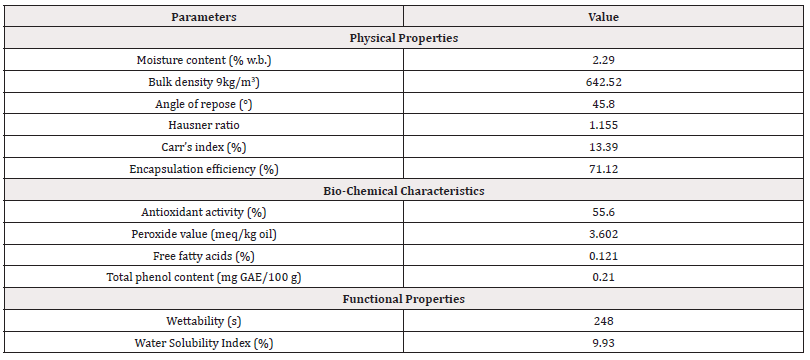
Table 1: Physical, bio-chemical and functional properties of encapsulated peanut oil.
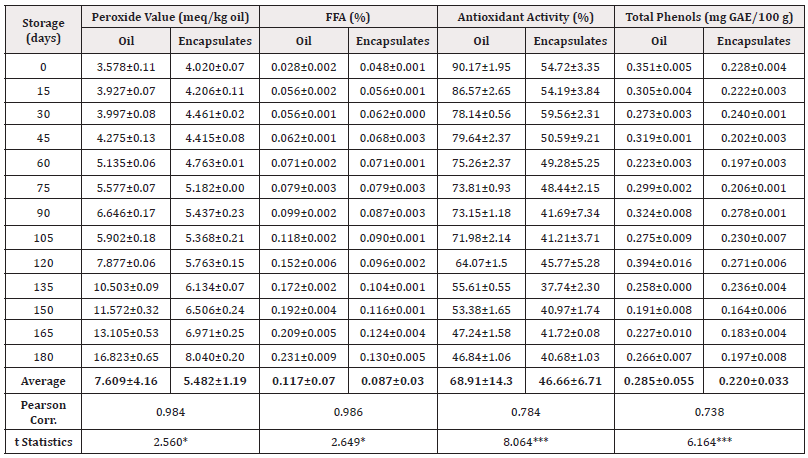
Table 2: Bio-chemical characteristics of unencapsulated and encapsulated peanut oil during storage.
*Note: *-Significant; ***-Extremely significant.

Figure 1: Change in peroxide value, free fatty acids, antioxidant activity and total phenol content of unencapsulated and encapsulated peanut oil during storage.
Free Fatty Acids
The Free Fatty Acids (FFA) content serves as an indicator of oil quality degradation. At the beginning of the study (0 days), the encapsulated peanut oil exhibited a higher FFA value (0.048%) as compared to the peanut oil (0.028%), as presented in Table 2. Pattnaik and Mishra [3] also reported higher FFA values for encapsulated oils. After 180 days of storage, the FFA content of the peanut oil without encapsulation increased to 0.231%, while the encapsulated peanut oil showed a value of 0.130% (Figure 1). The statistical difference showed lower value of FFA for encapsulated peanut oil as compared to unencapsulated peanut oil (Table 2). The higher rate of FFA increase in the unencapsulated peanut oil during storage can be attributed to factors such as light exposure, temperature fluctuations, and direct contact of the oil with environmental oxygen inside the bottle. Encapsulation process forms a protective barrier that limits direct contact between oxygen and the oil, thereby retarding the oxidation process. Wang, et al., [12] also noted that environmental conditions can influence changes in FFA content.
Antioxidant Activity
For 180 days storage period, antioxidant activity of the peanut oil decreased from 90.17 to 46.84% (Table 2). Similarly, the encapsulated peanut oil exhibited a decrease in antioxidant activity from 54.72 to 40.68%. The change in antioxidant activity was 43.33% for the peanut oil without encapsulation, whereas it was 14.04% for the encapsulated peanut oil, indicating that encapsulation provides protection against the degradation of antioxidants (Figure 1). During the storage, average antioxidant activity of encapsulated peanut oil was observed statistically higher (Table 2). Encapsulation effectively moderated the change in antioxidant activity of the peanut oil during storage, resulting in a higher shelf life. The environmental stresses contributed to a reduction in the antioxidative activity of the kenaf oil and it encapsulates (Razmkhan, et al.,).
Total Phenol Content
The total phenol content of the encapsulated peanut oil was 0.228 mg GAE/100 g at starting and decreased to 0.197mg GAE/100 g after 180 days of storage (Table 2). In comparison, total phenol content of unencapsulated peanut oil decreased from 0.351 to 0.266mg GAE/100 g after 180 days. The trend of change in total phenol content for both encapsulated and unencapsulated peanut oil is illustrated in (Figure 1). T-test showed significant difference between average total phenol content of the encapsulated and unencapsulated peanut oil (Table 2). The use of whey protein as a wall material in encapsulation has shown effectiveness in protecting total phenol compounds [13]. Encapsulation process successfully restricted the change in total phenol content of the core oil. Encapsulation proved to be an effective strategy in protecting the bio-chemical characteristics of peanut oil against oxidative deterioration, ensuring a higher shelf life by retaining the quality compounds of the oil during storage.
Conclusion
In conclusion, the encapsulation of peanut oil using corn starch and whey protein isolate through a microwave technique has proven to be a successful strategy in improving the oil's storage stability and oxidative resistance. Throughout the 180-day storage period, the encapsulated oil maintained an acceptable peroxide value, demonstrating its resistance to oxidation. Encapsulated peanut oil exhibited lower levels of free fatty acids, indicating reduced hydrolytic rancidity. The retention of antioxidant activity and total phenol content in the encapsulated oil further supports its enhanced preservation, contributing to its overall quality and nutritional value. These findings affirm that encapsulation effectively extends the shelf life of peanut oil by enhancing its oxidative resistance. that open the wide gate of research in biomedical science as it would be used as a specific treatment towards the need of preserved nutrients of oils at specific site of human body [14].
Acknowledgements
The authors are grateful to the Head, Department of Processing and Food Engineering, Junagadh Agricultural University, Junagadh for providing facilities to conduct various investigations.
Conflict of Interest
None.
References
- Dhamsaniya NK, Patel NC, Dabhi MN (2012) Selection of groundnut variety for making a good quality peanut butter. J Food Sci Technol 49(1): 115-118.
- Sindhal VD, Dhamsaniya NK, Patel UV (2019) Effect of Roasting Method on Fatty Acid Composition of Peanut Kernels. Int J Curr Microbiol Appl Sci 8: 2581-2589.
- Pattnaik M, Mishra HN (2020) Effect of microwave treatment on preparation of stable PUFA enriched vegetable oil powder and its influence on quality parameters. J Food Process Preserv 44(4): e14374.
- Bhuva SS, Dhamsaniya NK (2023) Encapsulation of vegetable oils for enhancing oxidative stability of PUFA. Biol Forum Int J 15(2): 271-284.
- Partanen R, Raula J, Seppanen RA, Buchert J, Kauppinen E, et al. (2008) Effect of relative humidity on oxidation of flaxseed oil in spray dried whey protein emulsions. J Agric Food Chem 56(14): 5717-5722.
- AOAC (1964) Free fatty acids. Gaithersburg, Maryland: AOAC International. pp 72-81.
- Luo W, Zhao M, Yang B, Shen G, Rao G (2009) Identification of bioactive compounds in Phyllenthus emblica L. fruit and their free radical scavenging activities. Food Chem 114(2): 499-504.
- Singleton VL, Rossi JA (1965) Colorimetry of total phenolics with phosphomolybdic-phosphotungstic acid reagents. Am J Enol Vitic 16(3): 144-158.
- Davis JP, Price K, Dean LL, Sweigart DS, Cottonaro J, et al. (2016) Peanut oil stability and physical properties across a range of industrially relevant oleic acid/linoleic acid ratios. Peanut Sci 43(1): 1-11.
- Omar KA, Shan L, Zou X, Song Z, Wang X (2009) Effects of two emulsifiers on yield and storage of flaxseed oil powder by response surface methodology. Pak J Nutr 8(9): 1316-1324.
- Bae EK, Lee SJ (2008) Microencapsulation of avocado oil by spray drying using whey protein and maltodextrin. J Microencapsul 25(8): 549-560.
- Wang W, Waterhouse GI, Sun-Waterhouse D (2013) Co-extrusion encapsulation of canola oil with alginate: Effect of quercetin addition to oil core and pectin addition to alginate shell on oil stability. Food Res Int 54(1): 837-851.
- Farahani ZK, Mousavi M, Ardebili SMS, Bakhoda H (2022) Modification of sodium alginate by octenyl succinic anhydride to fabricate beads for encapsulating jujube extract. Curr Res Food Sci 5: 157-166.
- Razmkhah S, Tan CP, Long K, Nyam KL (2013) Quality changes and antioxidant properties of microencapsulated kenaf (Hibiscus cannabinus L.) seed oil during accelerated storage. J Am Oil Chem Soc 90(12): 1859-1867.




 We use cookies to ensure you get the best experience on our website.