
Research Article 
 Creative Commons, CC-BY
Spousal Coping Styles Effect on Successful Reintegration Following Service Member Deployment
*Corresponding author: Tyan Carrico, The Chicago School Anaheim, USA.
Received: August 09, 2024; Published: August 13, 2024
DOI: 10.34297/AJBSR.2024.23.003113
Abstract
Previous research has demonstrated that reintegration following deployment is highly stressful for the service member as well as their spouse. The present study aimed to explore if the style of coping utilized (Problem Focused, Emotion Focused, or Avoidant Focused) by the civilian spouse influences the success of reintegration following deployment. There was a total of 16 military spouses who completed the study; all participants were female, between the ages of 25-34 (younger) or 35 - 45 years old (older) and were married to male service members of either the Army, Navy, Marice Corps, or Airforce and who also were in either of those two age categories. Participants completed three surveys: GANZ Scale of Military Identification (GANZ), Brief Cope Inventory (COPE), and the Reintegration Stress Index (RSI) to assess their stye of coping and perceived stress following reintegration. Results of the study revealed that the ”younger” spouses had more reintegration stress issues and needed more coping mechanisms. Similarly, participants whose spouse was in the “younger” age category also had more stress and coping issues. In addition, the age of participant and age of spouse created unique stress and coping issues depending upon whether the spouse was currently deployed or not. A striking finding was that if the participant had received mental health services, they had less reintegration stress and did not use “avoidant” type coping mechanisms such as drugs and alcohol as did those who had not received mental health services. These findings strongly support the perspective that spouses of service personnel had unique mental health needs that deserve attention.
Keywords: Military reintegration stress, Military culture, Coping styles, Military spouses
Introduction
There are four main branches of the United States military service: Army, Navy, Air Force, and the Marine Corps. As a whole, all military branches foster similar core values such as honor, integrity, discipline, focus, and, most importantly, the bond between members of the military [1]. Focus, discipline, and the value of brotherhood are the first core values introduced and instilled in each service member. The ability to maintain focus and discipline in their actions and emotions is an integral part of all military cultures [2]. These skills are fundamental as they are often relied on as lifesaving skills in the dangerous and unprecedented situations service members experience. Immediately, military members are told "no one left behind." Service members are taught to cherish the bond between the individuals of which they serve with. They are taught to protect, value, and nurture this bond in all situations for the rest of their lives, including life or death situations [2].
While all branches share similar core values, each branch conducts specialized missions and serves specialized purposes that foster specialized values. The Army is the United States' largest and oldest branch. The Army's primary missions are carried out on the ground [3]. This means that Army soldiers must be mentally prepared for missions that may often involve hand-to-hand combat. Core values instilled in soldiers include respect, loyalty, selfless service, and personal courage [2].
The values of the Air Force are listed as "integrity first, service before self, and excellence in all [they] do" [2]. The Air Force is tasked with protecting and supporting the United States in air and space [3].The Coast Guard is the smallest military branch and holds the primary values of devotion to duty, honor, and respect [2,3]. They are tasked with enforcing laws in the sea, illegal immigration via the sea, and sea rescues [3].
The Navy has been given the nickname of "defender of the seas.” [3] The Navy is responsible for protecting the United States at sea as well as most Marine air and sea missions [3]. Historically, the Marine Corps was established in 1775 as the supporting ground force associated with the Navy. The Marine Corps became established as an independent branch in 1798, but the two branches do share similar core values [3]. Both the Marine Corps and the Navy share a heavy emphasis on honor, commitment, and courage.
As the Marine Corps was created as a ground support force, there is a much greater emphasis on "warrior training" skills [2]. This training includes the proper use and maintenance of weapons and hand-to-hand combat. During this training, it is repeatedly underscored that their primary mission is to fight the enemy and possibly wound and/or kill. Warrior training is a fundamental training tactic in the Marine Corps, the Army, and the Air Force, whereas the Navy and Coast Guard do not incorporate such intense training [2]. Therefore, Marine, soldiers, and airmen share a similar mindset that is always prepared for dangerous, physical combat.
In 1973, it was reported that 1.9 million Americans had been drafted into active-duty military service. There are currently 1.3 million active-duty members voluntarily enlisted in the United States military [4,5]. This data demonstrates that there has been a moderately consistent resource of individuals who are enlisted in active-duty military service over the last 45 years. However, there has been a 5% decline in overall enlistment after the terrorist attack on September 11th, 2001, although there has been a 7% increase in enlistment in the Marine Corps [4].
The number of deployments has also reflected the slight decline in enlistment. Between the years 2001 and 2005, there were approximately 2.77 million service members deployed, with a peak in the year 2003 [6]. During those five years, the cumulative amount of time-of-service member deployment resulted in 1.8 million deployment years. [2] Of those 1.8 million deployment years, 58% were accumulated from the Army, 15% from both the Air Force and the Navy, and 12% from the Marines [6].
As reported by the RAND institute, the length of deployments can range between 6 to 12 months, depending on the branch of the military. For example, the average length of deployment in the Marines is nine months, whereas the average deployment length in the Army is up to 12 months [6]. The DoD recently updated the policies regarding nondeployable service member retention, stating that all service members must demonstrate combat readiness within a 12-month period, or they will face either administrative or disability-based discharge [7]. This updated policy suggests that all active-duty military service personnel have a possibility of being deployed and subsequently facing the challenges of reintegration. The prolonged separation allows for individuals to grow, mature, and change, which then requires families to relearn, accept, and support each other upon reintegration.
Reintegration is a delicate time for military families. During deployment, the military family is separated, and one member is relocated to a different country, often involving danger and combat. The stress of deployment and the following reintegration is felt by each member of the family in different ways. Reintegration is defined as an active process for both service members and families that requires balancing the change from military to civilian life along with adapting their day-to-day activities to include the service member [8]. This requires a change in daily routine for every member of the family. For service members, reintegration includes attempting to resume the responsibilities and roles in their family, workplace, and community relationships [9]. During reintegration, the service member faces dueling psychological difficulties and symptoms. Deployed service members who have experienced combat are at increased risk to develop psychological injuries such as anxiety, depression, substance use, or posttraumatic stress disorder (PTSD). These disorders have been found to be correlated with increased reintegration difficulties [8]. Beyond psychological difficulties that service members may acquire from deployment, psychological difficulties may arise that accompany reintegration, and that can parallel adjustment disorder.
O'Connell reported that it is common for the service member to feel frustrated, restless, or bored after returning to a more mundane life from the fast-paced work of deployment [9]. These stark changes in lifestyle may leave the service member feeling uncomfortable or unfulfilled. This is another barrier to reintegration success as the service member seems less involved and committed to the process. Additionally, the new pattern of behaviors adopted by the service member that was necessary for deployment is also a barrier to reintegration success. Service members reported feeling isolated, unrecognized, and misunderstood by their partners upon return from deployment, as well as chronic fatigue from remaining on constant alert as they were trained to be [9]. Feeling misunderstood and isolated from one's partner does not allow for successful reintegration because it blocks a successful reunion between spouses. Additionally, the dramatic shift in responsibilities and fatigue may reduce the service member's motivation and energy actively allocated to the reintegration process.
Often, service members face the challenges of reintegration alone as the stigma around mental health makes them less inclined to seek such help. Gould, et al. concluded that military service members felt that stigma regarding mental health posed a significant barrier to seeking psychological treatment [10]. Specifically, the service members reported not seeking treatment for concerns of being embarrassed, losing the confidence of one's unit, harming their career, and their superiors treating them differently. The barriers, stigma, and concerns may make the family less inclined to seek auxiliary services before deployment and during reintegration. The stigma regarding mental health may create a significant barrier for the service member to reach out for help. In fact, the culture of the military may also make it difficult for the military service member to admit they may need help or are having difficulty.
While the service member may be struggling with reintegration, their spouse is also facing significant difficulty. Over 50% of active-duty service members are currently married, and 30% are married to a civilian with children [4]. Much of the previous research regarding reintegration has focused on the service member, but there has been less of a focus on how the spouse impacts reintegration success. Many spouses have indicated that the intensive parenting role that occurs when the military spouse is deployed is increasingly difficult since spouses’ shoulder all of the burdens of caring for children while their partner is deployed. Most spouses reported that, during deployment, they felt they were "responsible for everything," ranging from groceries, childcare, and schedules to lawn care [11]. The greater stress associated with household chores coupled with a longer time of deployment within three years, was correlated with poorer feelings of overall wellbeing in the spouse [11].
This suggests that the more time the service member has spent deployed in the past three years may make the spouse feel they must consistently carry more of the household burden. Prolonged stress, as well as the stress accompanied by being separated from a loved one and concern over the loved one's safety likely, lends to a lower feeling of wellbeing. For the civilian spouse, the greater number of deployments is correlated with greater feelings of distress, anxiety, depression, sleep disturbances, and PTSD, while the children face greater behavioral and peer issues [6,8].
In addition to being concerned over their partner's wellbeing, spouses have also reported significant frustration with the intermittent ability to communicate with their spouse. The reduced and uncertain promise of contact has been found to discourage the spouse from sharing their stresses with their military partner [11]. Those who reported feeling disturbed by the amount of contact with their deployed spouse were less able to express their feelings when communicating with the deployed spouse. They were also more likely to report stress of household chores than those who do not have an issue with their communication with their spouse [11]. This may be a mechanism of differing priorities as the two spouses are living two separate lives during deployment and attempting to protect the service member from homebound struggles. The stateside spouse may also choose not to disclose the difficulties they experience as to not further concern the active-duty service member.
After being separated from their loved ones, facing intensified roles, and experiencing higher levels of stress, civilian spouses may not report feeling relief once the military spouse returned home. Rather, the civilian spouses have reported significantly increased relational difficulties [11]. These negative relational outcomes were positively correlated with the number of deployments in the last three years [11]. Deployment disrupts the relational connection between spouses and can introduce a level of uncertainty and distress in the marriage [6]. The service member and his/her civilian spouse may feel detached from one another. Creating further disconnection from each other may be impacted by increased stress and prolonged separation. This means that the more a couple has engaged in the process of reintegration, the more issues may continue to go unresolved and slowly degrade the marital bond.
Marek and Moore found that accurate expectations and better preparation before deployment help ease the stress of reintegration [12]. Additionally, the more satisfied the service member's perception of how their partner viewed and welcomed the service member home, as well as greater family functioning were significantly correlated with less reintegration stress [12]. This suggests that the more open, warm, and accommodating the civilian spouse is to the service member's return highly influences the success of reintegration.
Reintegration requires the military families to adapt their lives and help the service members resume their civilian life. This adaptation requires immediate and long-term intervention in multiple contexts with everyone involved. Successful reintegration begins before deployment occurs. Previous research has found that planning and coordinating external resources and peer support before deployment is correlated with more successful reintegration [6]. Preparing the family's support network before the service member deploys allows for the family to receive seamless connection and ease the period of adjustment. However, these external support and coping mechanisms must be flexible, built on the family member's strengths, and focus on family cohesion [6]. Issues during deployment can be unpredictable. Therefore, the family must also create a solid support system within themselves.
Deployment information packets can be lengthy and include a copious amount of extraneous information. When preparing for deployment, families are unlikely to allocate the limited time they have with their service members reading the information regarding deployment. Families Overcoming Under Stress (FOCUS) is a program that is specifically designed to help train families and military couples to best overcome the stress of deployment. FOCUS integrates principles of couples and family therapy to teach skills in overcoming challenges commonly associated with military life, such as improving emotional regulation, communication, problem-solving, goals, and managing stress and trauma effectively [13]. These programs may be highly beneficial; however, they are offered only in 10 states across the U.S., yielding a total of 24 training sites. Due to the limited availability across the country means that the majority of spouses may not have access to these resources. Additionally, the six to eight session requirements could be a time constraint for those families that do have access to these services.
External coping is utilizing services or others for support or assistance. Examples may include talking to friends or family, seeking psychological services, or volunteering in a community program. Therefore, internal coping skills are the resources that a person can utilize within themselves during hard times. Examples of internal coping strategies may be to journal, take a walk, watch cute videos on the internet, or mindfulness. Overall, there are three broad categories of coping: Problem-Focused Coping (PFC), Emotional-Focused Coping (EFC), and Avoidant Focused Coping (AFC).
PFC approaches involve taking steps to actively resolve the issue or stressor [14]. These skills include seeking advice, positive cognitive reappraisal, creating a plan, mindfulness, or breaking the task down into more manageable steps [14,15]. Previous research has indicated that introducing mindfulness as a coping technique is associated with greater PFC success and an increased feeling of overall wellbeing [14]. Dividing the task into smaller, easier to complete portions may be highly beneficial to help resolve issues, especially during times of stress. Dividing a task requires a person to identify priorities and allows them to feel a sense of accomplishment after completing each step [15]. EFC approaches are centered around reducing the emotional distress related to the situation or stressor. These skills may include journaling, venting, seeking emotional support, meditation, and reframing [14]. Often, the goal of avoidant focused coping is centered around ignoring, minimizing, or denying stressors through cognitive or behavioral means (Afshar, et al., 2015). Examples of avoidant focused coping may be distancing, self-controlling, disengagement, distraction, and substance use [16].
It has also been found that AFC tends to be a passive and maladaptive coping strategy, meaning the individual does not attempt to confront or reaction to the situation, rather they attempt to ignore it [17]. Whereas PFC tends to be proactive and immediate, meaning that the person is prepared or attempts to prepare for the situation before it occurs. EFC, by contrast, has been found to be a reactive strategy. This means that an individual reacts after a stressor has arisen [18]. Reactive, EFC strategies have been found to correlate with more negative consequences such as greater perceived levels of stress, and lower life satisfaction [19,20]. Similarly, passive, AFC strategies can provide an adaptive perception of comfort and growth in the short-term [16]. However, long term use of avoidant focused coping often results in increased levels of baseline distress, increased dysfunction, and an increased likelihood of developing a mental health disorder [16,17,21]. In contrast, PFC strategies have been found to be associated with a greater feeling of overall wellbeing [14]. Interestingly, research has suggested that young adults tend to utilize these PFC strategies at greater frequency than that of their older counterparts [22]. However, previous research suggests that some use of AFC skills in combination with active coping skills such as EFC or PFC or use of only active coping skills demonstrated a strong and direct influence on post traumatic growth following increased stressors or traumatic experiences [16].
The number of stressors that non-deployed spouses endure exponentially increased during the period of deployment. The extended period that a service member can be deployed may be long enough to result in the respective mood-related outcomes - meaning, spouses who employ EFC or AFC skills may experience an increase in depressive symptoms, possibly leading to withdrawal, lack of interest, or low mood upon reunification with their loved one. In this way, depressive symptoms may make the service member's reintegration more difficult.
Statement of the Problem
Research regarding reintegration has tended to focus on studying reintegration success based on factors relating to the active-duty member. However, it has been shown that reintegration is impacted by a host of environmental and relational factors [23]. Lara Cinisomo, et al. reported that reintegration requires intervention in multiple contexts with varying strategies because the military family unit is an "ever-evolving system” [11]. This means that the dynamics and routines of these military families are fluid and may abruptly change. This requires a family member to possess adaptive and flexible coping skills that increase family cohesion and build on family member strengths.
There is a paucity of research regarding civilian spouses of active-duty service members. However, the spouse that remains home plays a highly influential role in how successful reintegration of the service member back into the family unit. It is pertinent that the service member feels close to their spouse, has open communication with their spouse, and feels welcome upon reentering the home [11]. These factors influence how family members can alleviate tension during difficulties and make the service member feel more at ease. Within the family, most studies have focused on the period of time before and during deployment, but not the period that follows [8]. Previous research has suggested that planning and building resources, social support, and connections before the service member deploys can have powerful, positive effects. Preparing and establishing community and family support systems ensures continuity of support and may help ease the adjustment for the non-deployed family members [8].
The purpose of this study is to examine how the type of coping skill utilized by military spouses of deployed military spouses impact successful reintegration once the service member returns home. This study will focus on the coping styles utilized by the spouse who remained at home while their active-duty spouse was deployed and will assess how successful the military member’s spouse perceives the reintegration process has been. In general, those who utilize EFC strategies tend to present with greater feelings of depression, while those who utilized PFC strategies tend to experience more positive wellbeing [18]. These findings suggests that those spouses who utilize PFC strategies may be more warm, compassionate, welcoming, and active in the reintegration process, whereas spouses who utilize EFC or AFC strategies may be unable to be as welcoming due to factors such as depressive symptoms (i.e., low energy, irritability, and social isolation) or avoidance, disconnection, or ignoring.
The study design is quantitative, utilizing the BRIEF Cope measure to identify the type of strategy used by the civilian spouses, the Ganz Scale of Identification with the Military Culture to identify how strongly the spouse identifies with the military culture, and the Reintegration Stress Index to identify how successful they feel reintegration has been for their marriage and/or family. The goal of this study is to highlight the impact of how military spouses cope with stress and analyze which type of coping may make spouses more prepared and flexible enough to handle the different stress of reintegration. The clinical implications of this study's findings may be beneficial in bolstering the rate of successful reintegration for military families and improve the treatment approach taken to support spouses of active-duty members.
Methods
Participants
The present study collected a total of 17 surveys (16 completed survey questions and scale, and one participant did not complete two items on the RSI and did not complete the coping scale) from spouses of military service personnel whose most recent deployment was within the last two years. The respondents must have been married to a US Military service member (Army, Navy, Air Force, Marine Corps, Coast Guard) who had been deployed at least once and has returned home at least one month prior to participating in this study. There are no other restrictions related to age, gender, rank of military spouse, or ethnicity. Spouses of currently deployed service members were excluded.
Participants were recruited from military spouse support groups and Facebook pages. Due to the Coronavirus limiting all in person gatherings, the sample were recruited via snowball sampling technique online as no support groups are able to meet in person. A link to the survey was posted on varying Facebook pages and posted on the website of different support groups. The link directed respondents to the SurveyMonkey platform. They initially saw a Screening Questionnaire. If they did not meet all of the inclusion criteria, they were directed to an Exit page and thanked for considering participating. Those who meet the inclusion criteria were then directed to the Informed Consent.
Measures
Screening Questionnaire: The participants were asked to complete a screening questionnaire to determine eligibility for the study. The eligibility criteria were included in the Recruitment messages and again as part of the SurveyMonkey screening process. The screening questionnaire was anonymous and did not collect any personally identifiable information. It asked if they are currently married, if their spouse is or has been enlisted in the Marines, Air Force, Navy, Army, or Coast Guard, if their spouse is currently deployed or never been deployed, and if the spouse has returned from deployment within the last 30 days. If a participant indicated they are unmarried, their spouse is not a military service member, is actively deployed now, or has returned from deployment less than one month or longer than two years, they were redirected to an exit page and thanked for their participation.
Demographic Questionnaire: Participants who consented to participate by clicking the I consent button, then completed a Demographic Questionnaire. The demographic questionnaire did not collect any identifiable information and remained anonymous. The Demographic questionnaire assessed variables such as ethnicity, age, gender, length of most recent deployment, and length of marriage. It also collected information on total length of service, number of deployments, and number of children to assess other factors that may impact reintegration.
Ganz Scale of Identification with the Military Culture (GANZ): This inventory was developed by Ganz, et al. (2016) based on her conceptualization of the military culture and is designed to identify the extent to which the individual personally endorses the various components of the U.S. Military Culture [24]. The Ganz scale consisted of eight statements that address eight core values from the different branches of military service. Each statement allowed the participant to identify their level of agreement with how each core value impacts their view or belief surrounding mental health, on a 7 -point Likert scale from “Not at All” to “Very Much.” This is the fifth use of the GIMC, therefore, its reliability and validity are currently unknown as adequate normative data have not been accumulated yet [24-26].
Coping Orientations to Problems Experienced Scale (COPE): Participants were asked to respond to a 28-item questionnaire to assess the individuals coping strategies using the brief version of the Coping Orientations to Problems Experienced Scale (COPE) [27]. The Brief COPE measures a broad range of cognitive and behavioral coping strategies that individuals typically use in stressful situations. The instrument identifies the type of coping style utilized, Emotion Focused Coping (EFC), Avoidant Focused Coping (AFC), or Problem Focused Coping (PFC). The instrument also includes fourteen subscales: active coping, planning, positive reframing, acceptance, humor, religion, emotional support, instrumental support, self-distraction, denial, venting, substance use, behavioral disengagement, and self-blame. Participants were tasked with describing and reflecting on a recent stressful situation and specify the extent to which they used each coping strategy on a 4-point Likert scale ranging from 1 (not at all) to 4 (a lot).
Reintegration Stress Index (RSI): Participants were asked to respond to a 12-item questionnaire to assess how stressful the process of reintegration was for the spouses [12]. The measure focuses on the unique aspects of reintegration that military members face during reintegration. Participants were asked to rate how stressful they feel each situation was in their experience on a scale from 1 (“not at all stressful”) to 7 (“very stressful”). The researchers reported strong internal validity of α =92 for military service members and α =0.88 for their spouses [12].
Procedures: After completing the Screening questionnaire, eligible participants were immediately presented with an informed consent document. They indicated their consent to participate by clicking the “I Agree” button, and then they were presented with the following questionnaires in the following order: a demographic questionnaire, GANZ, COPE, and RSI. For those who selected “I do not agree,” they were sent to an Exit page and thanked for their participation. The questionnaires took approximately 20-30 minutes to complete and were administered fully online. After completing the final measure, participants were provided with a debriefing statement and thanked for their participation.
Participants were able to discontinue participation at any time or skip questions. All demographic information and survey responses have been kept on a password protected computer to which only the researcher and their chairperson have access. All data will be shredded after 5 years.
Results
Demographics
Of the participants who completed the survey, all participants identified as female, with no prior military service, and reported being currently married to male servicemen. Participants fell into two distinct age categories with 12 participants between the ages of 25-34 years old and four participants between the ages of 35-45 years old. The majority of participants reported their current spouse is their first marriage (n=14), with two participants reporting they were remarried. Seven participants reported they had been married to their service member spouse for two-five years, four participants reported being married for five to seven years, four also reported being married for eight to ten years, and one participant reported being married for eleven or more years. All spouses were reported to be associated with U.S. Air Force (n=4), U.S. Army (n=6), U.S. Marine Corps (n=4), and U.S. Navy (n=2). No spouses of Coast Guard service members completed the study.
The majority of participants identified as Caucasian (n=13), two identified as Latina/Hispanic, and one identified as “other.” Eight participants reported having no children, four reported having one child, one participant reported two children, and three reported having three children. In regard to educational background, three participants completed high school, one had some college but had not yet obtained a degree, one had an associate’s degree, four had a bachelors, five had a masters, one a doctorate, and one completed trade school.
Analyses
Unfortunately, only 17 participants provided responses to the scales to be included in data analyses, and only 16 of those 17 provided responses on all of the measures. Although there were a number of statistical tests that met conventional levels of statistical significance (p=.05 or less), p levels between ,05 and .10 are also reported. As this is essentially an exploratory study, it seems more important to not miss possible relationships that the small sample is not sensitive to identify from conventional levels of statistical significance. In other words, Type II errors are considered to be more consequential than Type I errors. Probability levels between .05 and .10 will be considered as tentative, possible relationships and interpreted accordingly.
Main Effect of Spouse’s Branch of Service on All Measures
Participant’s spouses were categorized by their reported branch of service. Spouses were reported to be associated with U.S. Air Force (n=4), U.S. Army (n=6), U.S. Marine Corps (n=4), and U.S. Navy (n=2). There was no significant main effect of spouse’s branch of service on reintegration stress based on the Reintegration Stress Index (RSI). There was a significant main effect of spouse branch of service on the belief that one should live by the military moral code and value system in everything they do (GANZ 5) (F(1,15)=3.367, p=.055). There was also a significant main effect of coping strategies used. Specifically, there was a significant difference based on spouse’s branch of service and utilization of getting emotional support from others (COPE 6) (F(1,15)=2.684, p=.094) and refusing to believe something has happened (COPE 8) (F(1,15)=3.909, p=.037). The means and standard deviations for items on the GANZ and COPE for which there were significant differences of spouse’s branch of service are found in (Table 1).

Table 1: Means and Standard Deviation of the significant effects of Spouse Branch of Service on Identification with Military Culture and Coping Strategy.
As seen in Table 1, participants with Navy spouses reported the highest endorsements of living by the military moral code and value system in everything they do (GANZ 5), followed by Marine Corps spouses, Army spouses, and Air Force spouses respectively. Table 1 also reflects that the highest scores on this military cultural value were obtained not only by those with Navy spouses, but next highest were those with Marine spouses-whereas this value was less endorsed by those whose spouses were ground (army) or air services (air force). Additionally, participants with Navy and Army spouses endorsed the lowest engagement of avoidant coping style of giving up trying to deal with it (COPE 6) and refusing to believe it happened (COPE 8). Whereas participants with Marine Corps spouses reported slightly higher frequency of use and Air Force spouses reporting the highest use of avoidant coping skills.
Age of Participant and Stress Related to Reintegration
Participants were classified by their age in years at the time of participation in this study. All participants in the study fell into one of two distinct age categories of “younger” participants aged between 25-34 years of age (n=12) and “older” participants aged between 35-44 years of age (n=5). There was a significant main effect of age of participant on reintegration related stress based on the Total score of the Reintegration Stress Index (RSI Total) (F(1,15) =6.802, p=0.02). There were also significant differences on six of the 12 items that comprise the RSI. Thus, the significant effect of participant age (category) on Total score appears to be the result of significant differences between the two age groups on those 6 items of the scale. There was a significant effect of participant age on the ability to manage one’s emotions (RSI 4) (F(1,15)=5.555, p=.032). There was a significant effect of age on re-establishing a relationship with a spouse/partner (RSI 5) (F(1,15)=3.819, p=.070). There was a significant effect of age on feeling like an outsider in one’s home (RSI 8) (F (1,15) =3.125, p=.097). There was a significant effect of age on resurfacing of unresolved conflicts (RSI 9) (F(1,15)=3.072, p=.10). One participant did not complete items 11 and 12 on the RSI, however, a separate analysis of these items for the 16 participants who did complete those two items resulted in statistically significant results also on both of those items. Thus, there was a significant effect of participant age on adjusting to a civilian workplace (RSI 11) (F(1,14)=4.872, p=.044) as well as a significant effect of participant age on adjusting to local community/neighborhood (RSI 12) (F(1,14)=4.051, p=.064). The means and standard deviations for RSI Total score and for the 6 items for which there were significant age differences are found in (Table 2).
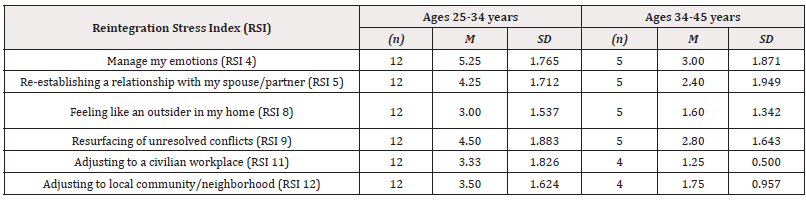
Table 2: Means and Standard Deviation of the effect of Participant Age on Reintegration Stress.
As can be seen in Table 2, the significant participant age difference in Total Reintegration Stress scores show that the younger participants had higher stress scores on 6 of the RSI items. These higher stress scores for the younger participants appear to reflect factors related to managing one’s emotions (RSI 4), re-establishing relationships (RSI 5), feeling like an outsider in one’s home (RSI 8), unresolved conflicts resurfacing (RSI 9), adjusting to civilian workplaces and communities (RSI 11), and adjusting to local community neighborhood (RSI 12). Thus, as shown in Table 2, younger participants (between the ages of 25-34 years of age) reported experiencing a greater amount of perceived reintegration stress across these 6 specific factors in comparison to participants within the age range of 35-44 years of age.
Age of Participant, Military Culture and Coping Style
There was not a significant effect of age of participant on level of identification with military culture (GANZ). Nor was there a significant effect of participant age on overall coping style. However, there was a significant main effect of participant age on one coping item: the amount one criticizes themselves (COPE 13) (F(1, 14) =3.231, p=0.094). It should be kept in mind that this is one item out of 28 on this scale and the p level does not meet conventional levels of significance, but this possible effect is being reported here so that it is not lost in future considerations of its possible existence. The means and standard deviations of this effect can be found in (Table 3).

Table 3: Means and Standard Deviation of the effect of Age on Coping Styles.
As shown in Table 3, participants between the ages of 25-34 years of age (the younger participants) reported a greater frequency of criticizing themselves while attempting to cope with stressors. Thus, the younger participants reported higher levels of 6 categories of reintegration stress and possibly are reporting that they have a more difficult time than the older participants with not criticizing themselves in how they are handling (reintegration) stresses.
Participant Age and Spouse Active-Duty Status
Participants were classified as to whether or not their spouse was on active duty at the time of participation in this study. There was not a significant main effect of active-duty status of the military spouse with endorsement of the military culture (GANZ). However, there were significant relationships of whether the spouse was on active duty regarding specific reintegration stressors as well as on methods of coping. There was a significant effect of active duty on how one views their children’s response to them (RSI 7) (F(1,12)=6.667, p=.025). There was also a significant effect of spouse active-duty status on resurfacing of unresolved conflicts (RSI 9) (F(1,12)=5.202, p=.042). The means and standard deviations for these two items of the RSI are found in (Table 4).

Table 4: Means and Standard Deviation of the effect of Active Duty Status on Reintegration Stress.
As can be seen in Table 4, the significant difference of active-duty status on reintegration stress scores appears to be based on factors related to how one’s child responds to them (RSI 7) and unresolved conflicts resurfacing (RSI 9). As shown in Table 4, participants with active-duty spouses reported experiencing a larger amount of perceived reintegration stress regarding their children’s response to them, whereas participants with non-active-duty spouses did not identify this as a concern at all (mean of only 1.0). In contrast, participants with non-active-duty spouses reported greater perceived reintegration stress in regard to resurfacing unresolved conflicts in comparison to participants with active-duty spouses. Thus, those with a spouse on active duty felt greater stress in regard to their children compared to those whose spouse was not on active duty, and they felt an equal amount of stress in regard to unresolved issues, but unresolved issues were highly relevant as a stress for those whose spouse was home (not on active duty at the time of the participant’s responding to this study).
There was not a significant effect of spouse’s active duty status on level of identification with military culture (GANZ). However, there was a significant effect of spouse’s active duty status on several coping methods. One effect was on the coping style of refusal to believe a stressor has occurred (COPE 8) (F(1, 12) =3.580, p=0.085). There also was a significant effect of spouse’s active duty status on utilization of distraction skills to think about a stressor less, such as going to movies, watching TV, reading, daydreaming, sleeping, or shopping (COPE 19) (F(1, 12) =6.469, p=0.026). In addition, there was a significant effect of spouse’s active duty status on the coping style of blaming oneself for things that have happened (COPE 26) (F(1, 12) =8.331, p=0.014). The means and standard deviations of these effects can be found in (Table 5).

Table 5: Means and Standard Deviation of the effect of Active-Duty Status on Coping Styles.
As shown in Table 5, participants with non-active-duty spouses reported a greater frequency of denial, distraction, self-blame while attempting to cope with stressors than participants with active duty spouses. These could be grouped as avoidance of engaging with the non-active-duty spouse regarding the stresses that the woman, participant was experiencing.
Interaction of Age of Participant and Spouse Active-Duty Status
There was a significant interaction of participant age and spouse active-duty status on one item of the Reintegration Stress Index: finding civilian employment (RSI 10) (F(1, 12) =4.251, p=0.062). There were also significant interaction effects of participant age and spouse active-duty status on six items of the Brief COPE Inventory (COPE). There was a significant interaction on refusal to believe a stressor has occurred (COPE 8) (F(1, 12) =3.580, p=0.083), on getting help and advice from other people (COPE 10) (F(1, 12) =3.3190, p=0.093) and on saying things to allow negative emotions to escape (COPE 9) (F(1, 12) =7.691, p=0.021). In addition, there were also significant interaction effects of participant age and spouse active-duty status on using alcohol or drugs to help them get through it (COPE 11) (F(1, 12) =3.3190, p=0.093) and on devising strategies to solve problems (COPE 14) (F(1, 12) =3.208, p=0.098). There was a significant interaction effect of participant age and spouse active-duty status on making fun of the situation (COPE 28) (F(1, 12) =5.49, p=0.037). The means and standard deviations for the one item of the RSI and six items of the Brief COPE Inventory for which there were significant interactions based on participant age and spouse active-duty status are found in Table 6. As shown in Table 6, it should be noted that there was only one participant in the older age category whose spouse was not on active duty (Table 6).
In general, it can be seen in Table 6 that the older participants whose spouse was on active duty (not at home), reported lower stress and less use of these coping techniques than the other participants. As shown more specifically in Table 6, participants between the ages of 25-34 years of age with active duty spouses reported a greater frequency of stress related to finding civilian employment than compared to same aged participants with non-active duty spouses and participants between the ages of 35-44 years of age with active duty spouses (RSI 10). However, the individual participant in the 34 -44-year-old age range with a non-active duty spouse endorsed a greater frequency of stress related to finding civilian employment as compared to all other groups.
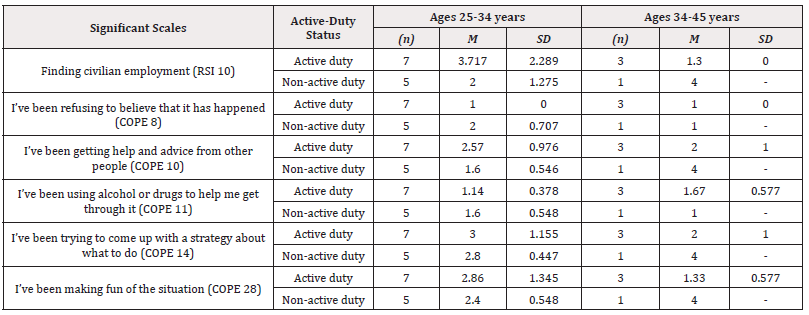
Table 6: Means and Standard Deviation of the interaction effect of Participant Age and Active Duty Status on Reintegration Stress and Coping Styles.
Participants between the 25-34 years of age with non-active-duty spouses reported a slightly greater frequency of utilization of refusal to belief something has happened as a means to cope than all other groups (COPE 8). Participants of the same younger age category with active-duty spouses as well as all participants in the older age category with active and non-active-duty spouses reported an equal frequency of denial.
The younger participants with an active-duty spouse reported greater frequency of seeking help or advice from others than all other groups, although the older participant with a non-active duty spouse reported the greatest frequency of seeking help from others (COPE 10). In fact, an examination of Table 6 reveals that this individual was reporting greater need for coping mechanisms than other groups, suggesting that they were quite individualistic compared to other participants.
Similar rates of seeking help or advice from others were reported by both categories of participants with active duty spouses with younger participants reporting a slightly greater frequency. Participants endorsed similar frequency of using drugs and alcohol to cope with participants aged between 34-45 years old with active duty-spouses and younger participants with nonactive-duty spouses reporting the greatest frequency in comparison to other participants (COPE 11).
All participants reported a similar frequency of attempting to come up with a strategy about what to do (COPE 14), with the individual participant aged 34-45 years old with a nonactive-duty spouse and younger participants with active-duty spouses reporting the greatest frequency attempting to cope by identifying a strategy to solve an issue. Finally, the individual participant aged 34-45 years old with a nonactive-duty spouse reported the greatest frequency of making fun of a situation to cope (COPE 28), whereas participants of the same, older age range with active-duty spouses reported the least frequency of making fun of a situation as a coping mechanism. Younger aged participants (aged between 25-34) with active and nonactive-duty spouses reported similar frequency of making fun of a situation to cope.
Main Effect of Spouse Age on All Variables
Earlier, effects of participants’ age were reported. Here, effects of Spouse’s age are reported. Spouse ages were classified by their age in years at the time of the participant’s participation in this study. Just like the participants, all spouses fell into one of the same two distinct age categories of “younger” aged between 25-34 years of age (n=11) and “older” aged between 35-44 years of age (n=5). In addition to there having been effects of the participant’s age, there were significant effects of spouse age on several items of the RSI and Coping Styles scales.
There was a significant main effect of spouse age on reintegration related stress based on three items of the Reintegration Stress Index (RSI). There was a significant effect of spouse age on renegotiating household responsibilities (RSI 1) (F(1,12)=3.266, p=.096). There was a significant effect of spouse age on figuring out the participant’s role in the home (RSI 3) (F(1,12)=3.826, p=.074). There was also a significant effect of spouse age on re-establishing a relationship with spouse/partner (RSI 5) (F(1,12)=4.176, p=.064).The means and standard deviations for the three items for which there were significant age differences on the RSI are found in Table 7. As can be seen in Table 7, participants with younger spouses (between 25-34 years of age) reported a greater amount of stress associated with renegotiating household responsibilities (RSI 1), figuring out their role in the home (RSI 3), and re-establishing a relationship with their spouse/partner (RSI 5) (Table 7).
There was a significant main effect of spouse age on coping strategies on three items of the Brief COPE Inventory (COPE). There was a significant effect of spouse age on saying to oneself “this isn’t real” (COPE 3) (F(1,12)=3.596, p=.082). There was a significant effect of spouse age on refusing to believe a stressor has happened (COPE 8) (F(1,12)=3.711, p=.078). There was also a significant effect of spouse age on getting help or advice from others (COPE 10) (F(1,12)=3.631, p=.081).The means and standard deviations for the three items for which there were significant spouse age differences on the COPE are found in (Table 8).

Table 7: Means and Standard Deviation of the effect of Spouse Age on Reintegration Stress.

Table 8: Means and Standard Deviation of the effect of Spouse Age on Coping Skills.
As shown in Table 8, participants with younger spouses (between 25-34 years of age) reported a greater utilization of telling oneself an issue is not real (COPE 3) and refusing to believe a stressor has happened (COPE 8). However, participants with older spouses (between 34-45 years old) reported greater utilization of seeking advice or help from others to cope with stressors (COPE 10) than participants with younger spouses.
Interaction of Spouse Age and Active-Duty Status of Spouse
Previously, there was a noted significant interaction effect of participant age and spouse active-duty status. The analysis reported here focuses on the interaction of the spouse age and spouse active-duty status on the three scales used in this study (GANZ, RSI, and COPE). Similar to results of the interaction effect of participant age and spouse active-duty status, there was a significant interaction of spouse age and spouse active-duty status on one item of the Reintegration Stress Index: finding civilian employment (RSI 10) (F(1, 15) =6.872, p=0.022). There were also significant interaction effects of spouse age and spouse active-duty status on three items of the Brief COPE Inventory (COPE). There was a significant interaction on telling oneself “This isn’t real” (COPE 3) (F(1, 15) =4.248, p=0.062) and refusal to believe a stressor has occurred (COPE 10) (F(1, 15) =3.711, p=0.078). Additionally, there was also a significant interaction effect of spouse age and spouse active-duty status on getting help and advice from other people (COPE 10) (F(1, 15) =5.516, p=0.037). There was no significant interaction effect of spouse age and spouse active-duty status on the GANZ scale. The means and standard deviations for the one item of the RSI and the three items of the Brief COPE Inventory for which there were significant interactions based on spouse age and spouse active-duty status are found in Table 9. As shown in Table 9, there was only one participant in the older age category whose spouse was not on active duty (Table 9).
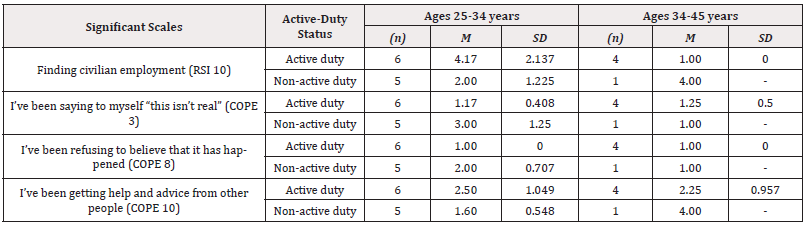
Table 9: Means and Standard Deviation of the interaction effect of Spouse Age and Active Duty Status on Reintegration Stress and Coping Styles.
As shown in Table 9, participants with younger spouses (between the ages of 25-34 years of age) and whose spouse was on active duty, and those with spouses in the 34 -44-year-old age range with a non-active duty spouse endorsed a greater frequency of stress related to finding civilian employment as compared to their peers with younger spouses who are non-active duty (RSI 10). Participants with non-active duty spouses between 25-34 years of age reported a slightly greater frequency of utilization of avoidant focused coping skills such as telling themselves “this isn’t real” (COPE 3) and refusal to belief something has happened (COPE 8). Similarly, those with younger, non-active duty spouses reported the least frequency of use of the problem focused coping skills of seeking advice from others (COPE 10). Thus, in general, those with younger, non-active duty spouses, meaning the spouse is at home, were more likely to use avoidant and denial coping mechanisms.
Participants with younger spouses (25-24 years of age) that are active duty and those with older spouses who are both active endorse little or no use of the above avoidant focused coping skills (COPE 3 and COPE 8). The participant with the older non-active duty spouse (35-44 years of age) endorsed the most use of seeking advice from others (COPE 10) as well as stress regarding civilian employment (RSI 10) suggesting that employment of an older spouse not on active duty was a specific stress in this participant’s life, with those active duty spouses of both age ranges reporting similar, yet moderate frequency of use.
Participant Mental Health Treatment
Participants were classified by their self-report of ever having mental health treatment: yes (n=6) or no (n=10). There was a significant effect of participant having received mental health treatment regarding specific items related to military identification (GANZ), reintegration stress (RSI), and coping strategy used (COPE). There was a significant main effect of participant mental health treatment and two items on the GANZ Scale of Identification with Military Culture. There was a significant main effect of participant mental health treatment on the belief one should fulfil their obligations to the military, mission, and unit (GANZ 2) (F(1,15)=6.563, p=.023). There was also a significant main effect of participant mental health treatment on the belief one should live by the military moral code and value system in everything you do (GANZ 5) (F(1,15)=6.750, p=.021). The means and standard deviations for the two items for these two significant differences of participant mental health treatment and the GANZ are found in (Table 10).

Table 10: Means and Standard Deviation of the effect of Participant Mental Health Treatment and Military Culture Identification.
As can be seen in Table 10, participants who had obtained mental health treatment reported greater identification with the belief one should fulfil their obligations to the military, mission, and unit (GANZ 2) than those participants who reported not having obtained mental health treatment. Additionally, participants who obtained mental health treatment also reported greater identification with living by the military moral code and value system in everything they do (GANZ 5) than those who had not had mental health treatment. Although the means for both groups are above the midpoint of the scale, having obtained mental health treatment was associated with greater endorsement of these values of commitment to obligations and to a moral code of values.
There was also a significant main effect of participants attending mental health treatment and reintegration stress related to adjusting to a civilian workplace (RSI 11) (F(1,15)=3.464, p=.084). The means and standard deviations for the RSI are found in Table 11. As can be seen in Table 11, participants who endorsed a history of mental health treatment reported greater stress regarding adjusting to a civilian workplace (RSI 11) than those who did not report a history of mental health treatment (Table 11).

Table 11: Means and Standard Deviation of the effect of Participant Mental Health Treatment and Reintegration Stress.
Finally, there was a significant main effect of participant mental health treatment on nine of the coping strategies. The was a significant main effect of participant mental health treatment on concentrating one’s effort to do something about the situation they are in (COPE 2) (F(1,15)=6.563, p=.023). There was a significant main effect of participant mental health treatment on giving up an attempt to cope (COPE 6) (F(1,15)=4.217, p=.059). There was a significant main effect of participant mental health treatment on saying things to let one’s unpleasant feelings escape (COPE 9) (F(1,15)=3.500, p=.082). There was a significant main effect of participant mental health treatment on getting help and advice from other people (COPE 10) (F(1,15)=3.898, p=.068). There was a significant main effect of participant mental health treatment on using alcohol or drugs to help me get through it (COPE 11) (F(1,15)=7.875, p=.014). There was a significant main effect of participant mental health treatment on trying to see it in a different light, to make it seem more positive (COPE 12) (F(1,15)=6.517, p=.023). There was a significant main effect of participant mental health treatment trying to get advice or help from other people about what to do (COPE 23) (F(1,15)=3.365, p=.088). There was a significant main effect of participant mental health treatment on learning to live with it (COPE 24) (F(1,15)=3.500, p=.082). There was a significant main effect of participant mental health treatment on making fun of the situation (COPE 28) (F(1,15)=3.797, p=.072). The means and standard deviations for the nine items for which there were significant differences on participant mental health treatment and coping strategies are found in (Table 12).
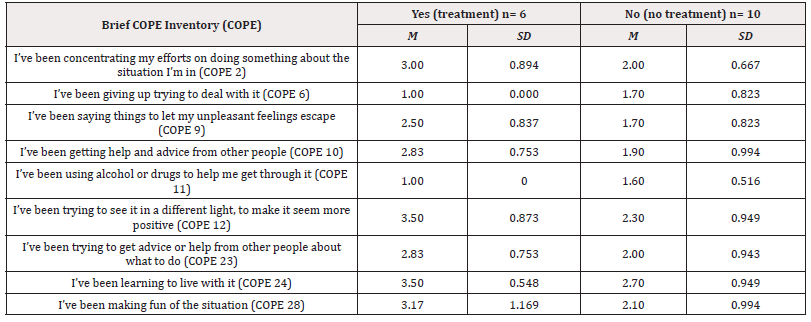
Table 12: Means and Standard Deviation of the effect of Participant Mental Health Treatment and Coping Strategy.
As shown in Table 12, participants who sought mental health care reported greater use of seven of those nine coping mechanisms. Thus, in general, mental health treatment was associated with various forms of attempting to cope (including obtaining mental health treatment). What those who received mental health treatment did less of was using alcohol and/or drugs, and simply giving up. Thus, specifically, those who had received mental health treatment reported concentrating their efforts on doing something about the situation they are in (COPE 2), saying things to let their unpleasant feelings escape (COPE 9), getting help and advice from other people (COPE 10), trying to see it in a different light, to make it seem more positive (COPE 12), trying to get advice or help from other people about what to do (COPE 23), learning to live with it (COPE 24), and making fun of the situation (COPE 28). In contrast, as stated above, participants who denied a history of mental health treatment endorsed greater use of giving up trying to deal with it (COPE 6) and alcohol or drugs to help me get through it (COPE 11).
Interaction Effect of Spouse Age and Participant Mental Health Treatment
There was a significant interaction of spouse age and participant mental health treatment on two items of the Reintegration Stress Index (RSI): There was a significant interaction effect on feeling like an outsider in one’s home (RSI 8) (F(1,15)=14.486, p=.003) and resurfacing of unresolved conflicts (RSI 9) (F(1,15)=4.433, p=.057).There were also significant interaction effects of spouse age and participant mental health treatment on two items of the Brief COPE Inventory (COPE). There was a significant interaction on turning to work or other activities to take one’s mind off things (COPE 1) (F(1,15)=6.672, p=.024), and blaming oneself for things that happened (COPE 26) (F(1,15)=4.586, p=.053).The means and standard deviations for the one item of the RSI and six items of the Brief COPE Inventory for which there were significant interactions based on participant age and spouse active-duty status are found in Table 13. As shown in Table 13, there was only one participant who had received mental health treatment and whose spouse was in the older age category (Table 13).
As can be seen in Table 13, the participants who had not received mental health treatment and who had a younger spouse reported greater reintegration stress related to feeling like an outsider in their home and problems with unresolved conflicts resurfacing. These were lessor issues for those who had obtained mental health treatment and had a younger spouse as well as for those who had not received mental health treatment, but who had an “older” spouse. The same pattern is seen with the coping style of turning to work or blaming oneself: those without mental health treatment and younger spouses tended to engage in these two somewhat avoidant coping mechanisms, whereas this was not the case with those who did not have mental health treatment but whose spouses were older. These all appeared to be problematic for the one participant who had obtained mental health treatment and who had an older spouse.
Discussion
This study attempted to research the relationships among identification with the military culture, sources of reintegration stress and various coping mechanisms. All of the participants were women who were not in the military, but their spouse was. Although a relatively small number of participants were obtained, a number of statistically significant relationships were identified, and a number of suggested relationships among the measures were also obtained. In addition, several demographic variables were found to be relevant to understanding the reintegration experience of these women. These variables included the age of the participant, the age of their spouse, whether their spouse was on active duty or not and whether the participant had received mental health treatment. In addition, several other relationships within the data were found and will be discussed also. Overall results of the study did not yield a significant influence of overall coping style on reintegration stress. Rather, specific coping strategies and reintegration stress were found. It turned out that participant age, spouse age, active duty status and having received mental health treatment interacted so as to produce unique reintegration stress issues and use of differing coping mechanisms.

Table 13: Means and Standard Deviation of the Interaction Effect of Spouse Age and Participant Mental Health Treatment on Reintegration Stress and Coping Styles.
Spouse Branch of Service and Coping style
Overall, Navy spouses and Marine Corps spouses reported the highest endorsement of living by the military code and the lowest avoidant focused coping skills. In comparison, Army spouses endorsed the lowest military identification (6 points lower) and the highest engagement in avoidant coping (Table 1) than in comparison to Army and Airforce spouses. This is a meaningful difference, but the means show that the Army spouses reported a rating of only 2, which is merely “a bit” of this use. It can be assumed there is a difference in personality style (as indicated by difference in coping styles) in those who marry Navy and Marine service members in comparison to those who marry Army service members. In general, however, there was little to no correlation with identification with military culture or values and reintegration stress or coping style other than what is listed above. However, there is a paucity of research in regard to the correlation of personality type of a spouse and branches of the military. Clearly, future research will have to identify such differences as suggested by this study.
Age of Participant/Active-Duty Status of Spouse
One of the most powerful factors in the reintegration stress that the participants expressed was in regard to their age. The participants could be classified as being in one of two age groups: either 25-34 or 35-45. It was clear that those who fell in the younger age groups had more difficulties with reintegration stress and attempted to use more emotion focused coping (EFC) mechanisms, specifically criticizing or blaming themselves presumably to deal with that stress (Table 2 and Table 3). The increased use of EFC strategies in times of increased distress is congruent with the findings that, individuals often rely on EFC strategies in situations they feel are out of their control [14]. It makes sense that the younger participants would have more difficulty with reintegration stress for a variety of possible reasons. It should be noted that the design of the study did not directly assess for reasons that the participants’ age would be a problem. However, it is reasonable to hypothesize that being younger, they have less experience with coping with stressors. In addition, being younger, it is likely that they would have less developed and refined coping mechanisms. This hypothesis appears inconsistent with previous research that found older adults tend to engage in less frequent use of PFC in comparison to younger adults [22]. Future research can now focus on identifying specific factors that contribute to younger spouses having more difficulty with reintegration stress than a cohort that is merely a decade older.
In regard to specific stresses and coping styles, the younger women participants reported greater stress related to their “status” within the home, specifically with their children as their spouse is active duty, and they have the sole task of raising the children (Table 4). These results are consistent with previous research, such that wives of currently deployed service members reported increased levels of stress in regard to the effects of deployment on their children and increased child rearing responsibilities [28]. In contrast, for the younger women participants, if the spouse was not active duty they expressed greater stress in regard to the relationship and unresolved stress arising, and they relied more heavily than the older women participants on what appear to be coping via Avoidant Focused Coping (AFC) with denial mechanisms (Table 4) [16]. It seems as though they did not feel that they had adequate mechanisms to directly deal with their stress and so they attempted to deny to themselves that there really was a problem that was bothering them.
As discussed below, having one’s spouse on active duty was also a factor as the younger participants used more coping mechanism than did the older participants whose spouse was on active duty (Table 5). This finding strongly supports the hypothesis that the older women participants simply did not need as many coping mechanisms to deal with their stresses, especially if the spouse was on active duty, suggesting the older women were better able to handle the demands of their lives. These findings appear inconsistent with Palmer, et al. (2009), as they suggested those who utilize Emotion Focused Coping (EFC) tend to report higher levels of perceived stress. However, these findings appear to be consistent with the more recent findings that AFC strategies can be adaptive in the short-term, often providing a perception of comfort and growth [16]. It is likely that those younger spouses who have been in their marriages for less time in comparison to older spouses are experiencing this short-term comfort but register the increased amount of perceived stress.
It should also be taken into account that the younger participants who had a spouse who was on active duty indicated specific sources of reintegration stress (Table 6). One such stress related to civilian employment. Apparently, with the spouse away, employment in the civilian world created particular stress for the female participant. It would seem that the additional responsibility to maintain the household without the presence of her military spouse and had to accommodate to the civilian work environment was of particular concern to these women. It doesn’t seem surprising that having one’s spouse on active duty or at home presents different challenges for younger women than for slightly older women.
Age of Spouse and Active-Duty Status of Spouse
Just as the age of participant turned out to be significantly related to reintegration stress and their coping mechanisms, the age of their spouse was also a powerful factor in the stress that the women felt and the coping mechanisms they utilized. In addition, just as whether the spouse was on active duty or not interacted with the participant’s age, the spouse’s active duty status and the spouse’s age also interacted to produce powerful relationships with the participant’s reintegration stress and use of coping mechanisms (Table 9). In general, those participants with a younger spouse appear to use denial coping mechanisms (AFC). Thus, whether the participant was younger or their spouse was younger, the women participants reported that they were more likely to not attempt active coping skills (i.e., problem focused coping [PFC] or EFC to deal with stress but more likely to use denial mechanisms (AFC) to cope than did older participants and those with an older spouse.)
The lack of correlation of increased perceived stress and use of PFC coping skills is consistent with previous research, such that long-term use of PFC skills have been associated with increased overall well-being and reduced overall stress, as issues are directly confronted [14]. Additionally, the correlation between increased stress with AFC strategies is also consistent with previous research as the long-term use of AFC skills resulting in increased overall stress and dissatisfaction [16,17]. However, these results do not support previous research regarding long-term use of EFC skills [19]. As discussed above, their research suggested long-term use of EFC strategies were correlated with overall lower life satisfaction and increased distress. In contrast, findings of the present study did not detect similar correlations between use of EFC strategies and increased reintegration stress. These differences in findings may be related to the specificity of reintegration stress. Again, it is reasonable to hypothesize that younger participants likely have not had the same amount of experience to refine their coping skills. Furthermore, it is reasonable to anticipate that as time passes and more stressors arise, the younger participants are beginning to experience the negative long-term ramifications associated with AFC strategies.
Mental Health Services, Reintegration Stress and Coping Mechanisms
It appears that some of the most profound findings provided by these women participants whose spouse was in the military were found in regard to whether the participants have had mental health treatment. It seems clear from the findings that having had mental health treatment was a meaningful help to them. Those who had received mental health treatment were more likely to value keeping commitments and living by a value system, were less likely to feel like giving up and less likely to report coping with alcohol or drugs. Stating the same findings from the alternative perspective, those women who had not had mental health treatment were more likely to feel like giving up and more likely to attempt to cope through the use of alcohol and drugs. Additionally, participants who reported a history of seeking mental health treatment reported the greatest and most varied utilization of PFC skills, specifically of concentrating one’s effort to navigate or improve the situation they are in, seeking advice and help, and seeing things in a positive light (Table 12). While simultaneously reporting increased levels of stress finding civilian employment, it is likely that these participants are actively seeking employment and devising ways to appropriately manage their stress level and actively resolve their stressors.
Once again, the spouse’s age was a significant factor when examining the possible benefits of mental health treatment (Table 13). Those participants who did not have mental health treatment and had a younger spouse were more likely to feel like an outsider in their relationship, had unresolved conflicts arise and used more denial/avoidant coping mechanisms including blaming themselves-for their problems. While this study was not designed to assess how mental health treatment was a benefit for the women, it seems clear that having had mental health treatment was a benefit both in terms of coping with stresses and in their self-esteem (i.e., not blaming themselves for their problems. These results are supported by findings that as army wives reported loneliness to be a significant stressor whereas their Army spouse did not [28]. The results of the present study expand on the abovementioned research such that the use of AFC likely allows for increased stress related to loneliness to fester and create increased difficulty upon attempted reintegration. Likely, this increased perceived stress furthers the documented ramifications of increased dissatisfaction and disconnection associated with long-term use of AFC [17].
Clinical Implications
Based on the findings above for having had mental health treatment and utilization of PFC coping skills, it appears clinically indicative that mental health treatment is a significant benefit to the reintegration process, the individual, and the marital unit. Thus, a recommendation is that when a spouse goes on active duty, it probably will be beneficial for many (women) spouses to be offered some mental health consultations. This especially appears to be true for “younger” spouses, and those whose spouse is “younger.” In other words, a proactive approach to heading off problems appears to be warranted rather than allowing conflicts to emerge and then addressing them.
Accordingly, clinicians working with military spouses should be particularly alert to younger women likely experiencing reintegration stress, and needing more coping mechanisms, and feeling like they cannot engage with their non-active-duty spouse about their stresses. Clinicians should be especially alert to a vulnerability to denial, use of drugs and or alcohol, disengagement from their partner, and to engage in self-blame or self-criticism. Clinician should encourage military spouses to seek guidance and assistance, engage in positive reframing, and actively process ways to change the situation in which they find themselves.
Additionally, it is important to note that previous research has demonstrated that long-term use of AFC and EFC coping skills can result in lower levels of life satisfaction and increased stress levels [16,17,19]. In contrast, short-term use of AFC skills in combination with PFC and EFC skills can result in increased resiliency, overall distress tolerance, and post-traumatic growth [16]. Therefore, clinicians should attend to the frequency and reason of engagement with each specific coping skill, allowing space for times of avoidance but encouraging gradual use of active coping without placing emphasis on a specific overall style. A couple of specific reintegration stresses were identified by these women participants for which clinicians can be especially alert. One such concern expressed by the women was their relationship with their children (RSI 6, RSI 7) while the spouse was on active duty. This specific concern appears to be related to the women often experiencing that their role in the home (RSI 3, RSI 8) and in the relationship (RSI 5, RSI 9) was often unclear to them (Table 2, Table 4). It would seem that being a military spouse creates a number of somewhat unique relationship issues to which clinicians would be well advised to be aware and attuned to and recognize when those are relevant.
Limitations and Directions for Future Research
One pertinent limitation of the present research is the participant sample, most notably the small sample size. Additionally, participants were obtained via snowball sampling, therefore there is likely a greater similarity among participants than what might be representative of (women) military spouses. The limited size of the sample and the method of collection reduces the generalizability of the results. In addition, participants were only female spouses married to male service members. Future research should increase the diversity of the sample with a larger sample size to increase generalizability of results, better capture the reported stressors related to reintegration and the impact of coping strategy utilized and understand the experience of male spouses of female service personnel. Similarly, the small sample size does not permit for any insights into possible ethnic or other diversity issues in reintegration stress and coping, thus those considerations have to be addressed by future studies.
Another likely limitation of the study is the adequacy of the measures used. The GANZ scale has limited clinical utilization, therefore its validity and reliably may be partially questionable. Additionally, it is a recently developed scale with some use in research, therefore, some additional scale development with additional items may be beneficial as there are only eight items. Although there were interesting findings of mental health treatment being associated with greater endorsement of values that could be considered greater endorsement of commitment as a value, further development of the scale for assessing endorsement of the military culture values is warranted.
The Brief COPE Inventory has high clinical utility and is well utilized; however, it is a short form of the original COPE Inventory. The Brief COPE Inventory reduced the original 60-item scale to 28-items, fully eliminating two scales and reducing the number of items assessing each area of coping [27]. The psychometric properties of the Brief COPE Inventory are similar to the original COPE Inventory with acceptable reliability [27]. Therefore, the use of the short form (while justified) may have impacted the results of the study and utilization of the original COPE Inventory might result in stronger and clearer results. Last, the Reintegration Stress Index (RSI) also demonstrated good clinical utility, however, the survey is normed predominately with a sample of National guard members, not active duty, regular, service members as studied in this survey [12].
Finally, this study did not examine the specific association between stressors and utilization of coping mechanisms as it did not assess for what coping style was used to manage each stressor. Rather, results of the study reflect general correlation between reported rate of use of a coping skill and overall perceived reintegration stress. Therefore, the present study cannot definitively address if use of a particular coping skill mitigates a specific stressor. As there was no correlation with a specific overall coping style, it is logical to assume that identifying and implementing the most effective coping strategy in regard to the individual utilizing it and the specific stressor present would result in more meaningful data. Future research could study specific approaches of coping and the direct impact on stressors to better understand if use of that coping method has any impact on the identified stress.
Summary and Conclusions
In summary, the study found there was no correlation between reintegration success and overall coping style for female spouses of military service members. Rather, there were specific qualities of the spouse and specific reintegration stresses along with specific coping strategies used that yielded relevant results regarding these participants. Thus, factors such as age of the participant, the age of their spouse, whether their spouse was on active duty or not and whether the participant had received mental health treatment were significantly related to the reintegration stress experienced and the coping mechanisms used. This means that there is no specific style of coping that results in most successful reintegration. Rather, the overall results of the study support findings of previous research such that utilizing a mix of problem focused coping (PFC), emotion focused coping (RFC), and avoidant focused coping (AFC) likely produces the greatest likelihood of reintegration success. It appears that utilizing only one specific overall coping style is not the most efficient way to approach coping with (reintegration) stressors.
Results of the study revealed that the ”younger” participants with “younger” spouses reported more reintegration stress issues and needed more coping mechanisms. However, results of the study demonstrated that receiving mental health treatment resulted in reduced frequency of avoidance (AFC coping), which has been demonstrated to produce long-term negative consequences [16,17,21]. Strikingly, the most impactful finding of the study was that understanding the most effective coping approach to a specific situation may produce the most success in reintegration following military deployment of one’s spouse. Future research into understanding the influence of coping and reintegration success ought to focus on what style of coping is most effective in navigating specific stressors.
Acknowledgment
None.
Conflict of Interest
None of the authors have a conflict of interest.
References
- (2020) Military Programs and Benefits. USAGov.
- Halvorson A (2010) Understanding the Military: The Institution, the Culture.
- Rodarte J (2019). Understanding The Five Branches of The Military.
- (2018) Demographic Profile: Profile of the Military Community. Department of Defense.
- (2020) Demographics of the U.S. Military. Council on Foreign Relations.
- Wenger JW, OConnell C, Cottrell L (2018) Examination of Recent Deployment Experience Across the Services and Components. Santa Monica, CA: RAND Corporation.
- (2018) Pentagon Releases New Policy on Nondeployable Members.
- Gil Rivas V, Kilmer RP, Larson JC, Armstrong LM (2017) Facilitating successful reintegration: Attending to the needs of military families. American Journal of Orthopsychiatry 87(2): 176-184.
- OConnell KK (2020) Recognizing and Responding to Reintegration Difficulties Among Returning Service Members. American Journal of Psychiatry Residents' Journal 15(4): 17-18.
- Gould M, Adler A, Zamorski M, Carl Castro, Natalie Hanily, et al., (2010) Do stigma and other perceived barriers to mental health care differ across Armed Forces? J R Soc Med 103(4): 148-156.
- Lara Cinisomo S, Chandra A, Burns RM, Jaycox LH, Tanielian T, et al., (2012) A Mixed-Method Approach to Understanding the Experiences of Non-Deployed Military Caregivers. Maternal and Child Health Journal 16(2): 374-384.
- Marek LI, Moore LE (2015) Coming home: the experiences and implications of reintegration for military families. Journal of Military Veteran and Family Health 1(2): 21-31.
- (2017) Front Page: FOCUS Project.
- de Vibe M, Solhaug I, Rosenvinge JH, Tyssen R, Hanley A, et al., (2018) Six-year positive effects of a mindfulness-based intervention on mindfulness, coping and well-being in medical and psychology students; Results from a randomized controlled trial. PLoS ONE 13(4): e0196053.
- (2020) Psychology Today. Productivity.
- London MJ, Mercer MC, Lilly MM (2017) Considering the impact of early trauma on coping and pathology to predict posttraumatic growth among 9-1-1 telecommunicators. Journal of Interpersonal Violence 35(21-22): 4709-4731.
- Brooks M, Graham Kevan N, Robinson S, Lowe M (2019) Trauma characteristics and posttraumatic growth: The mediating role of avoidance coping, intrusive thoughts, and social support. Psychological Trauma: Theory, Research, Practice, and Policy 11(2): 232-238.
- Gross J(2002) Emotion regulation: affective, cognitive, and social consequences. Psychophysiology 39(3): 281-291.
- Palmer A, Rodger S (2009) Mindfulness, Stress, and Coping Among University Students. Canadian Journal of Counselling and Psychotherapy 43(3): 198-212.
- Tyssen R, Vaglum P, Gronvold NT, Ekeberg O (2001) Factors in medical school that predict postgraduate mental health problems in need of treatment. A nationwide and longitudinal study. Med Educ 35(2): 110-120.
- Afshar H, Reza Roohafza H, Hassanzadeh Keshteli A, Mazaheri M, Feizi A, et al., (2015) The association of personality traits and coping styles according to stress level. Journal of Research in Medical Sciences 20(4): 353-358.
- Chen Y, Peng Y, Xu H, OBrien WH (2017) Age differences in stress and coping: Problem-focused strategies mediate the relationship between age and positive affect. The International Journal of Aging and Human Development 86(4): 347-363.
- Duttweiler R (2020) Here's What You Need to Know About Reintegration.
- Bohse W, Berger, SE, MacMillin M (2022) Identification with Military Culture, Drinking, and Mental Health Stigma among Army Soldiers and Veterans. Novel Research in Sciences 11(2).
- Ganz A PsyD Yamaguchi, C, Parekh B, Koritzky G, Berger SE (2021) Military Culture and Its Impact on Mental Health and Stigma. Journal of Community Engagement and Scholarship 13(4): 10.
- Gonzalez K, Berger S, Lopez B (2023) Women Veterans Reintegrating into Civilian Life. American Journal of Biomedical Science and Research 19(4): 507-518.
- Carver CS (1997) Brief cope inventory. Psyc TESTS Dataset.
- Allen ES, Rhoades GK, Stanley SM, Markman HJ (2011) On the Home Front: Stress for Recently Deployed Army Couples. Family Process 50(2): 235-247.




 We use cookies to ensure you get the best experience on our website.